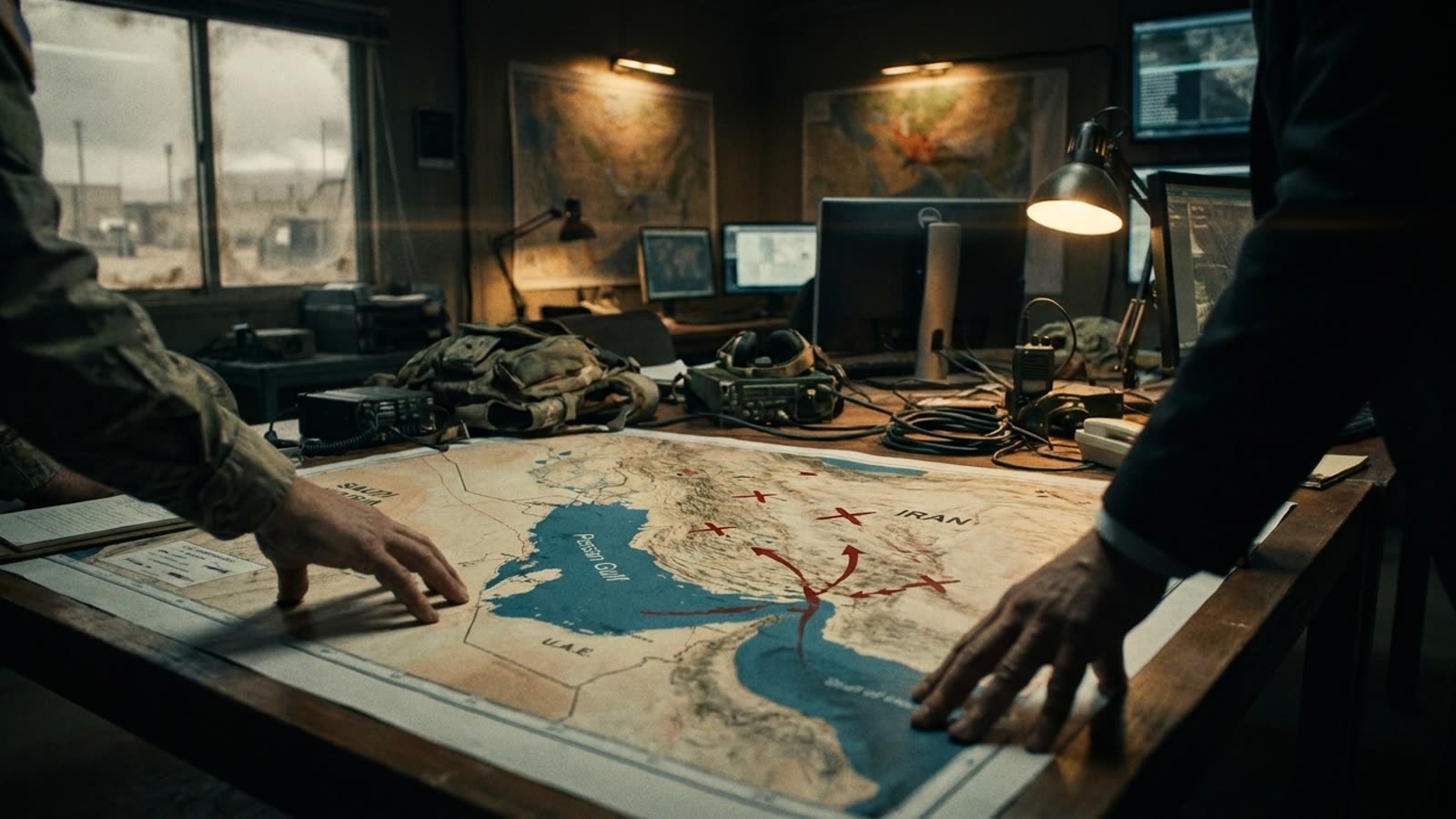
A century of days into America's third major Middle Eastern conflict this millennium, President Trump has answered the question that haunted his predecessors in Afghanistan and Iraq: no, he will not set a timeline for bringing troops home. The announcement, delivered with characteristic brevity during a Cabinet Room photo spray, forecloses the off-ramp that hawks feared and doves hoped for. American soldiers will remain in theater until Iran "gives us everything we want," a formulation so elastic it could justify presence for months or decades.
The irony is thick enough to taste. Trump built his political brand partly on excoriating endless wars, mocking nation-building, and promising to extract American blood and treasure from distant sands. His 2024 campaign featured blistering attacks on the bipartisan foreign-policy establishment that, in his telling, had squandered lives and trillions. Now, barely into his second term, he has authored a commitment with no visible exit criteria—precisely the structure he once denounced.
The military math
Pentagon briefings suggest the current deployment hovers around 45,000 personnel across the Persian Gulf theater, with carrier strike groups rotating through the Strait of Hormuz and ground forces concentrated in Iraq and the UAE. Operational tempo remains high; daily sorties into Iranian airspace have become routine, and special-operations raids along the Zagros mountain corridors continue to generate casualties on both sides. Defense officials privately concede that "degrading" Iran's military capacity is achievable, but "defeating" its will to resist is another matter entirely.
The administration's stated objectives—dismantling Tehran's nuclear infrastructure, neutralizing its ballistic-missile program, and severing its ties to regional proxies—constitute a maximalist agenda that no previous president dared pursue by force. Each goal, taken alone, would require sustained pressure; together, they describe a campaign measured in years, not quarters.
Domestic politics and the base
Republican voters remain broadly supportive of the Iran operation, but the coalition is not monolithic. Populist-nationalist factions that cheered Trump's skepticism of foreign entanglements have grown quieter, while traditional hawks relish the muscular posture. The president's refusal to discuss withdrawal timelines may be intended to deny Tehran negotiating leverage, yet it also denies his own supporters the clarity they once demanded from Obama and Biden.
Democrats, meanwhile, face their own incoherence. Many who criticized Trump's initial strikes now struggle to articulate an alternative beyond vague calls for diplomacy—diplomacy that, as Tehran's negotiators note, keeps colliding with "changing and contradictory" American positions.
Our take
Trump's 100-day marker reveals less about Iran than about the gravitational pull of American military commitments once begun. Presidents enter wars promising swift resolution; they remain because withdrawal looks like defeat. The base that loathed forever wars may discover it has simply traded one for another—with a commander who swore he knew better.