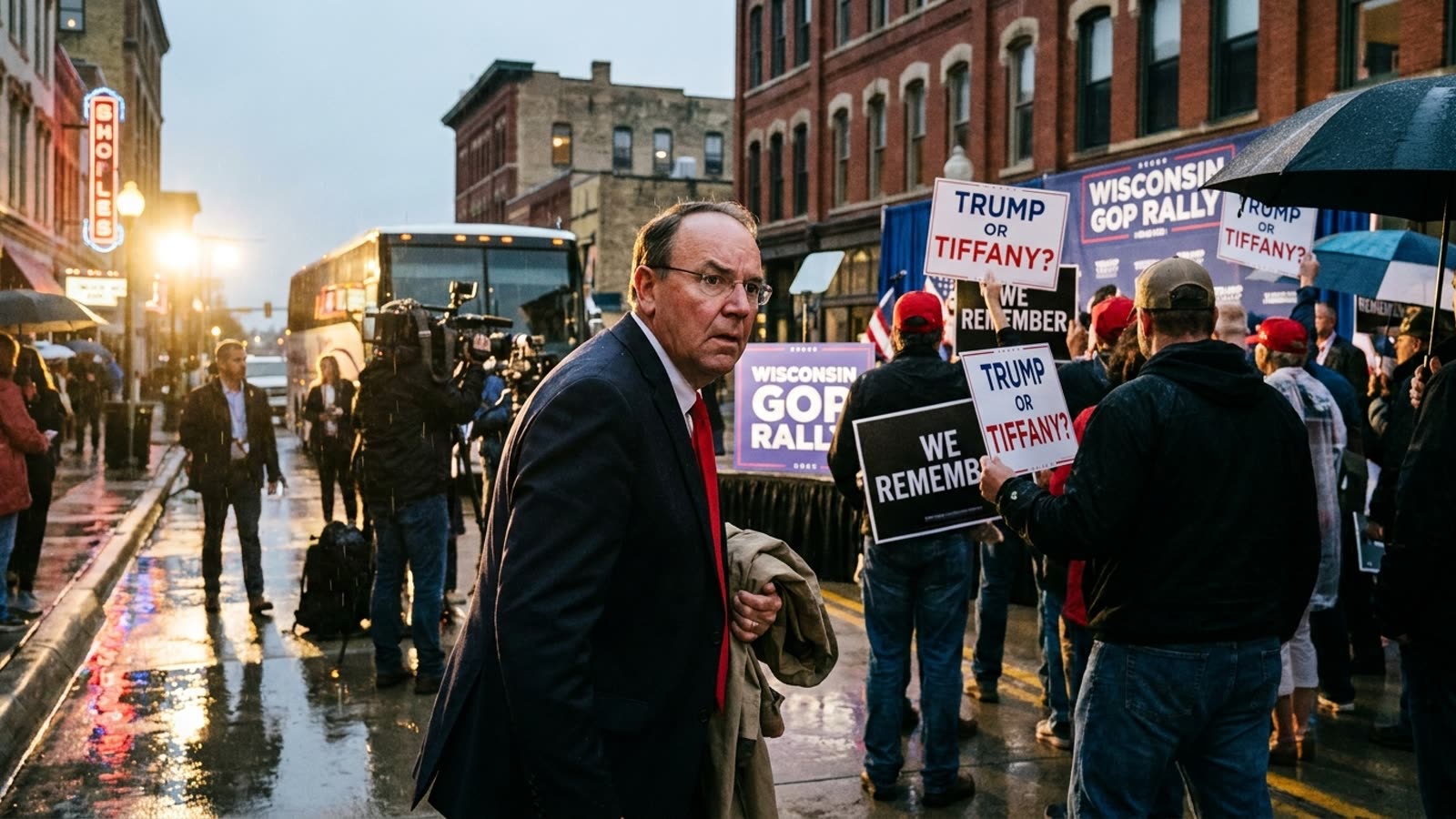
The Trump administration has crossed a threshold that election law scholars have long feared but few expected to see articulated so baldly: the Justice Department filed suit this week to block certification of Alaska's Senate race should the Republican incumbent Dan Sullivan lose, arguing that the presence of another candidate named Dan Sullivan on the ballot could "taint" the result.
The lawsuit, filed in federal court in Anchorage, does not allege fraud. It does not claim irregularities in voting machines or ballot handling. It simply asserts that voters might be confused by two people with the same name — a circumstance that has occurred in American elections since the Republic's founding — and that this theoretical confusion justifies federal intervention to prevent certification of results unfavorable to the incumbent.
The Legal Architecture of Pre-Emptive Nullification
What makes this filing extraordinary is not merely its weakness on the merits but its timing and structure. The Justice Department is not waiting for evidence of actual voter confusion, miscounted ballots, or statistical anomalies. It is establishing, before Election Day, a legal mechanism to reject results it dislikes. The complaint explicitly contemplates blocking certification "if the Republican Dan Sullivan loses," language that appears nowhere in any previous federal election lawsuit.
Constitutional scholars contacted by multiple outlets expressed alarm at the precedent. Federal courts have historically shown extreme reluctance to intervene in state election administration absent clear constitutional violations. The presence of candidates with similar names — common in local races and occasionally in statewide contests — has never been held to constitute grounds for federal nullification of results.
Alaska's Peculiar Vulnerability
Alaska's ranked-choice voting system and nonpartisan primary, adopted by voters in 2020, has produced an unusually crowded general election ballot. The second Dan Sullivan, a prior candidate who has run for various offices, qualified through the open primary system. State election officials have implemented standard disambiguation measures: middle initials on ballots, distinct candidate statements, and clear party affiliations where applicable.
The incumbent Sullivan, first elected in 2014, faces a genuinely competitive race for the first time, with Democratic challenger trailing by single digits in recent polling. The state's small population and independent streak have made it unexpectedly contested territory in a midterm cycle where Senate control hangs in the balance.
The Broader Pattern
This filing arrives alongside the administration's tariff maneuvering to assist Susan Collins in Maine, where the president's trade war has created acute political liability. Taken together, these moves suggest a White House willing to deploy federal power — economic and legal — to influence individual Senate races with unusual directness. The Alaska lawsuit goes further, however, by seeking not merely to help a candidate but to pre-authorize rejection of an unfavorable outcome.
Our take
The Justice Department has historically served as a guardian of voting rights, filing suits to expand ballot access and protect against discrimination. Using it instead as a pre-positioned tool for election nullification represents a fundamental inversion of that mission. The lawsuit may well fail — federal judges in Alaska have shown independence, and the legal theory is gossamer-thin. But the filing itself establishes a template: assert confusion, claim taint, seek federal override. That template, once normalized, does not require strong facts to cause lasting damage to electoral legitimacy.