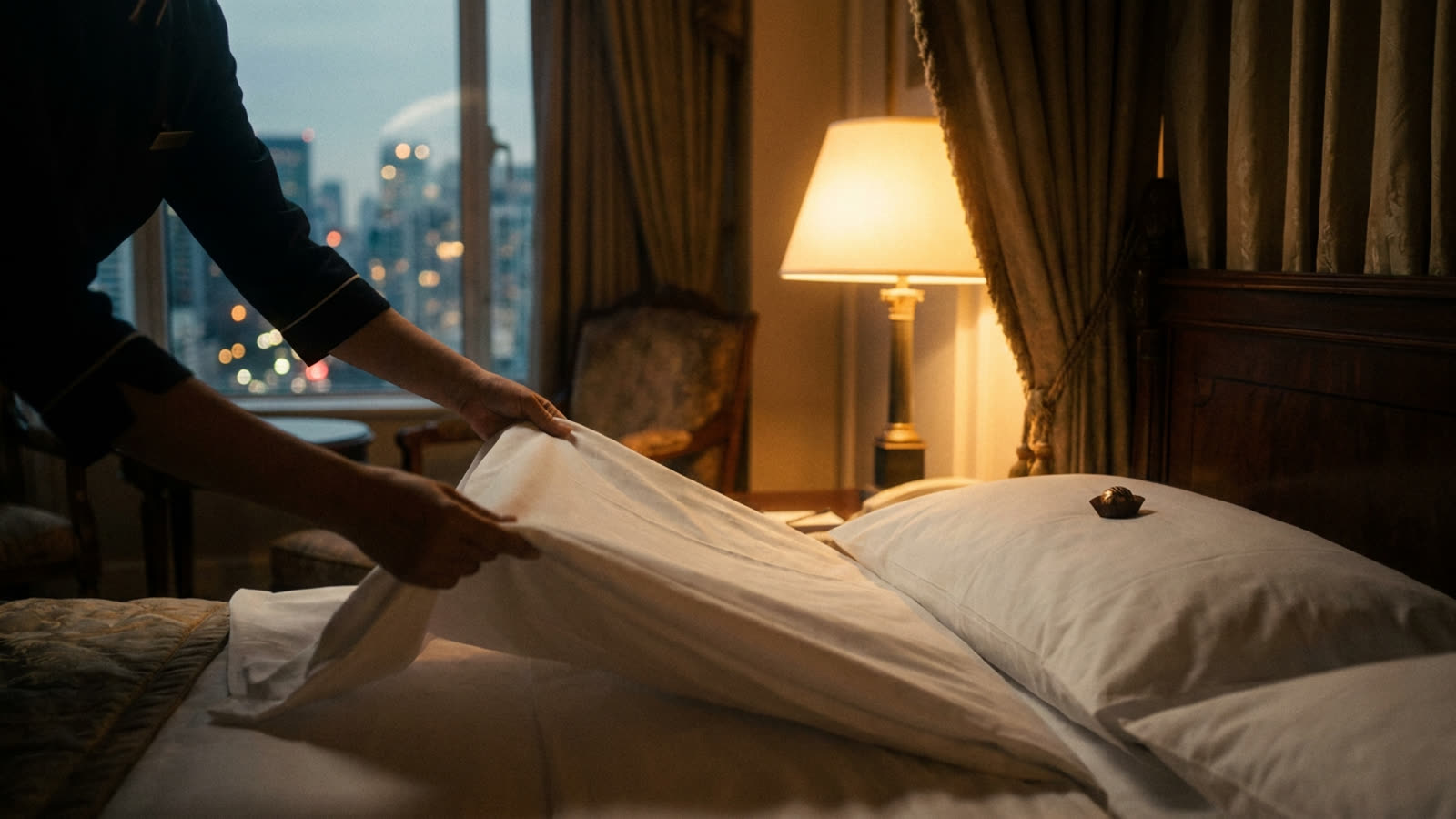
The turndown service is not about the chocolate on the pillow, though that gets most of the attention. It is about the strange intimacy of a stranger entering your temporary home, touching your belongings just enough to signal care, and leaving behind evidence of thoughtfulness that a sensor or algorithm cannot replicate. In the hierarchy of hotel luxuries, the turndown occupies a peculiar position: too subtle to advertise, too labor-intensive to scale, and too easily dismissed as anachronistic fuss. Which is precisely why it matters.
The ritual emerged from European grand hotels in the late nineteenth century, when travelers of means expected their accommodations to approximate the service of a well-staffed private home. A valet or chambermaid would prepare the bedroom for sleep: drawing curtains, turning down the bedcovers at an angle, laying out nightclothes, perhaps warming the sheets. The gesture acknowledged that rest was not merely functional but ceremonial, that the transition from day to night deserved its own choreography.
The choreography of care
Modern turndown has evolved into something more codified but no less deliberate. At the better establishments, the sequence follows an unwritten grammar: curtains drawn to a specific width, slippers positioned at the precise angle of approach, a weather card or handwritten note placed where the eye naturally falls. The television might be tuned to a classical music channel at low volume. The bathroom receives fresh towels, the soap is replaced even if barely used, and the lighting shifts to warmer tones. None of this is strictly necessary. All of it communicates something that efficiency-obsessed hospitality has largely forgotten: that you are a guest, not a user.
The labor economics work against it. A proper turndown requires a second visit to each occupied room, typically between six and nine in the evening, performed by staff who must navigate the delicate timing of guests who may or may not be present, may or may not want interruption. The major chains have largely abandoned the practice except at their highest tiers, replacing it with opt-in requests or eliminating it entirely in favor of contactless service models that pandemic-era preferences accelerated.
What the algorithm cannot fold
The turndown's decline tracks a broader retreat from human service in hospitality. Mobile check-in, digital room keys, tablet-controlled lighting, and chatbot concierges have made it possible to spend an entire hotel stay without meaningful human interaction. For many travelers, this represents progress: friction removed, preferences remembered, awkwardness avoided. But something is also lost when no one enters your room to observe that you've been working late, to adjust the pillows accordingly, to leave a small gesture that says someone noticed.
The hotels that still invest in turndown understand this. The Aman properties train their staff to read subtle cues—an open book's page number noted and marked, a guest's preferred water brand restocked without request, the room temperature adjusted based on how the previous night's bedding was disturbed. The Ritz Paris employs dedicated evening staff who learn returning guests' preferences across visits and years. These are expensive commitments that will never appear in a booking app's feature list.
Our take
The turndown service is easy to mock as aristocratic theater, a relic of an era when labor was cheap and leisure was performed. But its persistence at the genuine top of the market suggests it answers something real. The chocolate is incidental. What the turndown offers is evidence of attention—proof that in a world optimized for scale and self-service, someone still thought about your particular comfort, your particular evening, your particular rest. That this requires a human being, moving through space, making small judgments, is not a bug but the entire point. The best hospitality has always understood that luxury is not the absence of friction but the presence of care.