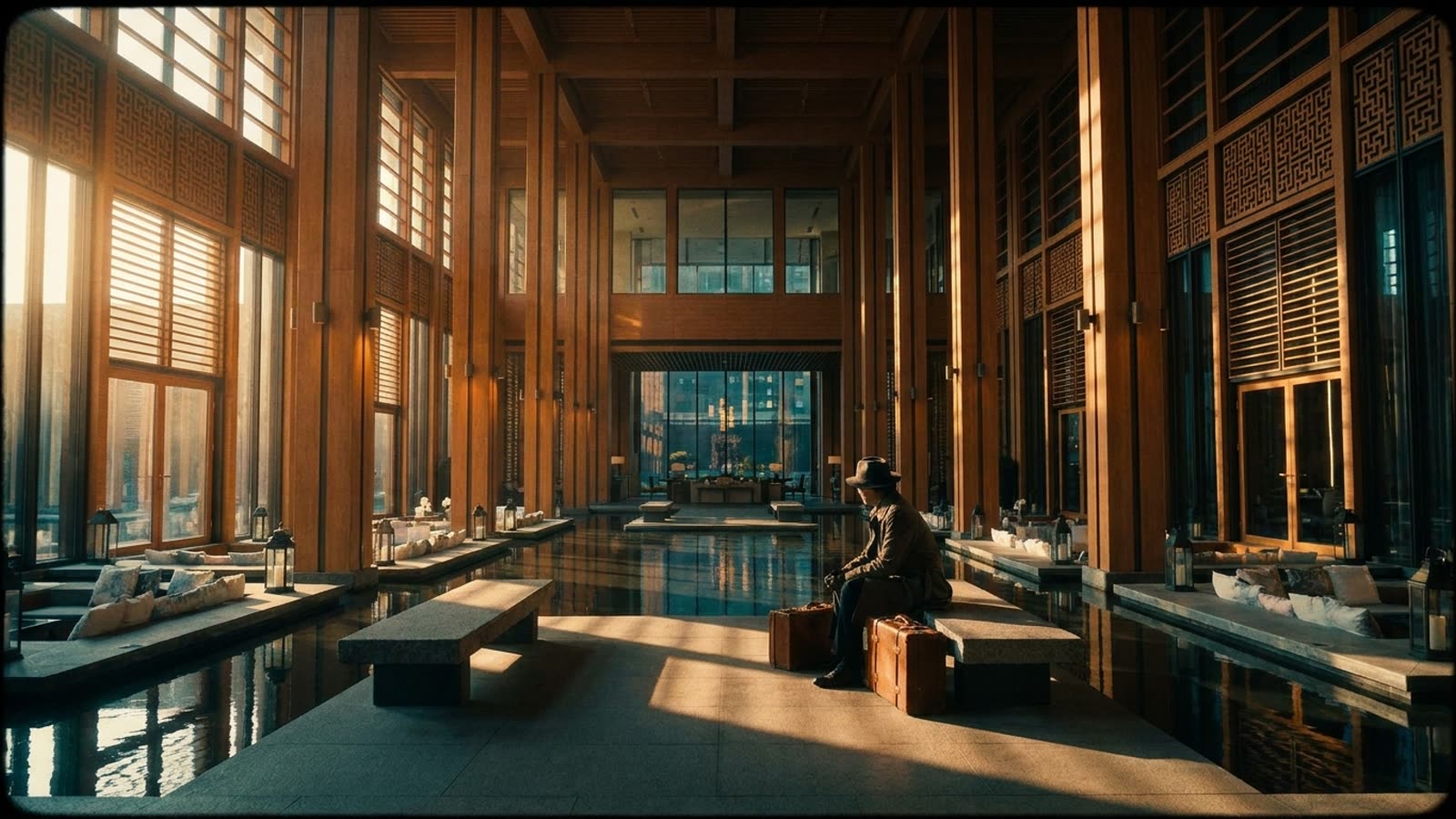
The greatest hotel lobbies understand something fundamental about human nature: we want to be seen arriving. Not departing, not lingering, but crossing that threshold between the ordinary world and the curated fantasy of hospitality. The lobby is where transformation begins, and its slow erosion by efficiency-minded operators represents one of contemporary travel's quieter tragedies.
Consider what happens when you enter a properly conceived hotel lobby. There is the immediate sensory recalibration—the temperature shift, the acoustic dampening, the particular smell that good hotels cultivate like vintners tend terroir. Then comes the spatial drama: the ceiling height that makes you stand straighter, the sight lines that guide you toward the desk while offering glimpses of bars, restaurants, and fellow travelers whose stories you will never know but can pleasantly imagine.
The democracy of the grand foyer
The hotel lobby is one of civilization's few remaining democratic public spaces, a place where the price of entry is merely the appearance of belonging. Unlike private clubs or ticketed venues, a great lobby welcomes anyone who walks in with sufficient confidence. This has made lobbies essential to cities in ways that extend far beyond accommodation. Business deals are struck in lobby bars. Affairs begin and end in lobby corners. Writers have composed novels in lobby armchairs, using the ambient human drama as fuel.
The Algonquin in New York, the Chateau Marmont in Los Angeles, the Savoy in London, Raffles in Singapore—these lobbies function as urban living rooms, their value to their cities incalculable and largely uncompensated. They provide what the sociologist Ray Oldenburg called "third places," neither home nor work but something necessary to both.
The threat of the seamless experience
The contemporary hospitality industry's obsession with frictionless service poses an existential threat to the lobby. Mobile check-in, keyless entry, and the general fetishization of never having to interact with another human being all conspire to render the grand foyer superfluous. Why maintain expensive real estate when guests can proceed directly to their rooms?
This logic, while financially coherent, misunderstands what travelers actually seek. The lobby is not an obstacle to be eliminated but a ritual to be savored. The brief interaction with a concierge, the moment of orientation before ascending to one's room, the chance to observe and be observed—these constitute the psychological transition from traveler to guest. Without them, a hotel becomes merely a place to sleep, indistinguishable from an apartment with better linens.
Our take
The best hoteliers have always understood that they are selling not rooms but experiences, and the lobby is where that experience is established or squandered. Those who gut their foyers in pursuit of efficiency will discover, too late, that they have removed the very thing that made their properties worth visiting. The lobby is not dead space; it is the soul of the house.