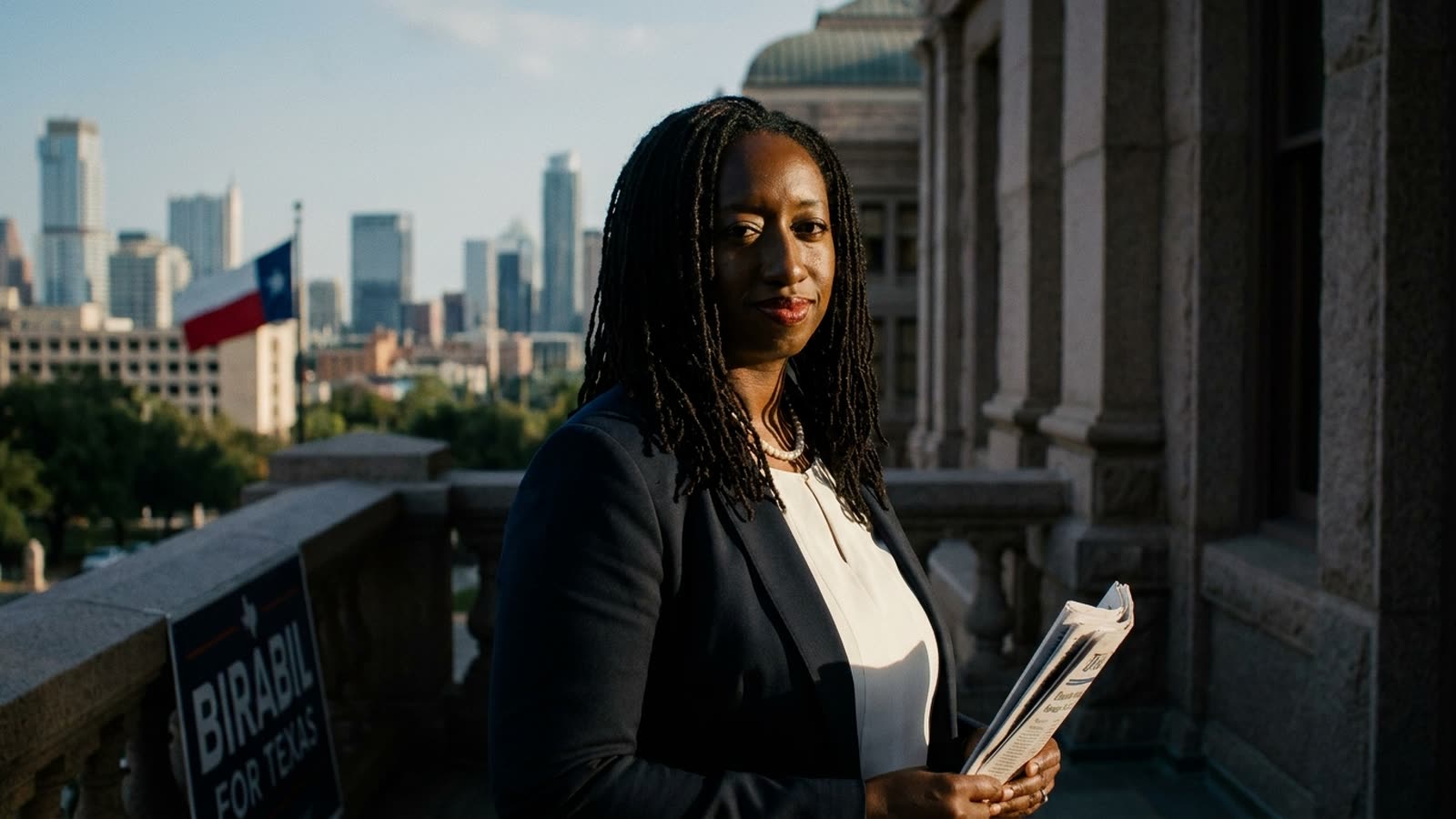
The Texas Democratic Party got the result it wanted on Tuesday night without having to work particularly hard for it. Salman Bhojani, a Muslim-American attorney, defeated Lorraine Birabil in a state House runoff after Birabil's campaign collapsed under the weight of her own rhetoric—specifically, her claim that Jewish donors were conspiring against her because she had criticized Israel.
The party issued a rebuke. It did not issue much else. No major Democratic figure campaigned against Birabil. No significant resources flowed to Bhojani's campaign from state or national committees. The antisemitism that party leaders condemned in press releases was left to defeat itself at the ballot box, which it did, but only after Birabil had already won the first round of voting in March.
The remarks and the response
Birabil, who had served in the Texas House since 2019, made her comments at a candidate forum in February, suggesting that pro-Israel donors were funding her opponents as punishment for her votes on Gaza-related resolutions. The remarks were recorded and circulated widely. Jewish organizations demanded she withdraw. The Texas Democratic Party called her statements "antisemitic" and "unacceptable."
What followed was instructive. Birabil did not withdraw. She did not apologize in any meaningful sense—offering instead the familiar non-apology about how her words had been "mischaracterized." And the party, having issued its condemnation, largely moved on. No prominent Texas Democrat endorsed Bhojani. The runoff proceeded as a low-turnout afterthought in a safely Democratic district.
The asymmetry problem
Democrats have spent years arguing, correctly, that the Republican Party's tolerance for bigotry within its ranks represents a moral failure. They have demanded that GOP leaders do more than issue statements—that they actively campaign against candidates who traffic in racism, antisemitism, or conspiracy theories. The Birabil episode suggests Democrats are not always willing to meet their own standard.
The party's calculation was presumably that Birabil would lose anyway, that intervening more forcefully would inflame intra-party tensions between progressive and moderate factions, and that a state House seat in Dallas was not worth a national fight. All of this may be true. It is also the kind of reasoning that Republicans use when they decline to spend political capital opposing their own problematic candidates.
Our take
Birabil's defeat is a relief, not a vindication. The Democratic Party's handling of this episode was cowardly in exactly the way it accuses Republicans of being cowardly—issuing the right words while avoiding the hard work of enforcement. If antisemitism is disqualifying, it should be disqualifying before the voters render their verdict, not merely after. The next Lorraine Birabil will notice that the party's rebuke came with no real consequences, and she will act accordingly.