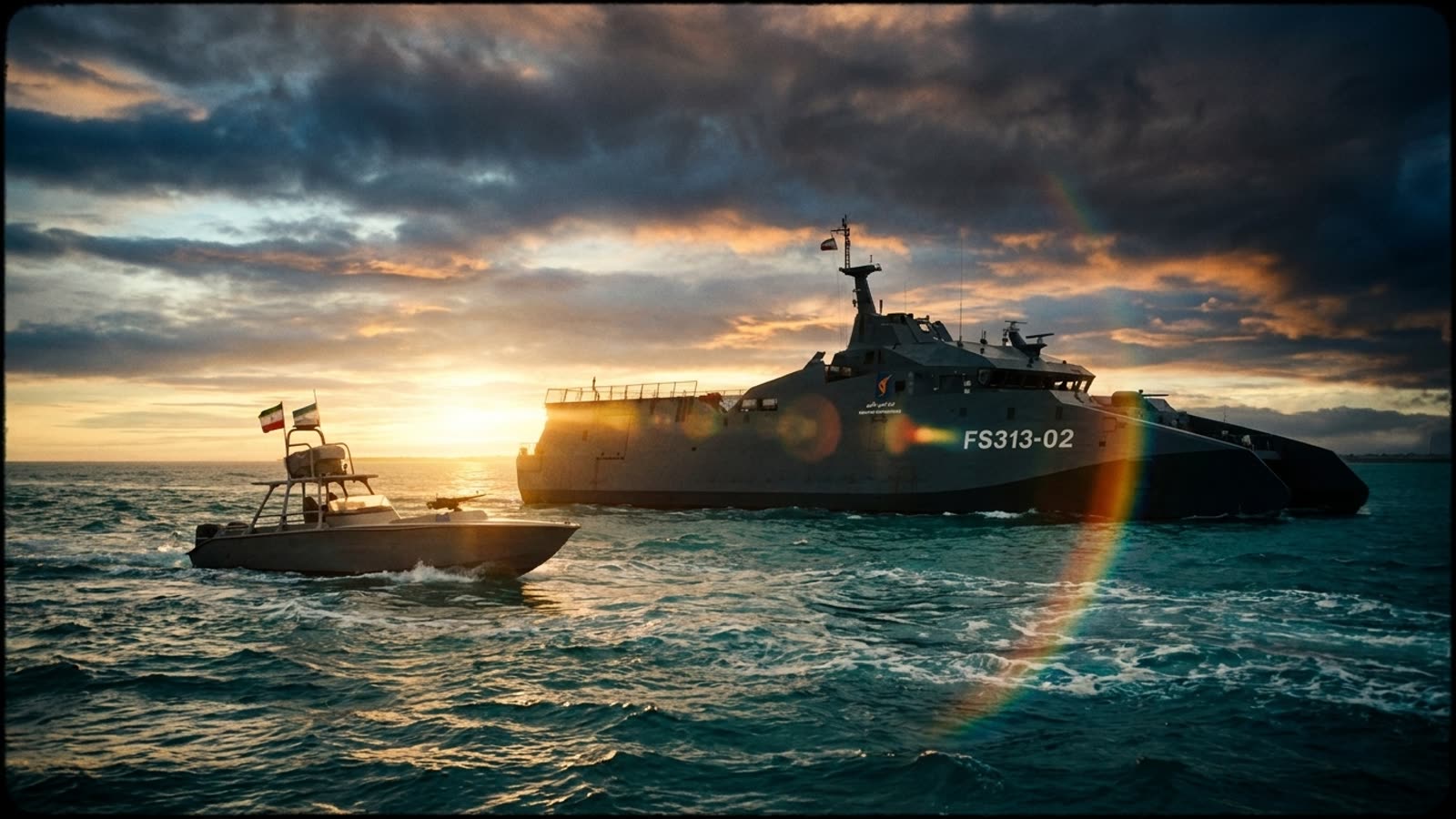
The familiar rhythm of Middle Eastern escalation has returned, and this time the tempo is quickening. Iran's threat to retaliate against American strikes on its launch sites and naval vessels marks a dangerous inflection point in a conflict that has lurched from shadow war to something approaching direct confrontation.
The strikes themselves were significant: targeting not proxy infrastructure in Iraq or Syria, but Iranian military assets directly. Washington's calculation appears to be that hitting Iran where it hurts—its offensive capabilities—will restore deterrence. Tehran's calculation is that absorbing such blows without response invites more of them.
The deterrence paradox
Both sides are trapped in a logic that makes escalation rational and restraint appear weak. The Trump administration has framed the strikes as defensive, a response to Iranian-backed attacks on American personnel and assets across the region. Iran frames its entire posture as defensive, a response to decades of American pressure, sanctions, and the 2020 assassination of Qasem Soleimani.
The problem with deterrence through punishment is that it requires the other side to believe you will stop once they comply. Neither Washington nor Tehran has given the other reason to believe this. American policy has oscillated between maximum pressure and tentative engagement for two decades. Iranian policy has consistently expanded its regional influence regardless of which approach Washington adopts.
The regional calculus
Israel watches with a mixture of satisfaction and anxiety. Satisfaction because American strikes on Iran serve Israeli security interests. Anxiety because a wider war could draw in Hezbollah, still formidable despite years of attrition, and because American attention is a finite resource. The Gulf states, having spent years hedging between Washington and Beijing, now face the scenario they most feared: being caught between great power competition and regional conflagration simultaneously.
China and Russia observe from the sidelines, content to see American resources and attention consumed by yet another Middle Eastern entanglement. Neither will intervene directly, but both will ensure Iran has enough support to sustain resistance without enough to win outright.
The limits of escalation dominance
The United States possesses overwhelming conventional military superiority over Iran. This is not in question. What is in question is whether that superiority translates into political outcomes Washington actually wants. Twenty-three years after the invasion of Iraq, the lesson should be clear: America can destroy what it targets but struggles to build what it desires.
Iran cannot win a conventional war with the United States. It can, however, impose costs—on American personnel, on regional allies, on global energy markets, on the attention span of an American public that has shown little appetite for another Middle Eastern war. The asymmetry is not military but political.
Our take
This is the war neither side wanted but both sides built. Years of mutual provocation, abandoned diplomacy, and regional proxy conflicts have created conditions where direct confrontation was always one miscalculation away. The question now is not whether escalation will occur—it already has—but whether anyone in Washington or Tehran possesses both the authority and the wisdom to find an off-ramp before the cycle becomes self-sustaining. History suggests pessimism is warranted.