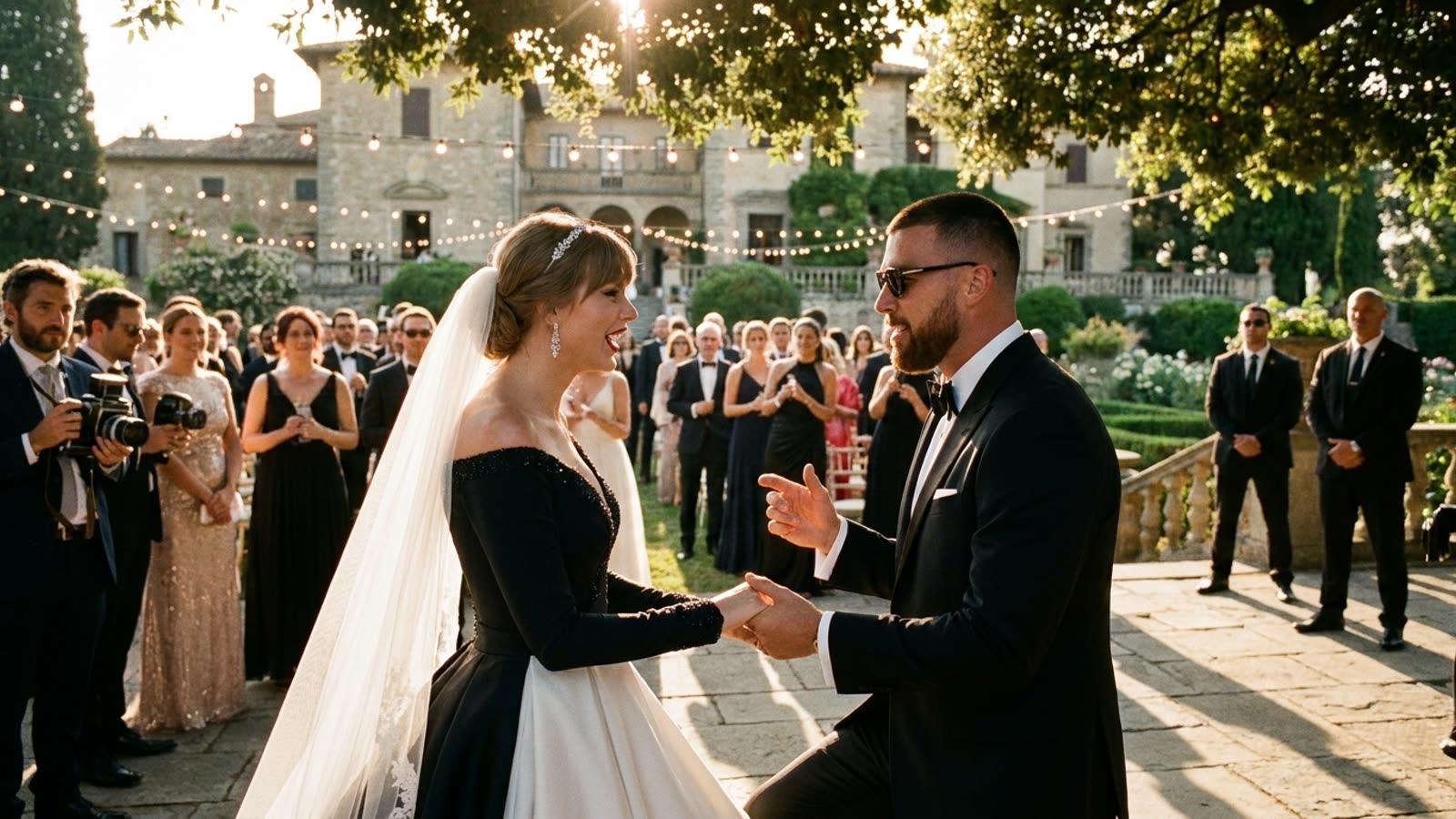
The most documented woman in America got married this weekend, and there are no photos.
Taylor Swift and Travis Kelce exchanged vows at her Watch Hill estate in Rhode Island on Saturday, capping a relationship that has been dissected, memed, and monetized across every conceivable platform since the singer first appeared at Arrowhead Stadium in September 2023. Yet the ceremony itself—attended by a reported 200 guests including A-list names from both entertainment and professional sports—operated under a strict no-phone policy. Guests surrendered devices upon arrival. No exceptions, no workarounds, no "just one quick story."
The choice is both entirely predictable and quietly radical.
The new celebrity playbook
Phone bans at high-profile weddings are not new. Beyoncé and Jay-Z reportedly enforced similar rules in 2008. George and Amal Clooney did the same in Venice a decade ago. But Swift's version carries particular weight because her entire commercial apparatus depends on fan intimacy—the Easter eggs, the surprise announcements, the parasocial relationship carefully cultivated across eras. To draw a hard boundary at her own wedding is to acknowledge that even the most successfully monetized personal brand requires some territory that remains unmonetized.
The logistics alone suggest serious intent. Security personnel reportedly collected phones in numbered pouches, the same Yondr system increasingly common at comedy shows and school classrooms. Guests received them back only after the reception concluded. In an age when "pics or it didn't happen" has calcified into social norm, the Kelce-Swift wedding functionally didn't happen—at least not for the 300 million people who follow the couple's every move.
What the silence says
The absence of leaked footage is itself a kind of statement. Swift commands perhaps the most devoted fan base in contemporary pop culture, one that routinely decodes her nail polish colors for hidden album announcements. That this same audience will never see her wedding dress, her vows, or her father's toast represents a deliberate withholding—a reminder that celebrity, even at its most omnipresent, can still choose what it shares.
There is also a practical calculation. Swift's previous relationships have been conducted under relentless scrutiny, with breakups spawning entire album cycles and tabloid industries. By keeping the wedding itself offline, she and Kelce deny the content ecosystem its raw material. No screenshots to dissect, no lip-reading analyses, no frame-by-frame examinations of guest reactions. The marriage begins, for once, without the internet's immediate commentary track.
Our take
The phone ban is not really about phones. It is about the exhausting, ambient pressure to turn every meaningful moment into content—a pressure that celebrities both suffer from and profit by. Swift has built an empire on controlled revelation, on making fans feel like insiders while never actually ceding control of the narrative. Her wedding simply extends that logic to its natural conclusion: the most intimate moment stays intimate. The rest of us, scrolling through secondhand reports and paparazzi shots of arriving guests, are reminded that some experiences still exist beyond the feed. It is a small, expensive luxury. But in 2026, it might be the only luxury that matters.