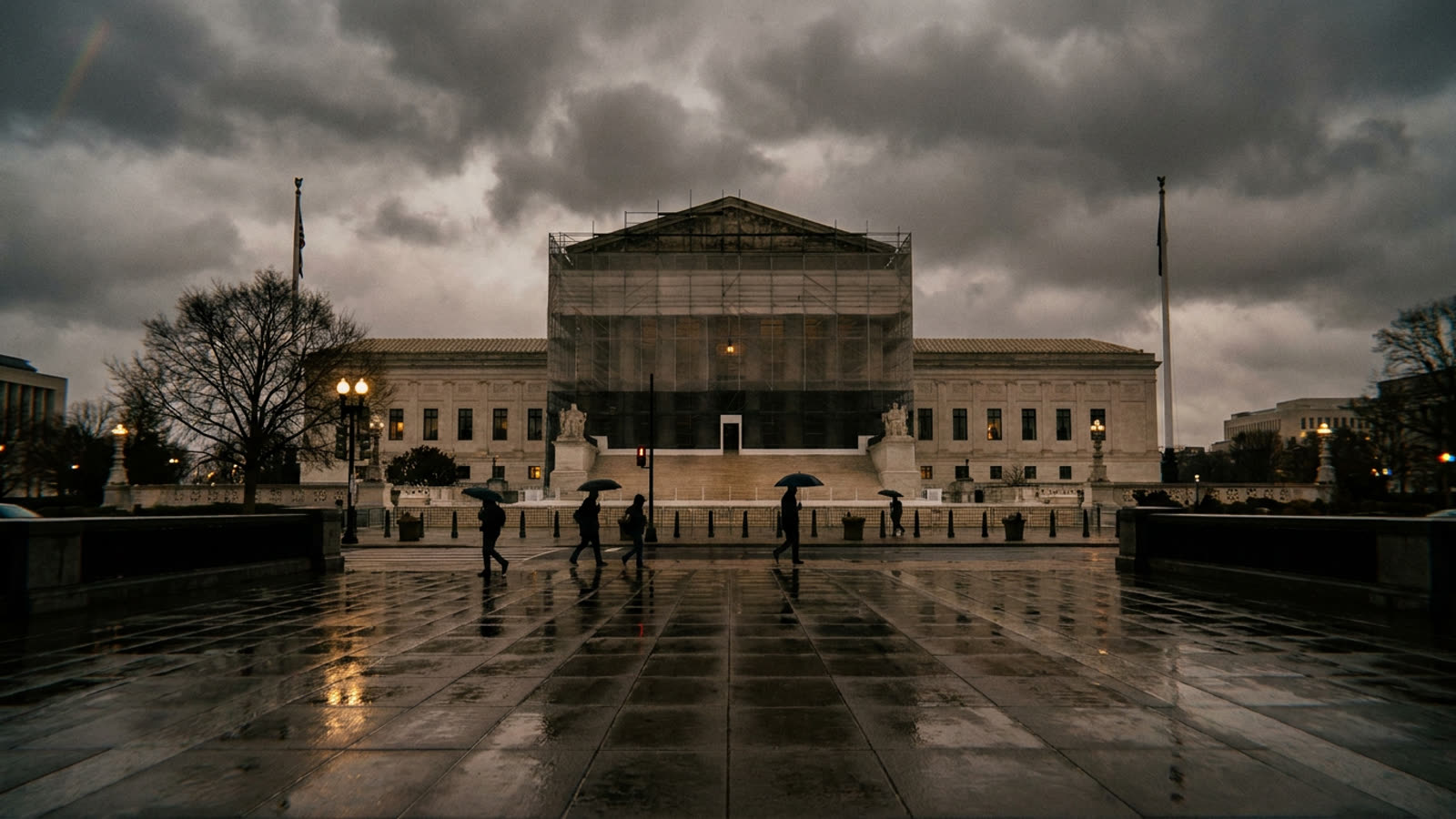
The Supreme Court's ruling permitting states to bar transgender athletes from competing on teams matching their gender identity is less a legal earthquake than a constitutional shrug—and that shrug will echo through locker rooms, courthouses, and statehouses for a generation.
The decision does not mandate exclusion; it permits it. That distinction matters enormously. States like West Virginia, Tennessee, and Florida, which had already enacted bans, now operate with the Court's implicit blessing. States like California and New York, which have moved in the opposite direction, remain free to include trans athletes. The result is a nation where a teenage girl's eligibility to play volleyball depends on which side of an arbitrary line her family happens to live.
The legal architecture of ambiguity
The Court's reasoning rests on familiar federalism principles: absent a clear congressional mandate, states retain authority over their public schools and athletic associations. The majority declined to find that the Equal Protection Clause requires states to permit trans athletes to compete consistent with their gender identity, nor did it rule that such inclusion violates the rights of cisgender competitors. It simply stepped back.
This studied neutrality will satisfy no one. Advocates for trans youth see the ruling as a green light for discrimination dressed in procedural modesty. Proponents of the bans wanted affirmative validation that sex-based athletic categories are constitutionally required. Instead, the Court gave both sides permission to keep fighting—in legislatures, in school board meetings, and inevitably back in federal court.
The practical fallout
Twenty-four states currently have some form of restriction on transgender athletes in school sports. That number will almost certainly grow. Republican-controlled legislatures that had hesitated, waiting to see whether courts would intervene, now have their answer: the judiciary will not save them from the political consequences of inaction, nor punish them for acting.
For transgender students, the calculus is grimmer. Participation in team sports correlates with better mental health outcomes, higher graduation rates, and stronger college prospects. A trans girl in Idaho who might have run cross-country will now face a choice: compete on the boys' team, in defiance of her identity; not compete at all; or move. That last option is available only to families with means, which means the ruling's burden falls hardest on those least able to bear it.
Our take
The Court's decision is a masterclass in judicial minimalism deployed to maximum political effect. By refusing to set a national standard, the justices have guaranteed that transgender athletes will remain a wedge issue through at least the next two election cycles. The Constitution, we are told, is silent on the matter. But silence, in this context, is not neutrality—it is permission for fifty different experiments in exclusion. The teenagers caught in the middle did not ask to be constitutional test cases. They just wanted to play.