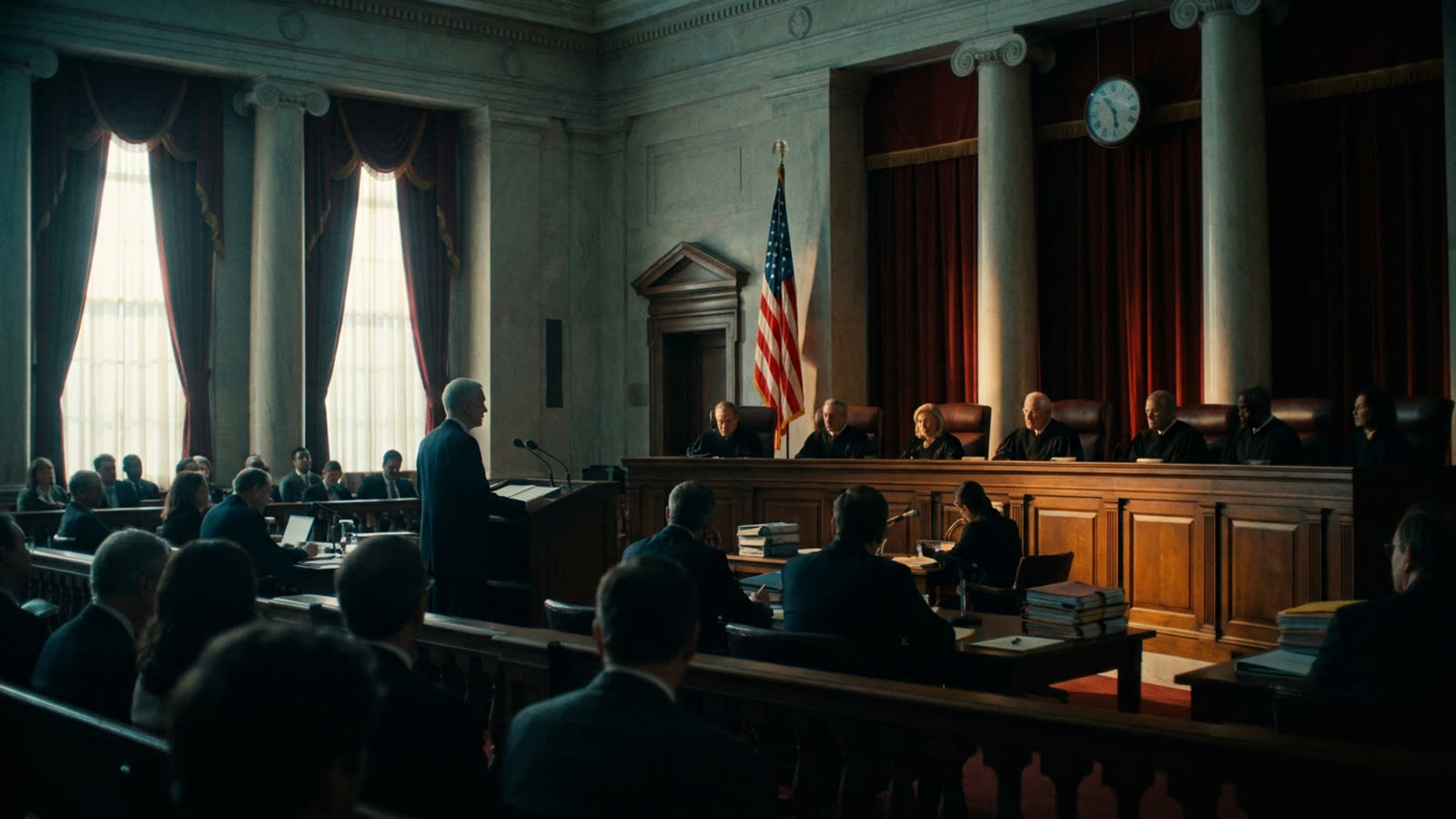
The Supreme Court's oral arguments have become unwieldy spectacles, stretching hours past their traditional limits as justices compete to monologue rather than interrogate. What was once a disciplined hour of pointed questioning has metastasized into something closer to a nine-person podcast, and the transformation tells us something uncomfortable about the Court itself.
The numbers are stark. Arguments that once concluded in sixty minutes now routinely exceed two hours, sometimes pushing toward three. Justices interrupt advocates mid-sentence only to deliver lengthy soliloquies that sound suspiciously like first drafts of concurrences. The lawyers, nominally the people presenting cases, have become bit players in a drama where the robed principals can't resist the spotlight.
The performance problem
This isn't merely an efficiency concern. The elongation of oral arguments reflects a Court increasingly aware of—and playing to—its audience. Since audio livestreaming became standard during the pandemic, justices have discovered they're not just questioning lawyers; they're broadcasting to law professors, journalists, and partisans who parse every syllable for ideological signals. The temptation to grandstand has proven irresistible.
Justice Clarence Thomas, once famously silent for years at a stretch, now participates actively. His colleagues have followed suit with a vengeance. The result is a bench where everyone has something to say, repeatedly, at length, regardless of whether it advances the legal inquiry.
Deliberation or declaration?
The traditional theory of oral argument held that it served the justices—a final opportunity to test their tentative views against skilled advocates before retreating to chambers for genuine deliberation. But when arguments become vehicles for justices to signal their positions, telegraph their votes, and audition sound bites, the deliberative function atrophies. Why wrestle privately with difficult questions when you've already committed publicly to an answer?
This matters especially now, with the Court facing cases that will define executive power, administrative authority, and constitutional boundaries for a generation. The institution's legitimacy depends partly on the perception that its members approach cases with open minds. Marathon oral arguments that showcase closed ones undermine that perception.
Our take
The justices might benefit from remembering that brevity is a judicial virtue, not a limitation. The Court's authority derives from the quality of its reasoning, not the quantity of its words. When nine brilliant lawyers can't resist the urge to hear themselves think aloud for three hours, they're not demonstrating intellectual rigor—they're revealing an institution that has confused performance with jurisprudence. Someone should tell them: the best judges, like the best writers, know when to stop.