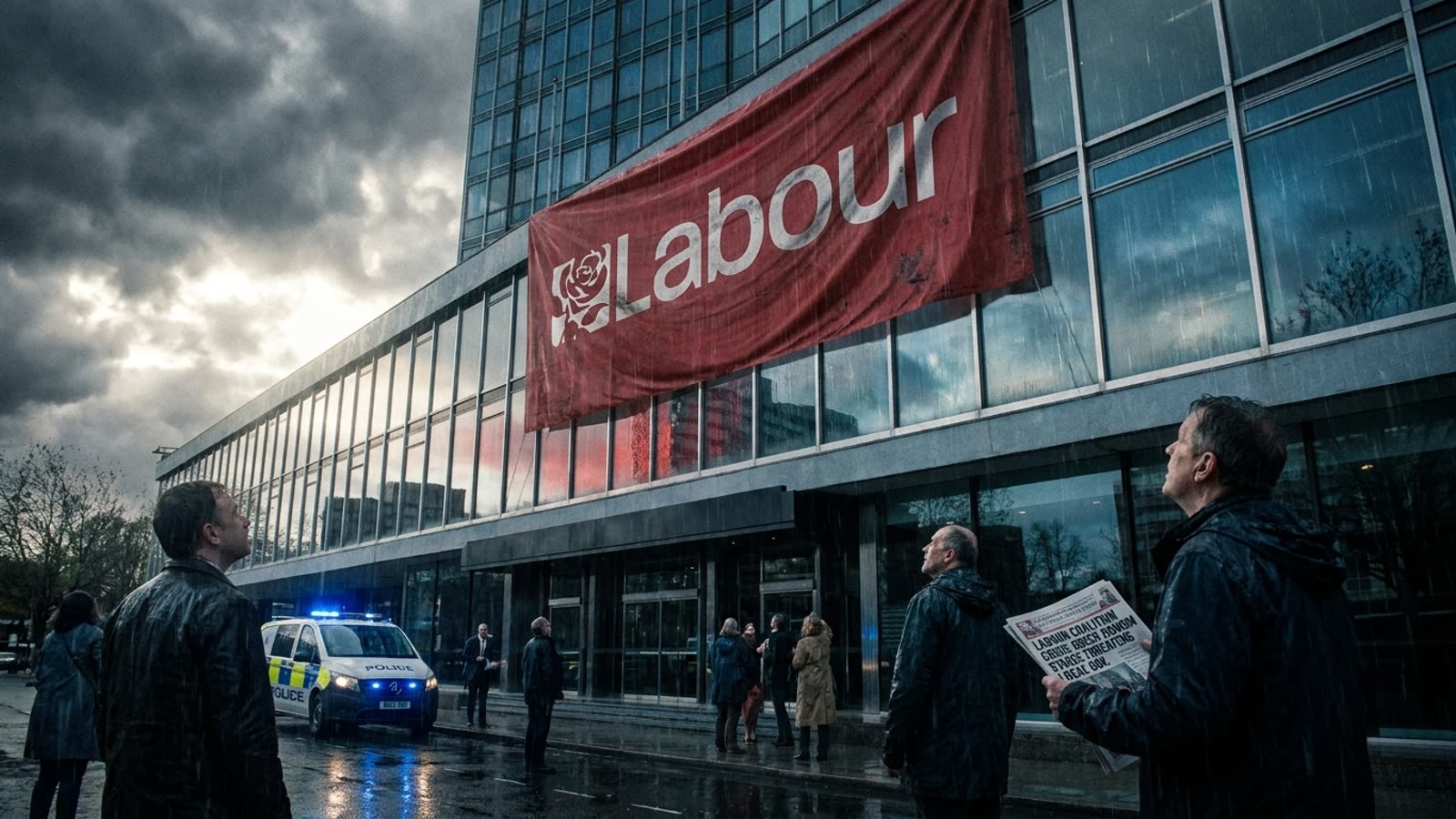
Labour has told its councillors in England and Wales to review—and potentially end—power-sharing agreements with the Green Party after the Greens adopted a resolution last month describing Zionism as a "racist, colonial ideology." The directive, confirmed by Labour headquarters on October 15, affects at least a dozen councils where the two parties govern together, including several in London and the West Midlands. Labour says any Green councillor who does not publicly disown the resolution will be deemed incompatible with coalition.
The move is the latest escalation in a dispute that has simmered since the Green Party of England and Wales passed the motion at its September conference. Labour's national executive committee had initially stayed silent, but pressure from Jewish community groups and some backbench MPs forced the party's hand. Now local Labour leaders face an impossible choice: break up functioning administrations over a symbolic disagreement, or defy party orders and risk suspension themselves.
The practical cost of purity
Most of the affected councils are hung, meaning no party commands a majority. Labour-Green coalitions were formed precisely because neither side could govern alone and neither wanted to partner with the Conservatives or Liberal Democrats. Blowing up these arrangements mid-term would likely trigger fresh elections or force minority administrations that struggle to pass budgets. In Lewisham, where Labour and the Greens share power, the council is already grappling with a £40 million shortfall; a political crisis would only deepen the fiscal one.
Labour's directive also ignores the reality that most Green councillors are pragmatists focused on bin collection and bus routes, not Middle East policy. The Zionism resolution was passed by party conference delegates—a self-selecting group of activists—and does not bind elected officials. Forcing councillors to issue loyalty oaths over a motion they may have opposed, or never even voted on, sets a precedent that could haunt Labour the next time its own conference passes something embarrassing.
Why now, why this
The timing is conspicuous. Labour is polling at 38 percent nationally, down from the 43 percent it won in the 2024 general election, and the party is desperate to shore up support among Jewish voters ahead of next year's local elections. But the heavy-handed approach risks alienating younger, left-leaning voters who see the Greens as natural allies and view Labour's Israel-Palestine positioning as too cautious. It also hands the Greens a ready-made narrative: that Labour cares more about internal discipline than about keeping the lights on in town halls.
The policy itself is vague enough to cause chaos. Labour has not defined what "disowning" the resolution means—must Green councillors issue a statement, or is private assurance enough? What happens if a Green councillor says they disagree with the resolution but refuse to make a public declaration on principle? The lack of clarity suggests this was a reactive move designed to appease one constituency without thinking through the consequences for another.
Our take
Labour is picking a fight it does not need and cannot win cleanly. If Green councillors comply and disavow their own party's conference motion, Labour looks like a bully. If they refuse and coalitions collapse, Labour looks incompetent for prioritizing symbolism over service delivery. The smarter play would have been to issue a firm but general statement condemning the Green resolution, then let local leaders make their own judgment calls about whether their Green partners are actually causing problems. Instead, Labour has handed the Greens a wedge issue and given its own councillors an administrative headache. In a year when voters are already sour on both major parties, picking internal squabbles over competence is a luxury Labour cannot afford.