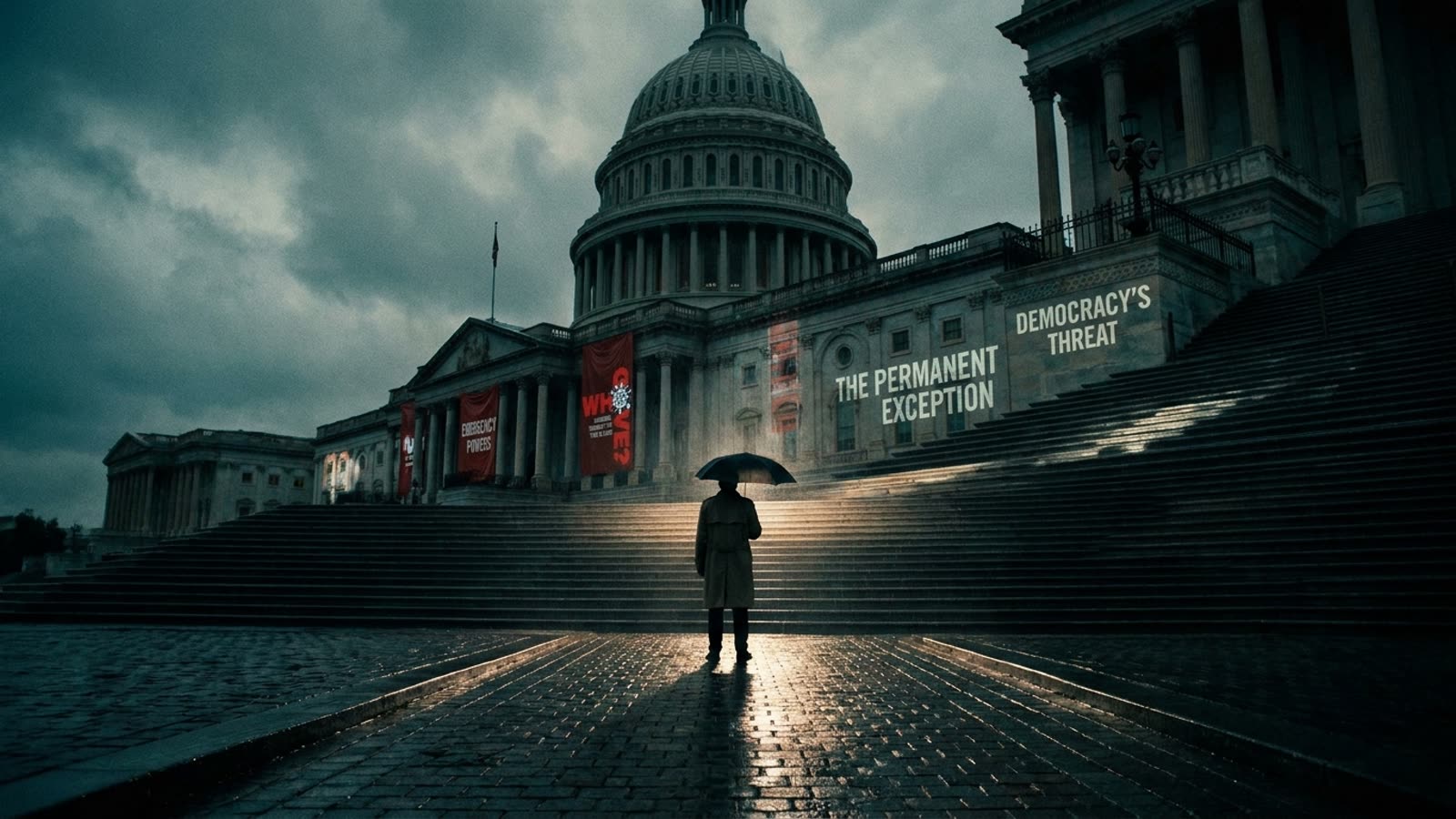
Every modern constitution contains a trapdoor. Buried in the fine print, usually somewhere between the articles on judicial review and amendment procedures, sits a clause permitting the suspension of normal governance during emergencies. The logic seems unimpeachable: democracies must be able to act decisively when survival is at stake. The problem is that survival is a remarkably elastic concept, and the trapdoor, once opened, proves surprisingly difficult to close.
The architecture of emergency powers varies considerably across democracies, but the basic grammar is consistent. A triggering event—war, natural disaster, public health crisis, civil unrest—activates extraordinary executive authority. Legislatures may be bypassed. Courts may defer. Civil liberties may be curtailed. The state, temporarily, becomes something other than itself. This transformation is meant to be brief, a holding pattern until normalcy returns. Yet normalcy, it turns out, is not a self-executing concept.
The ratchet effect
Political scientists have documented what they call the "ratchet effect" of emergency governance: powers expanded during crises rarely contract fully when the crisis passes. The United States still operates under dozens of national emergencies, some declared decades ago. France's state of emergency following terrorist attacks in 2015 was eventually lifted, but much of its substance was quietly absorbed into ordinary law. Hungary's pandemic-era rule-by-decree provisions sparked international condemnation, yet similar mechanisms exist, dormant but available, in constitutions across Europe.
The pattern is not conspiracy but incentive. Executives who acquire emergency powers have little reason to relinquish them voluntarily. Legislatures, having delegated authority during a crisis, often lack the political will to reclaim it. Courts, traditionally deferential to the executive on security matters, tend to validate emergency measures rather than scrutinize their duration. The emergency becomes self-perpetuating not through malice but through institutional inertia.
The definitional problem
What constitutes an emergency? The question sounds academic until you realize that its answer determines the boundary between constitutional government and something else. Traditional emergencies—invasion, insurrection, pandemic—at least have the virtue of recognizable endpoints. But modern threats have grown more diffuse. Terrorism, climate change, cyberattacks, and economic instability are chronic conditions rather than discrete events. They do not end; they merely intensify or recede.
This ambiguity creates opportunities for abuse. Leaders can invoke emergency powers against threats that are real but permanent, effectively normalizing the exception. They can define crises broadly enough to encompass political opposition. They can extend emergencies indefinitely by pointing to ongoing risks that, by definition, never fully disappear. The constitutional trapdoor, designed for extraordinary moments, becomes an ordinary feature of governance.
Our take
The uncomfortable truth is that emergency powers represent a design flaw that democracies have chosen to live with rather than fix. Sunset clauses help but are routinely extended. Legislative oversight exists but is often perfunctory. Judicial review applies but with excessive deference. The real safeguard has always been political culture—the shared expectation that emergencies end and normal governance resumes. That expectation is weakening. In an era of permanent crisis, the exception is becoming the rule, and constitutions are proving inadequate to the task of preventing their own suspension.