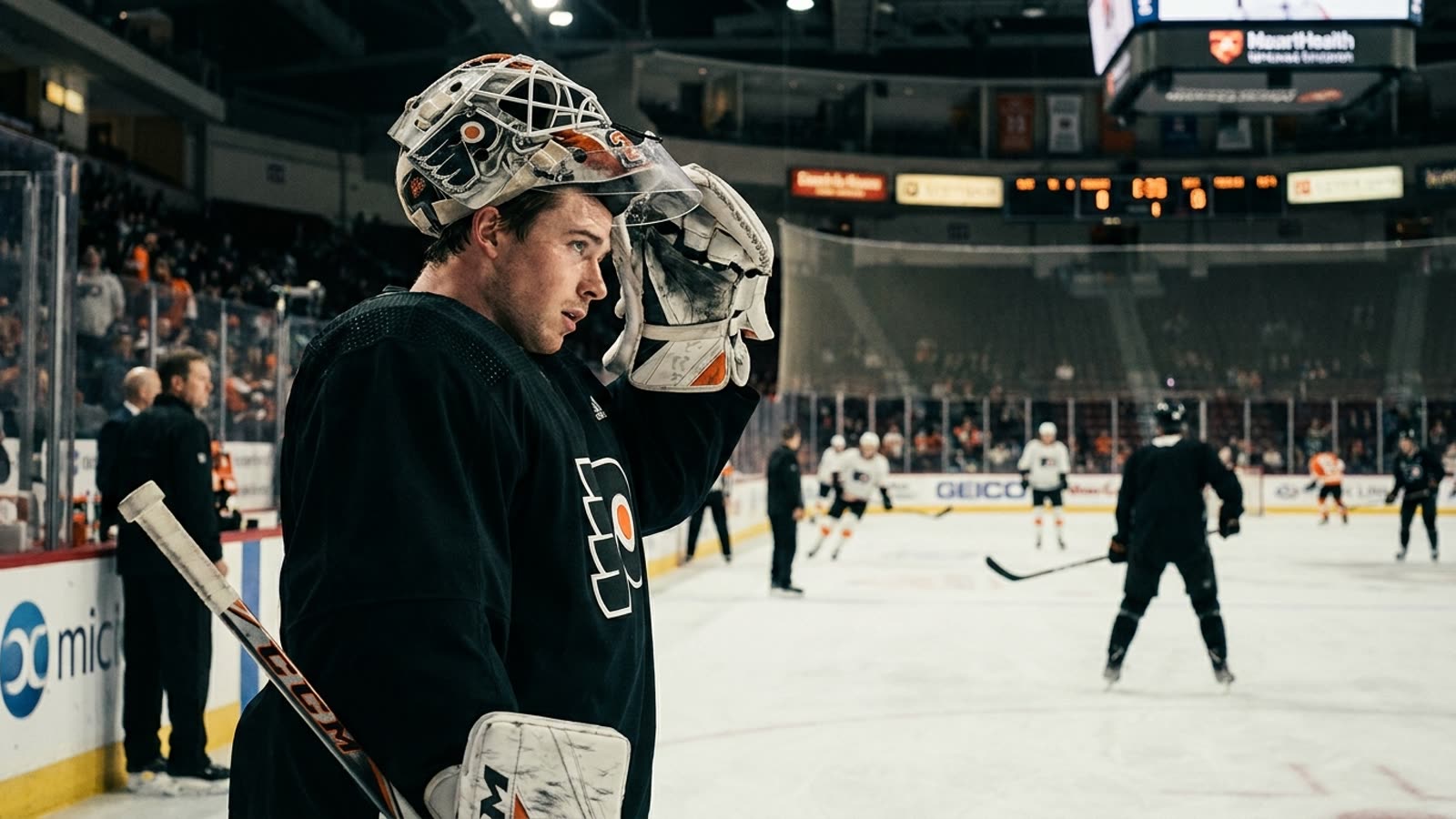
The Stanley Cup Final is, at its core, a referendum on the position hockey analytics tried to kill. For years, the advanced-stats community insisted goaltenders were voodoo—too random, too dependent on shot quality, too subject to small-sample chaos to merit serious investment. Then Carter Hart and Frederik Andersen spent the 2026 playoffs reminding everyone that when the margins compress in June, the person standing in the crease is the only margin that matters.
Hart enters the Final playing the best hockey of his career, a redemption arc so complete it borders on fiction. Andersen, meanwhile, has been the steadying force behind a team that looked vulnerable in the regular season but found another gear when elimination loomed. The player rankings heading into this series read like a goaltending manifesto: Hart and Andersen occupy the top two spots, with Mitch Marner—the lone skater capable of single-handedly altering a game's geometry—slotting in third.
The goaltender gap
What separates this Final from recent editions is the quality disparity at the position. Both Hart and Andersen are posting save percentages above .930 in the playoffs, numbers that would be elite in the regular season and are borderline historic in the pressure cooker of elimination hockey. The teams behind them are good, occasionally very good, but neither roster screams dynasty. The goaltenders do.
Hart's journey is the more compelling narrative. Written off after a disastrous stretch that saw him demoted and doubted, he rebuilt his mechanics and, more importantly, his confidence. His positioning is now textbook, his rebound control immaculate. Andersen's story is quieter but no less impressive: a veteran who has absorbed every critique about playoff performance and answered with the most consistent postseason of his career.
Marner as the x-factor
If the series is decided by goaltending, it will be close. If it is decided by a skater, that skater will almost certainly be Mitch Marner. His playoff numbers have silenced the annual chorus of doubt that accompanies his postseason performances. He is creating at a rate that puts him among the best wingers in Final history, and his defensive awareness—long underrated—has been crucial in tight games.
Marner's ability to find seams that do not appear to exist gives his team an asymmetric advantage. Neither goaltender can prepare for passes that defy conventional passing lanes. The question is whether Marner can sustain this level against a defense specifically designed to neutralize him.
Our take
This Final will be remembered for its goaltending, regardless of outcome. Hart and Andersen have elevated a good series into a potentially great one, and their duel represents everything the position's skeptics got wrong. Goaltenders are not voodoo. They are the game.