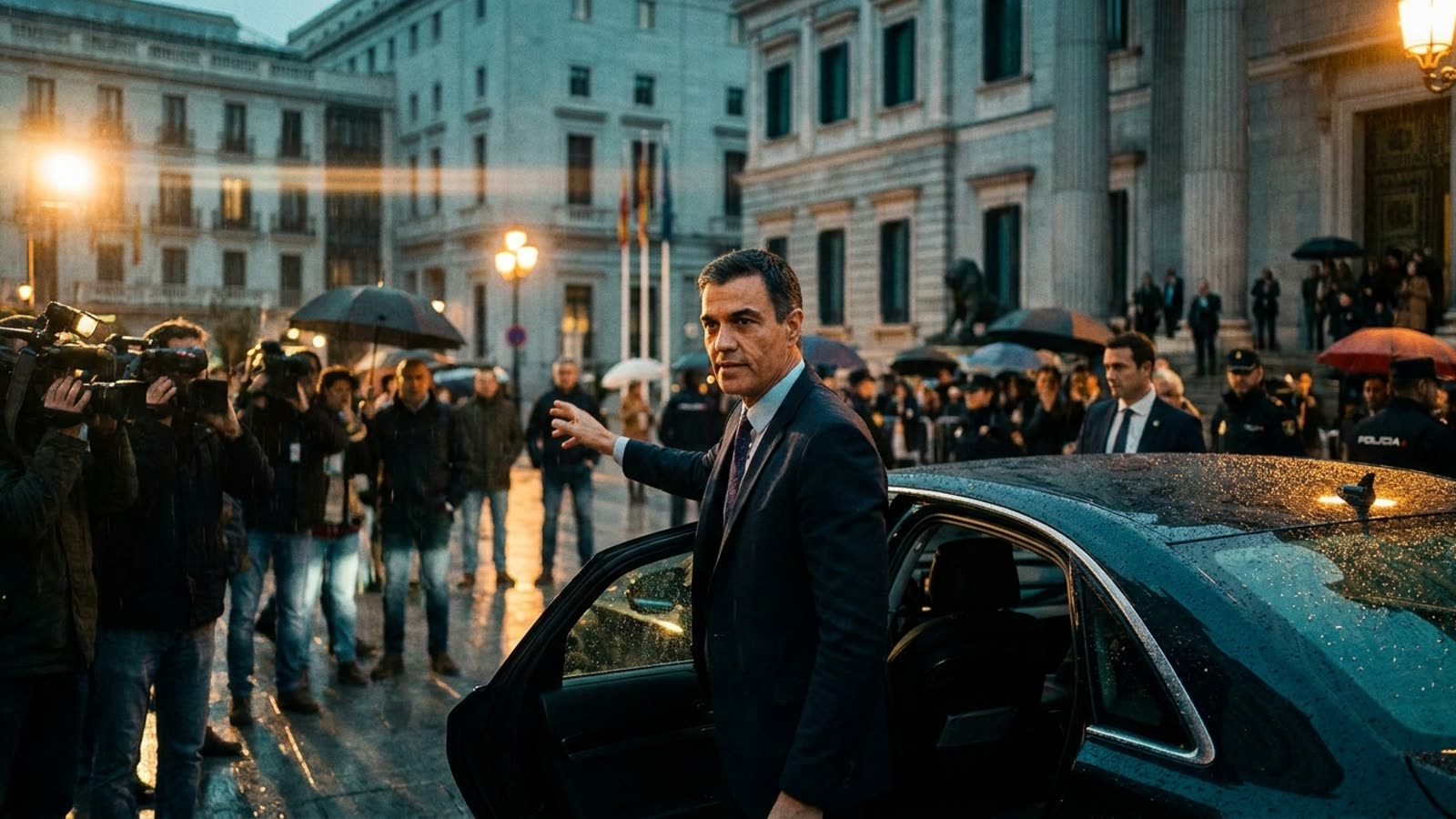
The spectacle of a sitting European prime minister addressing parliament to defend himself against corruption allegations is never routine, but Pedro Sánchez has made a career of surviving moments that would end lesser politicians. His appearance before the Spanish legislature this week comes as investigators probe financial dealings connected to his inner circle, allegations the conservative Popular Party has weaponized with characteristic enthusiasm.
Sánchez's predicament is both personal and structural. The allegations—which center on contracts and influence-peddling claims that have swirled around figures close to his government—have given the opposition ammunition it has lacked since his improbable return to power. More troubling for Sánchez is the fracturing of his already precarious parliamentary coalition, where regional parties and the far-left Sumar alliance have grown restive.
The arithmetic of survival
Spain's fragmented parliament means Sánchez governs without a majority, relying on a patchwork of Catalan independentists, Basque nationalists, and smaller left-wing formations. This arrangement has always been transactional rather than ideological, and corruption allegations give coalition partners cover to extract concessions or distance themselves entirely. The Catalan parties, in particular, have shown little sentimentality about abandoning Madrid allies when politically convenient.
The Popular Party, led by Alberto Núñez Feijóo, senses vulnerability. Having failed to form a government despite winning the most seats in the 2023 election, Feijóo has spent months positioning himself as the responsible alternative. The corruption allegations allow him to reframe the narrative from his own coalition failures to Sánchez's ethical lapses.
Europe watches nervously
Sánchez's potential downfall carries implications beyond Spain's borders. He has been among the most vocal European leaders supporting Ukraine, pushing for stronger EU responses to Russian aggression, and advocating progressive positions on migration and climate. His departure would shift the European Council's center of gravity rightward at a moment when the continent faces mounting pressures from both Moscow and Washington.
The timing is particularly awkward given Spain's role in upcoming EU negotiations on defense spending and trade policy. A weakened or caretaker Spanish government would reduce Madrid's influence precisely when major decisions loom.
Our take
Sánchez has defied political gravity before—his 2018 no-confidence motion against Mariano Rajoy, his resurrection after losing the PSOE leadership, his coalition-building after inconclusive elections. But corruption allegations carry a different weight than policy disputes or parliamentary arithmetic. They corrode the moral authority that center-left leaders depend upon more than their conservative counterparts. Sánchez may survive this parliamentary session, but the damage to his political brand will compound with every new headline. The question is no longer whether he can govern effectively, but whether his continued presence helps or harms the broader Spanish left.