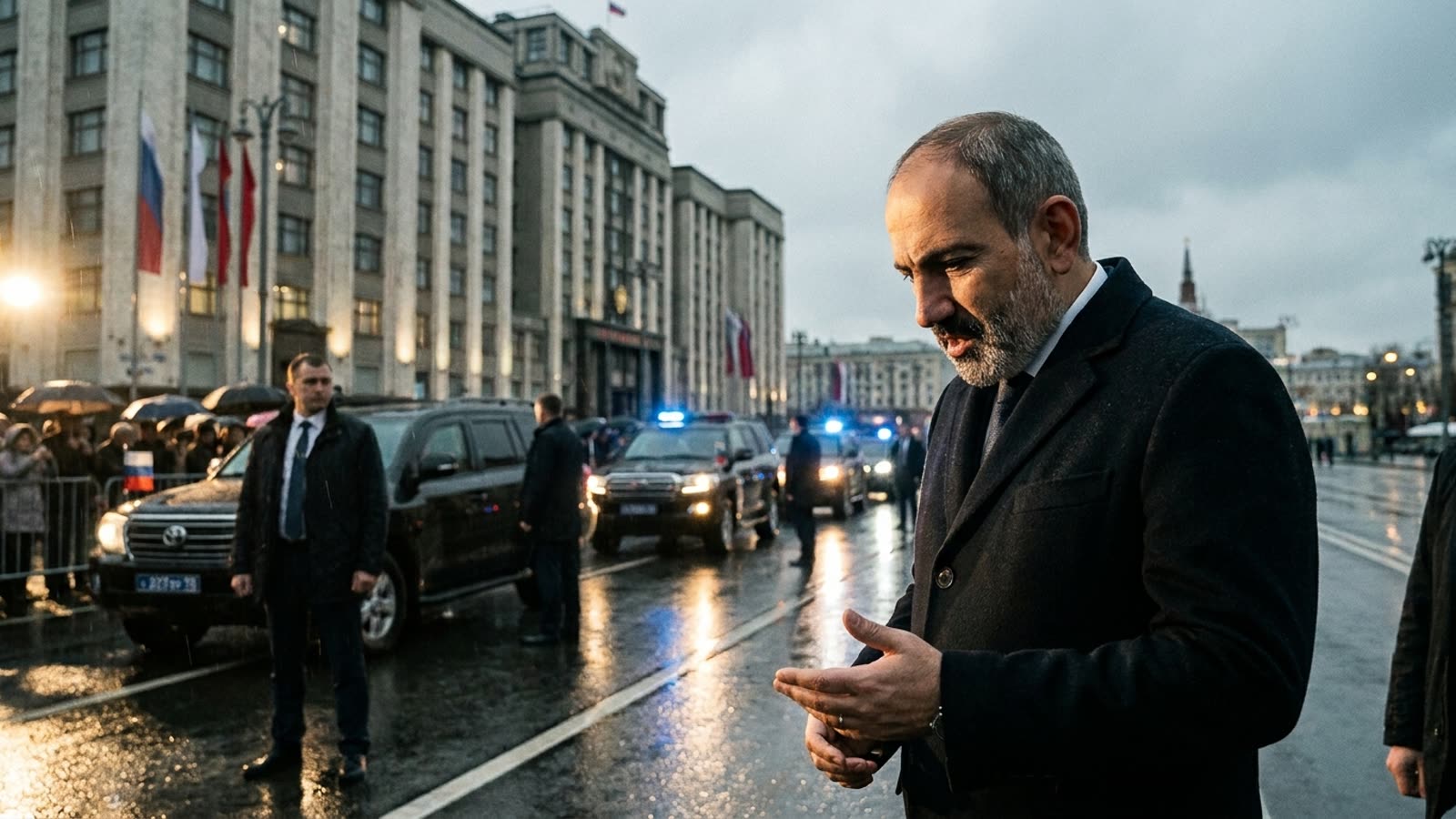
The photograph tells the story before any communiqué can spin it: Vladimir Putin seated at the head of an absurdly long table, Nikol Pashinyan at the far end, the physical distance a deliberate visual grammar of displeasure. The Armenian Prime Minister's visit to Moscow this week was framed as routine diplomacy, but nothing between these two leaders has been routine since Yerevan began its slow-motion pivot toward Brussels and Washington.
The meeting comes at a moment of acute vulnerability for Pashinyan. Armenia's military remains dependent on Russian equipment and training. Its economy runs through Russian-controlled corridors. And Azerbaijan, emboldened by its 2020 victory in Nagorno-Karabakh and subsequent territorial consolidation, continues to press maximalist demands on border demarcation. Pashinyan needs security guarantees that only a great power can provide—and he has been shopping for alternatives to the one he inherited.
The Western courtship
Armenia's flirtation with the European Union and the United States has accelerated dramatically over the past eighteen months. Yerevan signed a Comprehensive and Enhanced Partnership Agreement with the EU, sent humanitarian aid to Ukraine (a symbolic thumb in Moscow's eye), and hosted joint military exercises with American forces. Pashinyan has publicly questioned the value of the Collective Security Treaty Organization, the Russian-led military alliance that conspicuously failed to intervene when Azerbaijan seized Karabakh.
The Kremlin has watched this courtship with the patience of a creditor who knows the debtor has nowhere else to go. Russia maintains a military base in Gyumri, controls Armenia's energy imports, and provides the only reliable land corridor to Iran—itself now entangled in delicate ceasefire negotiations with Washington. Putin's leverage is structural, not sentimental.
The message in the meeting
Moscow's official readout emphasized "traditional friendly relations" and "mutual interest in regional stability"—the diplomatic equivalent of a firm handshake that lingers just slightly too long. But the subtext was unmistakable: Russia will not be replaced as Armenia's security guarantor through incremental defection. The West can offer statements of concern and modest aid packages; Russia offers the only military umbrella that matters in a neighborhood where Turkey backs Azerbaijan and Iran remains unpredictable.
Pashinyan returned to Yerevan without any announced breakthroughs on the issues that matter most to his government: a binding security commitment against Azerbaijani aggression, relief from economic pressure, or a path to genuine strategic autonomy. He got a photo opportunity that made him look small—which may have been the point.
Our take
Pashinyan is attempting something genuinely difficult: extracting his country from a sphere of influence without possessing the military or economic weight to survive the extraction. The West's support has been rhetorically generous and materially thin. Putin knows this, and the Moscow summit was designed to remind everyone else. Armenia's tragedy is that its geography makes neutrality impossible and its history makes trust in any great power foolish. Pashinyan is not wrong to seek alternatives to Russian dependency—he is simply discovering that wanting out and getting out are very different things.