The image will linger longer than the match itself: Zeynep Sönmez, the 19-year-old Turkish qualifier who had been the tournament's feel-good story, sprawled on the red clay of Court Suzanne-Lenglen, clutching her right ankle after her foot caught the edge of a recessed advertising board during a desperate chase for a drop shot. She would retire moments later, her Roland Garros over, her ranking surge halted by infrastructure designed to sell watches.
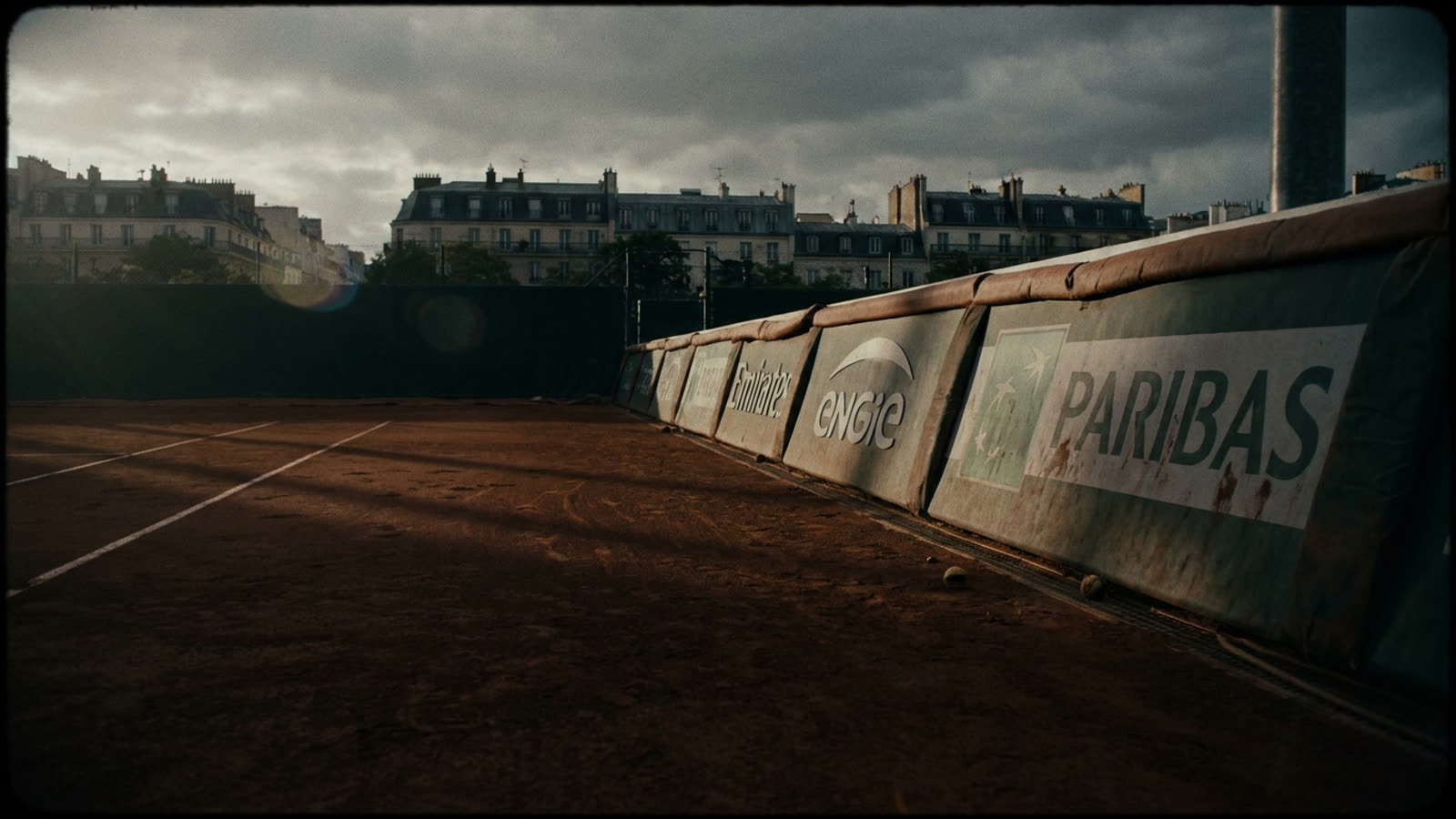
Sönmez had won three qualifying matches and a first-round upset over the 18th seed to reach the second round. She was two sets from the third round, leading 6-4, 3-2 against Beatriz Haddad Maia, when the incident occurred. The ad boards at Roland Garros sit in shallow depressions at the court's perimeter, theoretically flush with the surface but in practice creating lips and edges that become treacherous when a player's momentum carries them beyond the baseline.
The economics of court real estate
Grand Slam tennis has become a festival of branding. Every sightline is monetized: the net posts, the umpire's chair, the ball kids' shirts, and especially the courtside boards that appear in every television frame. The French Tennis Federation reportedly earns north of €30 million annually from courtside advertising at Roland Garros alone. The boards are positioned as close to the playing surface as regulations permit, because proximity to the action is what sponsors pay for.
The problem is that modern tennis is played increasingly in the margins. Players retrieve balls that previous generations would have conceded. The baseline is a suggestion, not a boundary. When Sönmez chased Haddad Maia's drop shot, she was doing what elite tennis demands—extending beyond the court's nominal limits to keep the point alive. The ad board was waiting.
A pattern, not an anomaly
This is not the first such incident, nor will it be the last. Players have complained for years about the encroachment of advertising infrastructure on their workspace. Ankles have been rolled, knees have been twisted, and careers have been jeopardized because the commercial footprint of tennis venues keeps expanding while the playing area remains fixed. The tours and federations respond with studies and committees, but the boards remain, and the money keeps flowing.
Sönmez, ranked 147th entering the tournament, had no leverage to demand changes. She is not a star whose injury would force a reckoning. She is a teenager from Ankara who was briefly living a dream until she tripped over a Rolex advertisement. The tournament will continue. The boards will stay where they are.
Our take
Tennis sells itself as a sport of elegance and tradition, but its economics are as ruthless as any American franchise league. The ad boards at Roland Garros are a small, visible symbol of a larger truth: player safety is a consideration, not a priority, when it conflicts with revenue. Sönmez will recover, probably, and return to the grind of challenger events and qualifying draws. The French Tennis Federation will pocket its sponsorship millions. And the next player to chase a ball into the margins will face the same hazard, because no one with power has decided that the risk is unacceptable. The clay at Roland Garros is beautiful. The business around it is not.