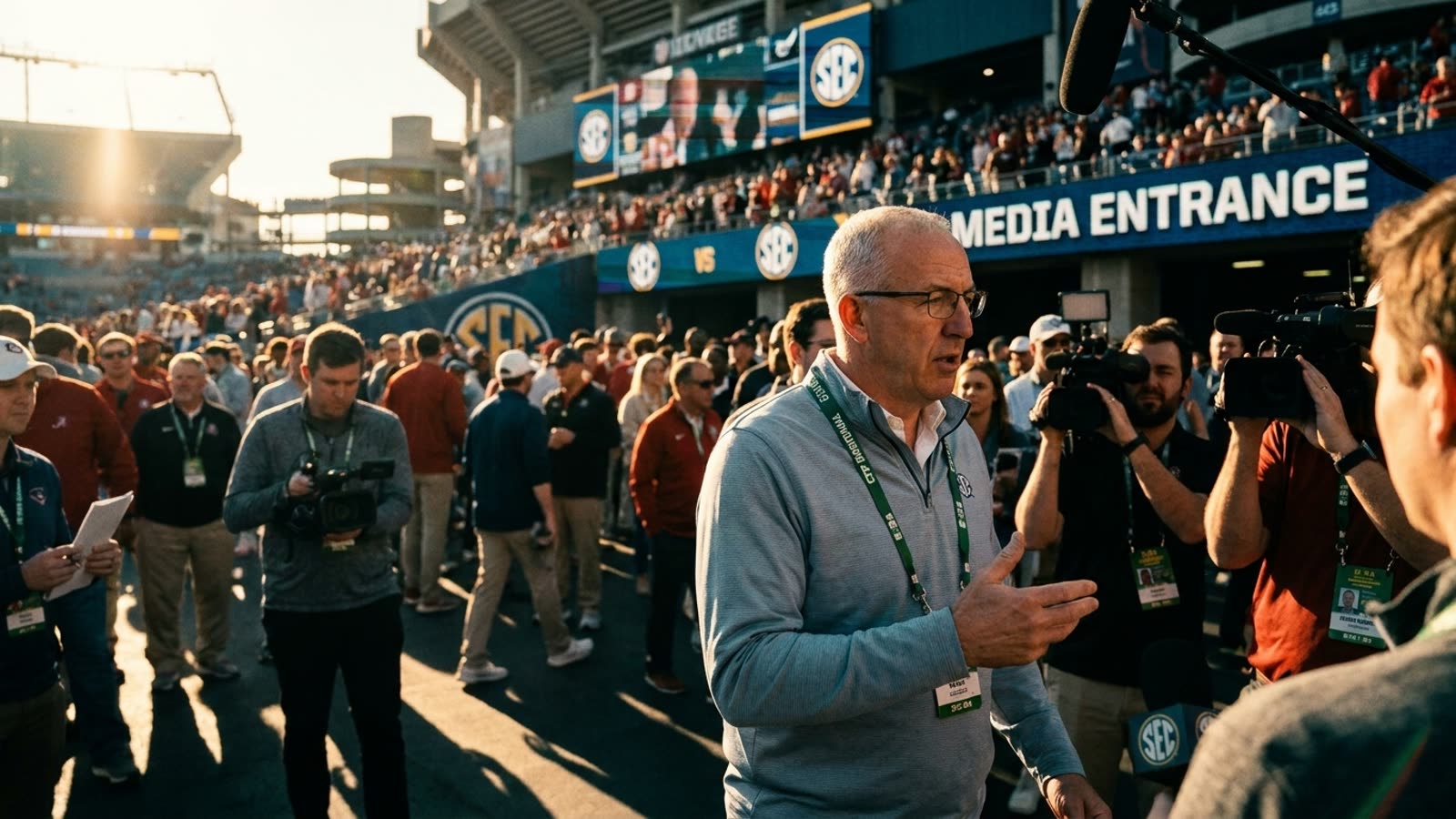
The Southeastern Conference is no longer negotiating. It is issuing ultimatums.
Greg Sankey, the SEC commissioner who has spent a decade accumulating leverage like a man who knows exactly how the game ends, hinted this week that his conference could abandon the NCAA entirely if College Football Playoff revenue distribution talks continue to stall. The statement was delivered with the diplomatic veneer of a "hypothetical," but nobody in college athletics misunderstood the message. The SEC generates more television revenue, produces more NFL draft picks, and commands more national attention than any other conference. If it walks, the NCAA's football enterprise collapses into irrelevance.
The arithmetic of dominance
The SEC's threat arrives at a moment when the conference's supremacy has never been more quantifiable. Since the four-team playoff began in 2014, SEC programs have appeared in nine of the twelve championship games. The conference's new media rights deal with ESPN and ABC, signed in 2024, guarantees north of $300 million annually — before playoff revenue is even distributed. Add Texas and Oklahoma, who formally joined in 2024, and the SEC now controls sixteen programs, several of which individually generate more revenue than entire conferences.
The current dispute centers on how the expanded twelve-team playoff's windfall — estimated at $1.3 billion annually by 2026 — gets divided. The SEC and Big Ten believe their programs deserve a larger share, reflecting the audiences they deliver. Smaller conferences, clinging to the egalitarian fiction of amateur athletics, want equal distribution. Sankey's comments suggest patience for that debate has expired.
What a breakaway would actually mean
A full SEC departure from NCAA football governance would be legally complex but practically straightforward. The NCAA's authority over football has always been more ceremonial than substantive — the College Football Playoff itself operates as a separate entity, and conferences negotiate their own media deals. An SEC-led exodus would formalize what insiders already know: the sport is governed by television contracts, not Indianapolis bureaucrats.
The immediate consequence would be a two-tier system, with the SEC and likely the Big Ten operating as a de facto super league while remaining conferences scramble for relevance. Some programs — Clemson, Florida State, perhaps Oregon — would seek admission to the new order. Others would find themselves playing a regional sport with regional audiences.
Our take
Sankey is not bluffing, and the NCAA knows it. The governing body's only remaining leverage is the threat of excluding breakaway conferences from the NCAA Tournament in basketball — a nuclear option that would harm the SEC far less than it would harm the NCAA's own revenue model. College football's future is consolidation, professionalization, and the explicit acknowledgment that a handful of programs operate professional franchises with unpaid labor. Sankey is simply saying the quiet part at a normal volume.