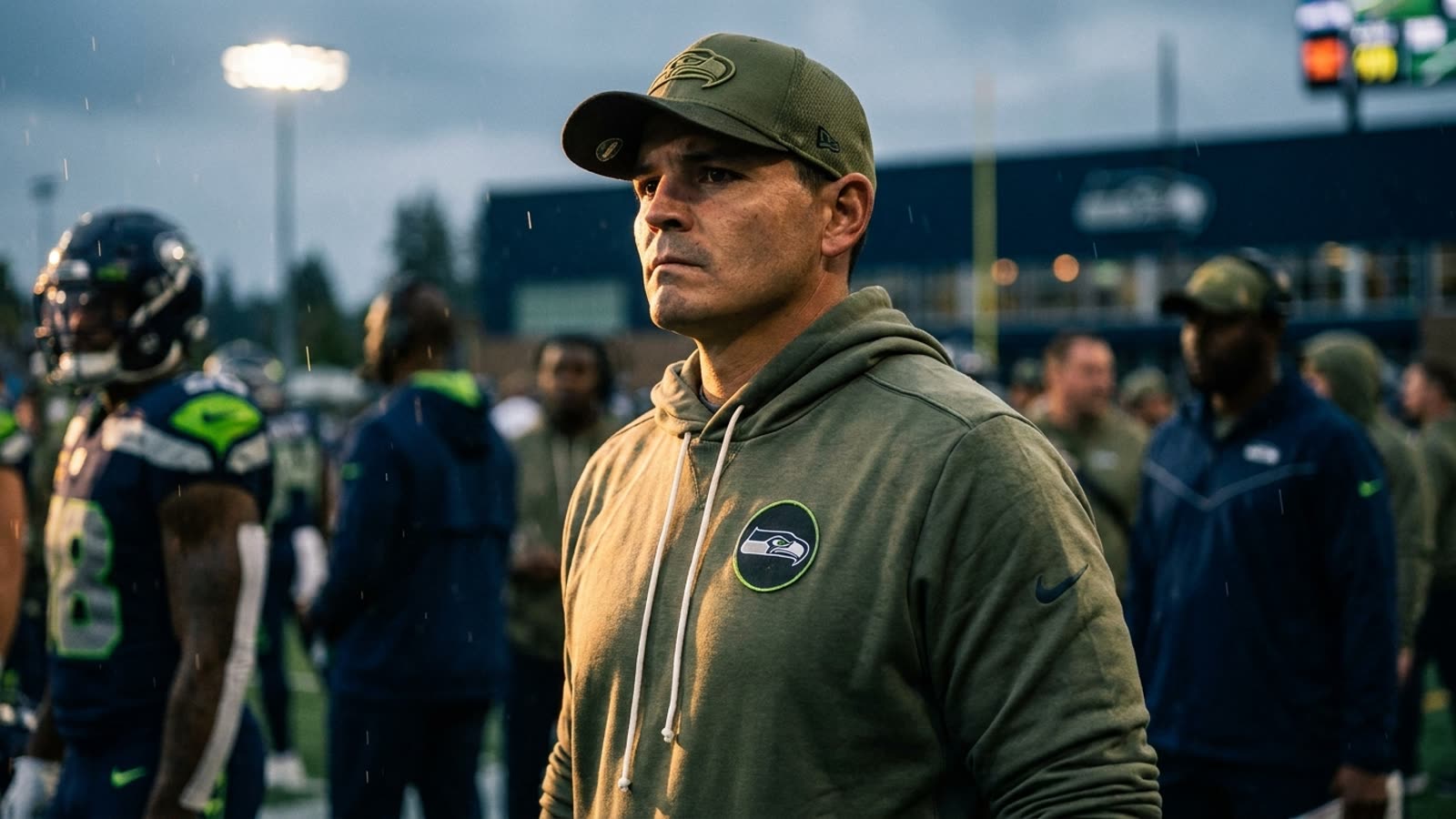
When a head coach invents a phrase to describe his team's direction, he's usually selling something. Mike Macdonald's choice—"run it forward"—is a masterclass in having it both ways, a semantic compromise between reverence for Pete Carroll's decade-plus of Seattle football and the urgent need to prove that reverence won't define the next chapter.
The Seahawks enter their second summer under Macdonald still searching for a coherent identity. Last season produced the predictable turbulence of a defensive-minded coach inheriting an offense-first roster: flashes of the aggressive, pressure-heavy schemes that made Macdonald a hot commodity in Baltimore, interrupted by the growing pains of a quarterback room that never quite found its footing.
The language of transition
Macdonald's phrasing is deliberately awkward because the situation is awkward. "Run it back" implies satisfaction with the status quo. "Move forward" suggests abandonment. "Run it forward" threads the needle—acknowledging the Carroll foundation while insisting the franchise isn't standing still. It's coach-speak elevated to minor poetry, the kind of thing that sounds profound in a press conference and dissolves under scrutiny.
But the scrutiny matters less than the signal. Macdonald is telling his locker room, his front office, and Seattle's demanding fanbase that he understands the weight of following a Super Bowl-winning coach. He's not tearing down the Legion of Boom mythology; he's trying to build something adjacent to it.
What 'forward' actually requires
The Seahawks' offseason has been measured rather than dramatic. No blockbuster trades, no franchise-altering draft moves, just the quiet work of roster construction that rarely makes headlines but determines seasons. Macdonald's defensive fingerprints are becoming more visible—younger, faster linebackers; a secondary being rebuilt around versatility rather than star power.
The question is whether Geno Smith, now firmly on the wrong side of thirty, fits the timeline Macdonald is implicitly describing. "Running it forward" suggests urgency, but Seattle's moves suggest patience. The contradiction will resolve itself one way or another by January.
Our take
Macdonald deserves credit for understanding that coaching the Seahawks means coaching against a ghost. Carroll's tenure was long enough to become the franchise's modern identity, and any successor was going to spend years in that shadow. The "run it forward" framing is clever—perhaps too clever—but it reveals a coach who grasps the political dimensions of his job. Whether he grasps the football dimensions as well remains the more important question. Seattle's window is neither fully open nor fully closed, which is the most dangerous place for a rebuilding coach to be.