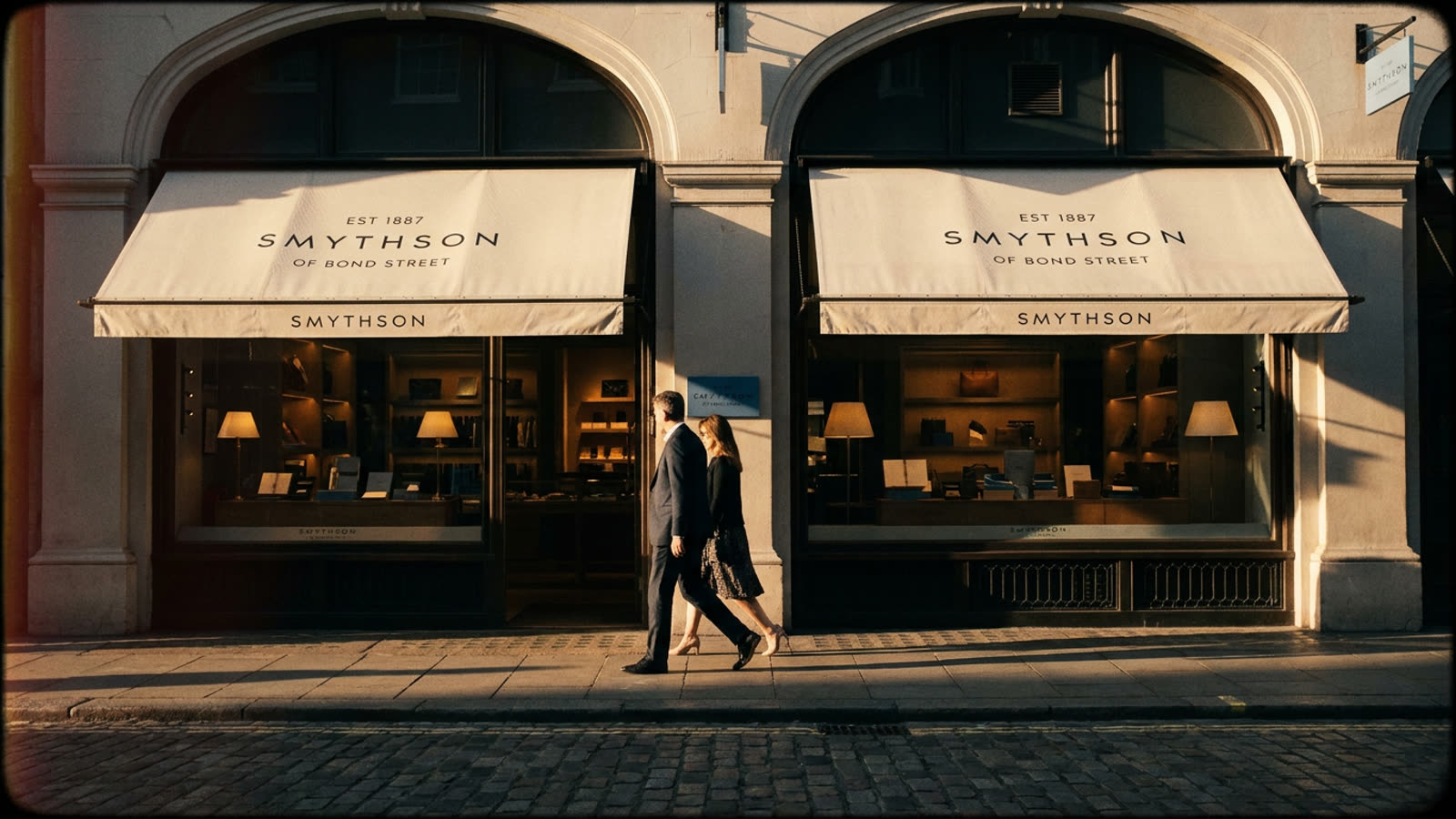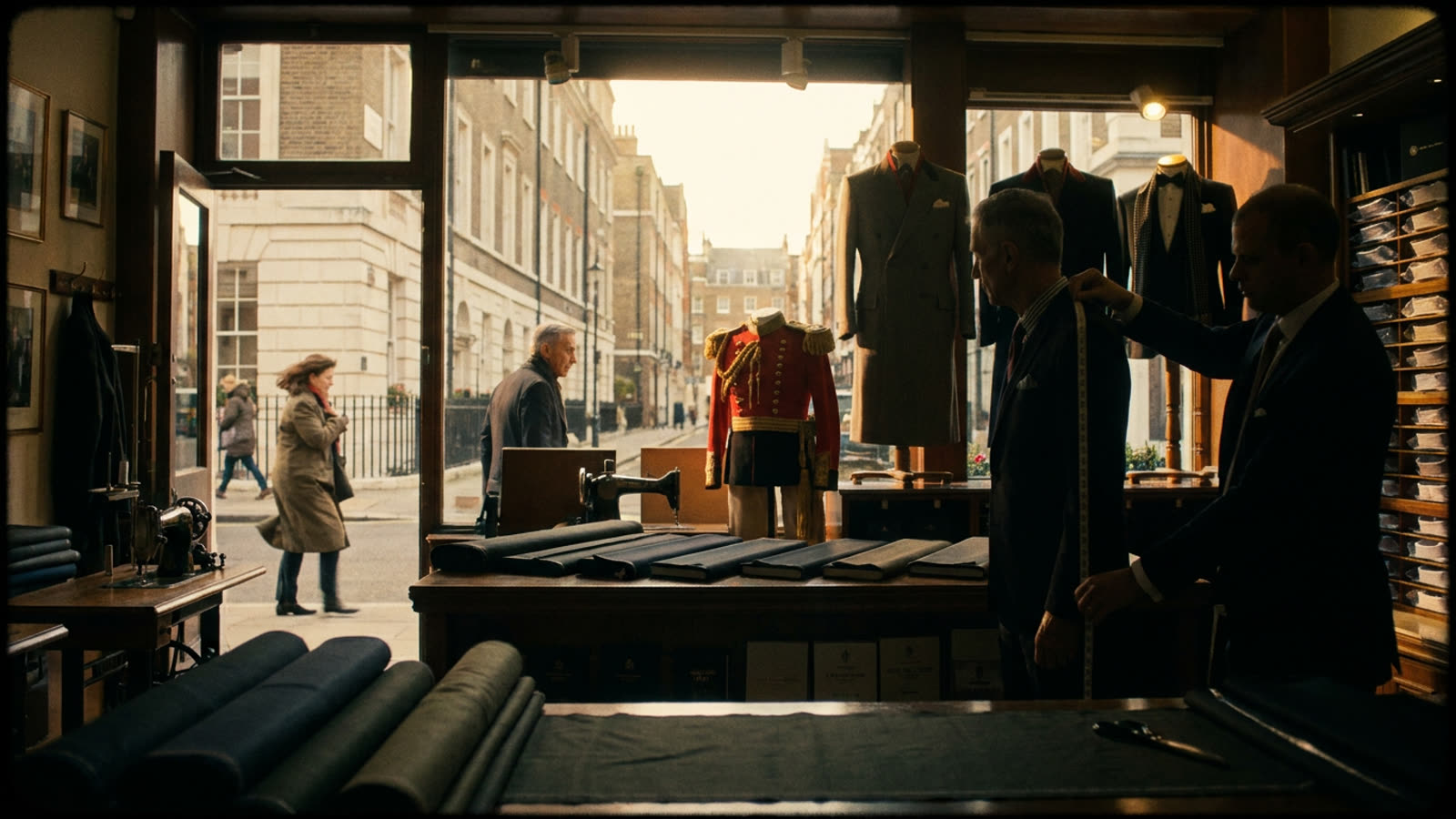
The arithmetic of bespoke tailoring has always been unforgiving. A master cutter needs fifteen years to develop the eye that can judge a shoulder's drop from across a room. A single suit requires fifty hours of handwork, spread across twelve weeks. At Savile Row's remaining houses, where chalk marks on bolts of Super 180s wool tell stories passed between generations, these numbers now collide with a harsher set: commercial rents that have tripled in two decades and a workforce where the average age approaches sixty.
The apprentice crisis
The Row's predicament centers on a paradox. Demand for true bespoke tailoring—the kind where patterns exist only in a cutter's memory and every stitch passes through human hands—has never been stronger. Tech executives and finance professionals queue for fittings at Anderson & Sheppard, where Prince Charles learned to appreciate a soft shoulder. Yet these houses struggle to find young people willing to spend years learning to fell a lapel or shape a canvas.
The traditional apprenticeship model, where teenagers entered workshops straight from school and emerged as cutters in their thirties, has effectively collapsed. Modern labor economics makes the proposition untenable: five years earning barely above minimum wage while mastering skills that smartphones cannot replicate. The few who attempt it often depart for fashion houses offering immediate prestige and triple the salary.
Reinvention without compromise
Some houses have found creative solutions. Huntsman now runs intensive training programs in partnership with Newham College, compressing the basics into two-year courses. Henry Poole & Co has pioneered profit-sharing arrangements that give senior craftspeople equity stakes. Several Row stalwarts have quietly opened ateliers in Leeds and Naples, where rents and wages permit the old rhythms.
The more radical experiments involve technology. While the Row's marketing still emphasizes handwork, laser cutting now handles preliminary pattern work at several houses. Digital measurements capture body quirks that once lived only in a cutter's notebook. These adaptations remain closely guarded secrets—clients paying £6,000 for a two-piece suit expect romance with their canvas and horsehair.
Our take
Savile Row's survival will likely require abandoning the fiction that it remains frozen in Edwardian amber. The street's genius has always been adaptation: military tailors who pivoted to civilian dress, Jewish refugees who brought Continental techniques, innovators who created the drape suit and the dinner jacket. Today's challenge—maintaining craft standards while acknowledging economic reality—is merely the latest test for an industry that has survived Napoleon, the Blitz, and the leisure suit. The Row will endure, though perhaps with fewer houses and more pragmatism than its mythology suggests.