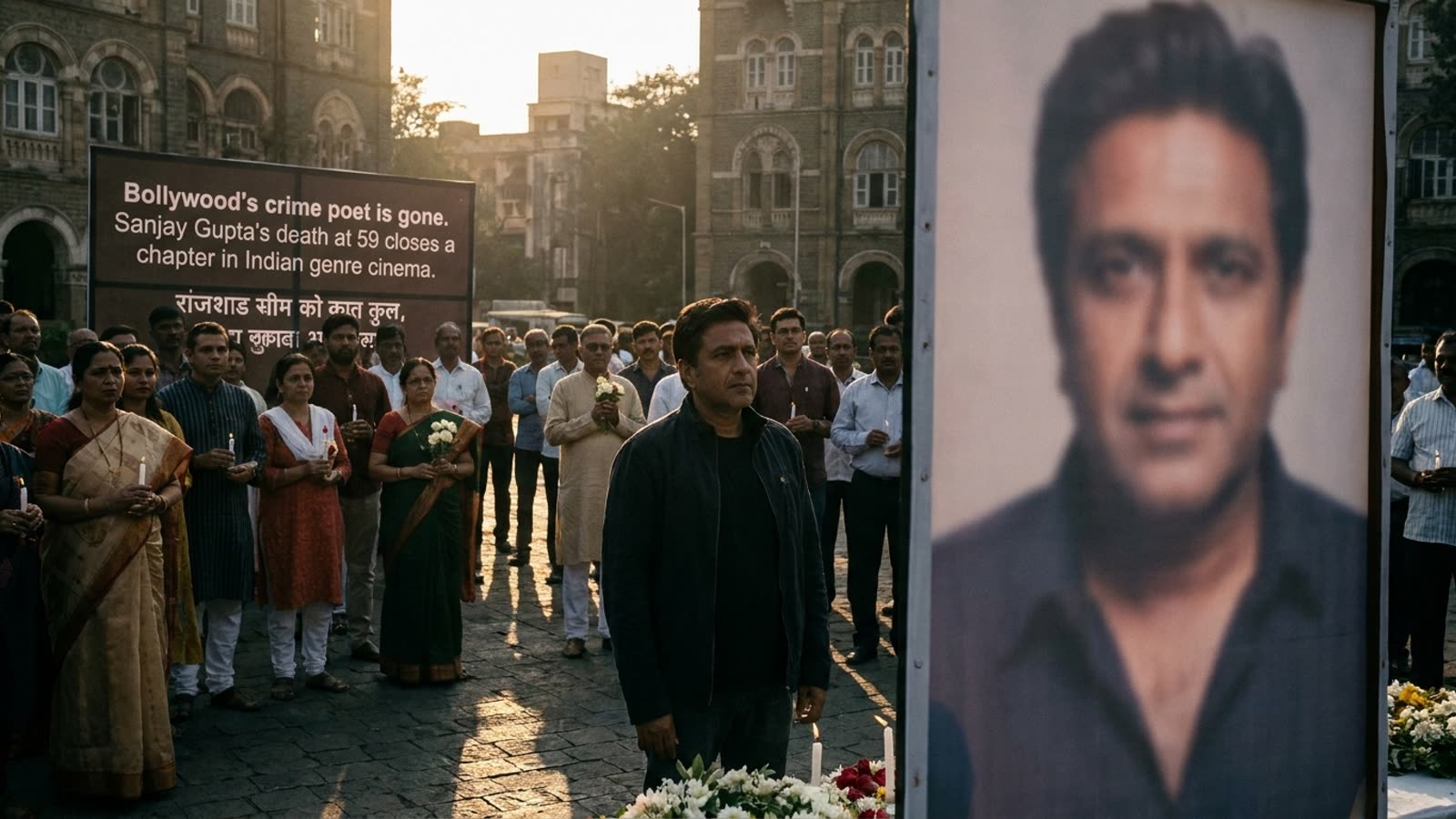
Sanjay Gupta understood something that eluded most of his Bollywood contemporaries: style is not the opposite of substance — it is substance, weaponized. The director, who died Thursday after a fall at his Mumbai residence at 59, spent three decades proving that Indian audiences would pay for atmosphere as readily as they paid for songs.
His death arrives at a moment when Bollywood is frantically chasing the streaming algorithm, flooding platforms with content that mistakes length for depth. Gupta's best work — lean, mean, unapologetically derivative in the best sense — now looks like a rebuke from beyond the grave.
The heist that changed everything
"Kaante" (2002) remains his signature achievement, a film that wore its Tarantino worship so openly it became its own kind of honesty. Six Indian men in Los Angeles, a botched heist, a warehouse standoff — the premise was borrowed, but the execution was pure Gupta. He assembled a cast that read like a fantasy draft of Bollywood machismo: Amitabh Bachchan, Sanjay Dutt, Suniel Shetty, Kumar Gaurav, Mahesh Manjrekar, Lucky Ali. The film's genius was understanding that Indian stars could occupy American genre frameworks without losing their essential Indianness.
"Zinda" (2006) took the borrowing further, remaking Park Chan-wook's "Oldboy" for audiences who would never see the original. Critics called it plagiarism; Gupta called it cultural translation. Both were right.
Violence as visual grammar
Gupta's films were never subtle about their intentions. "Shootout at Lokhandwala" (2007) and "Shootout at Wadala" (2013) turned real-life police encounters into operatic bloodbaths, the kind of films where slow motion exists not to clarify action but to aestheticize it. He understood that audiences wanted their violence beautiful, their villains charismatic, their moral universe uncomplicated by ambiguity.
This made him unfashionable among critics who preferred their Indian cinema socially conscious or at least apologetic about its pleasures. Gupta offered no apologies. His films were machines built to deliver specific sensations, and they delivered.
Our take
Gupta was never going to win a National Award, and he knew it. His contribution to Indian cinema was more practical: he demonstrated that genre filmmaking could be commercially viable without being artistically negligent. In an industry now drowning in bloated three-hour epics and algorithm-chasing content, his tight, stylish crime pictures look almost radical in their discipline. The man who made "Kaante" understood something his successors have forgotten — that sometimes the most respectful thing you can do for an audience is not waste their time.