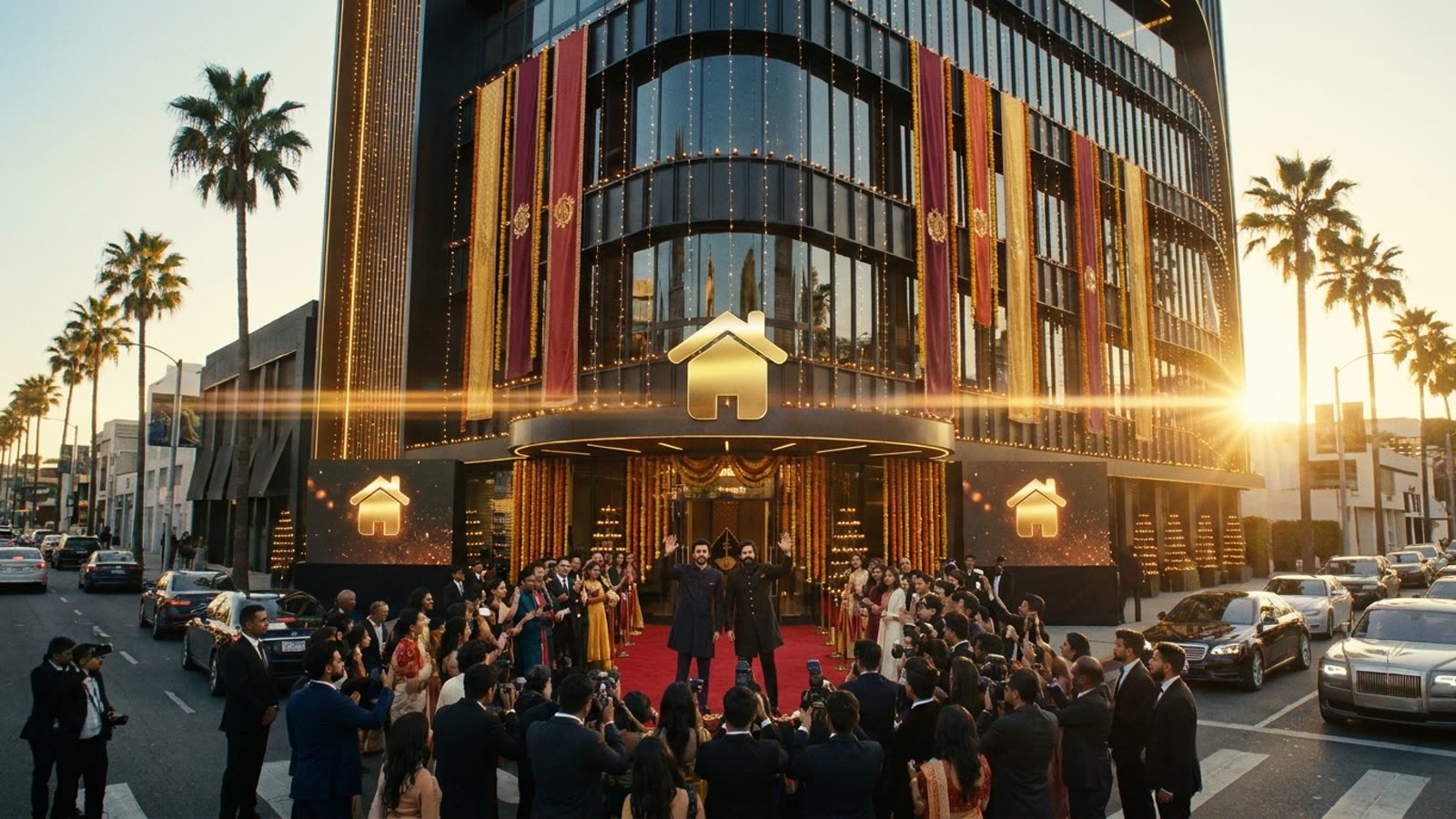
For years, the South Asian entertainment industry operated on a parallel track to Hollywood—massive domestic audiences, billion-dollar box offices, and near-total invisibility at American awards shows and premieres. That arrangement is ending, and the clearest evidence arrived last night at The Majestic Downtown in Los Angeles, where Gold House staged its largest Gold Diwali celebration yet.
The guest list read like a merger announcement. Ranbir Kapoor and Yash, the leads of the forthcoming epic "Ramayana: Rise of a Legend," appeared alongside director Nitesh Tiwari and producer Namit Malhotra, the VFX pioneer whose DNEG has become indispensable to Hollywood blockbusters. The event also launched Gold House's new South Asian Shorts Fund, designed to pipeline emerging talent into the American studio system.
The Ramayana factor
The timing is not accidental. "Ramayana: Rise of a Legend" opens next week with one of the largest marketing campaigns ever mounted for an Indian production targeting global audiences. The film reportedly cost upward of three hundred crore rupees to produce, with DNEG's visual effects work rivaling anything from Marvel or Legendary. Kapoor and Yash—the latter still riding the cultural aftershocks of the "KGF" franchise—represent exactly the kind of crossover star power that streaming platforms have spent years trying to cultivate.
Gold House, the advocacy collective that has become the de facto gatekeeper for Asian representation in American media, understands the leverage. By hosting these stars during Diwali week, the organization positions itself as the bridge between two entertainment economies that have historically operated in mutual suspicion.
Why Hollywood is paying attention
The calculus has shifted for straightforward commercial reasons. Indian theatrical audiences remain robust while American attendance stagnates. Streaming services desperate for subscriber growth in South Asia need content that travels. And the South Asian diaspora in North America—affluent, culturally engaged, and underserved by mainstream programming—represents exactly the demographic that advertisers prize.
The Shorts Fund announcement extends this logic. Rather than waiting for Indian talent to prove itself domestically before offering Hollywood opportunities, Gold House is creating a direct pathway. It is, in effect, building the infrastructure for a talent pipeline that studios have been too cautious to construct themselves.
Our take
Cultural power follows economic power, and the Indian film industry has accumulated enough of both to demand a seat at the American table. Gold House's Diwali gala was not a celebration so much as a negotiation—one conducted with champagne and photo opportunities, but a negotiation nonetheless. Hollywood has spent decades treating Bollywood as an exotic curiosity rather than a peer industry. That condescension is becoming expensive, and last night's guest list suggests the recalibration has finally begun.