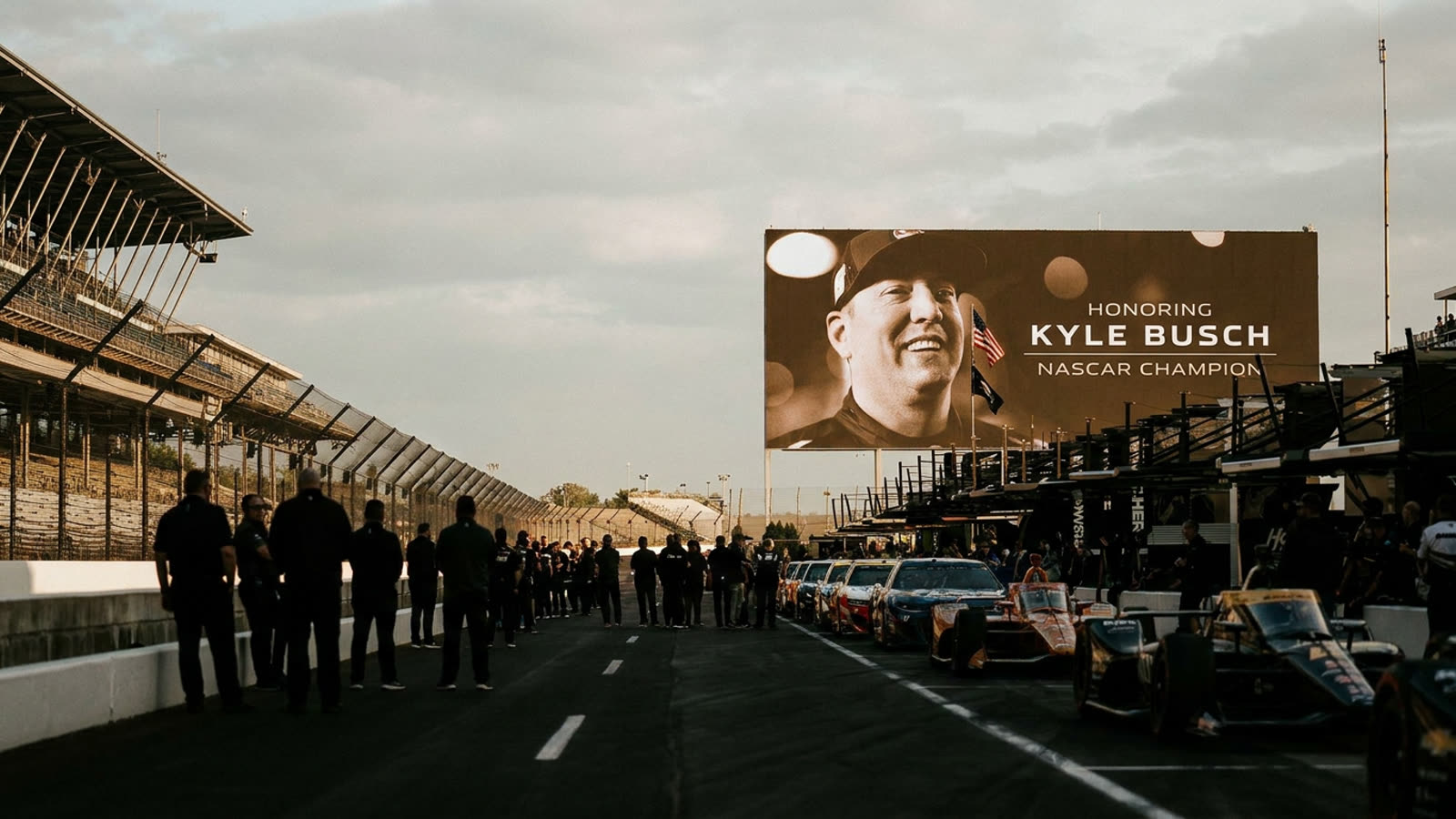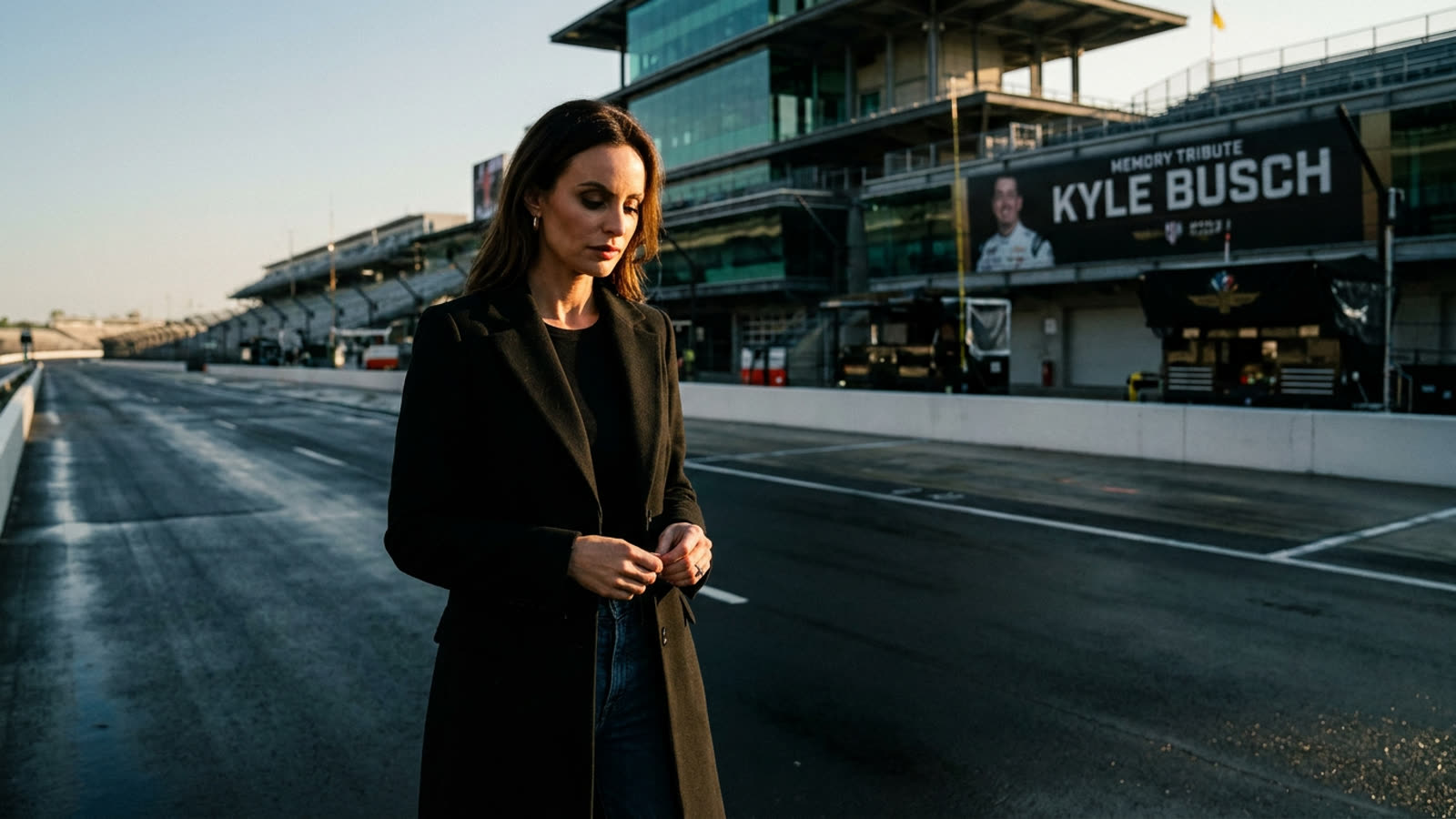
Grief, in motorsport, is never private. Samantha Busch discovered this again on Sunday when she appeared at the Indianapolis Motor Speedway to witness the tribute to her husband Kyle, who died in a crash at Talladega last September. As the field completed lap 18—Kyle's career number—in near-silence, cameras found her in the stands, composed but visibly moved, her young son Brexton beside her. It was the kind of moment that American sports television handles with practiced solemnity, and also the kind that forces a widow to perform her sorrow for millions.
The burden of being a racing widow
Motorsport has always demanded that its bereaved families participate in the mythology. Dale Earnhardt's widow Teresa became a guardian of his legacy and, eventually, a litigant protecting it. Susie Wheldon, widow of IndyCar champion Dan, has spent more than a decade navigating the strange territory between private mourning and public stewardship. Samantha Busch now enters this sorority at 37, with a platform—she has more than a million Instagram followers—and a choice about how visible to remain.
Her appearance at Indianapolis suggests she intends to stay present. She wore black, kept her sunglasses on, and declined interviews but posed briefly with team officials. The gesture was calibrated: enough presence to honor Kyle's memory, not so much that it became about her. Racing insiders noted that she arrived with Kyle's former crew chief, a signal that the Busch racing operation's relationships remain intact.
Brexton's inheritance
The more complicated question involves her son. NASCAR has already announced it will retire the No. 8 until Brexton Busch, now nine, is old enough to compete professionally—a gesture that is both touching and burdensome. The boy has been racing go-karts since he was four and reportedly shows genuine talent. But he is now also carrying a legacy that will follow him whether he wants it or not.
Samantha has been protective of Brexton's public exposure since Kyle's death, limiting his appearances and scrubbing some older content from her social channels. The Indianapolis appearance was his first at a major race since the funeral. He watched the tribute lap without visible emotion, which is either healthy compartmentalization or the mask that children of famous parents learn to wear early.
Our take
There is something uncomfortable about the way American motorsport metabolizes tragedy—the tributes, the number retirements, the slow laps—that transforms private loss into content. Samantha Busch handled Sunday with grace, but she shouldn't have had to handle it at all, not in front of cameras, not with her son beside her. The sport owes its widows more than ceremonial moments. It owes them the space to grieve without becoming symbols.