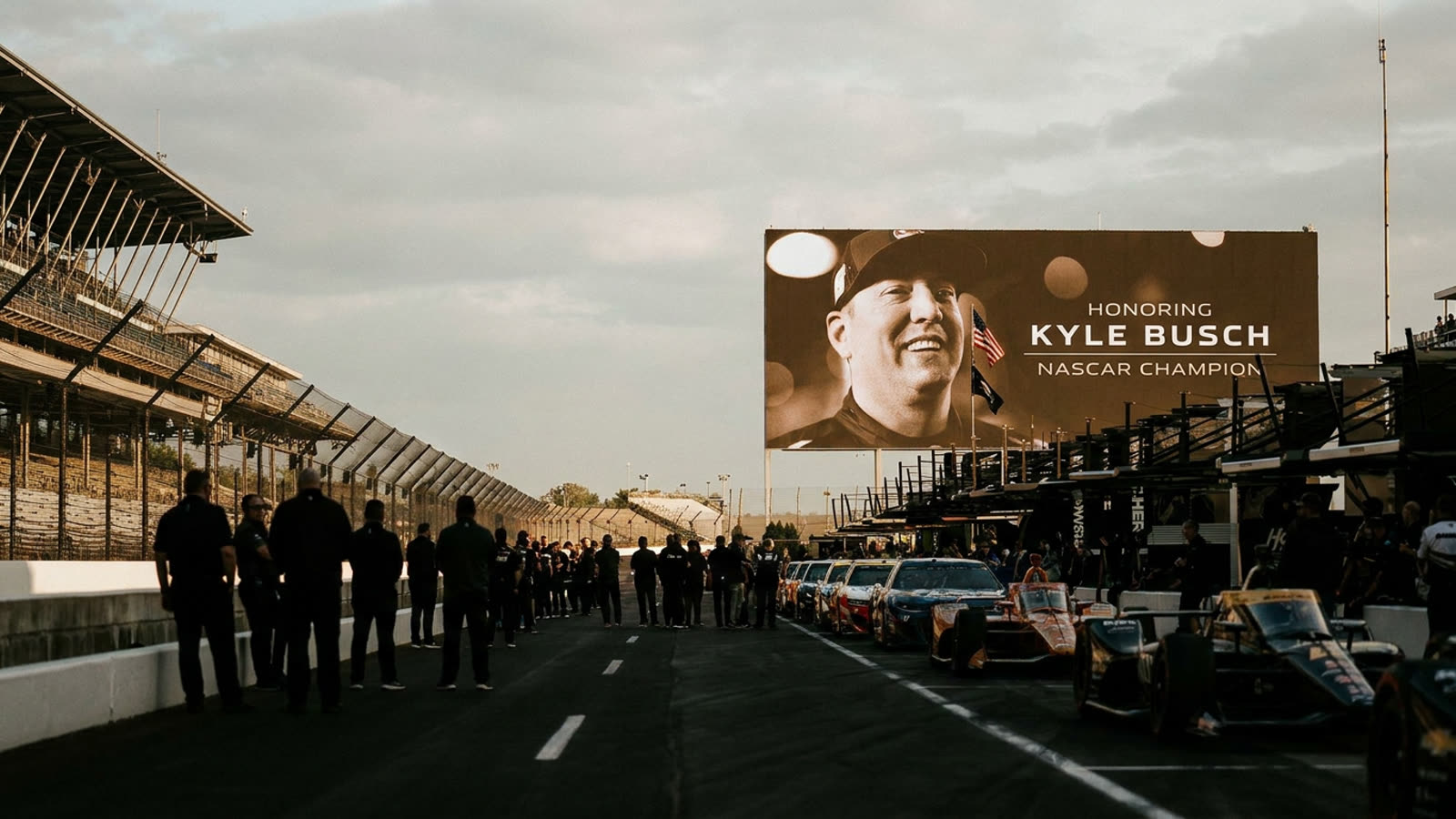
When the Indianapolis Motor Speedway's public address system acknowledged Kyle Busch during lap 18 of Sunday's Indy 500, it marked something rarer than a green-flag pit stop executed to perfection: a genuine moment of cross-series reverence in American motorsport.
Busch, the two-time NASCAR Cup Series champion whose career has been defined by polarizing brilliance and an unapologetic willingness to be the villain, received recognition at the cathedral of open-wheel racing—a venue that has historically viewed stock car drivers the way the Metropolitan Opera views dinner theater. The tribute, timed to his iconic number 18, drew cheers from a crowd that theoretically shouldn't care about a man who has never turned a competitive lap at the Brickyard in an IndyCar.
The Tribal Lines Are Blurring
For decades, American motorsport operated like rival medieval kingdoms. NASCAR fans dismissed IndyCar as an afterthought; IndyCar purists sneered at stock cars as unsophisticated oval-turners. The Indy 500 and the Coca-Cola 600, run on the same day, competed for eyeballs rather than celebrating a shared holiday of speed.
That paradigm is crumbling. Streaming has fragmented audiences to the point where motorsport can no longer afford internal civil wars. Younger fans, raised on YouTube highlights and cross-platform content, don't inherit their fathers' allegiances. They follow drivers, not series. Busch's recognition at Indianapolis reflects this shift—the understanding that a passionate NASCAR fanbase watching the Indy 500 to catch a glimpse of their guy is better than no fanbase at all.
Why Busch, Why Now
At 41, Busch occupies a peculiar position in racing's cultural hierarchy. He's won 63 Cup races, tied for ninth all-time, yet remains perpetually underrated in legacy discussions dominated by the Earnhardts and Pettys. His move to Richard Childress Racing in 2023 after Toyota declined to retain him added a late-career chip on his shoulder that has only sharpened his edge.
The Indy 500 tribute functions as an acknowledgment that Busch's influence extends beyond his series. His merchandise still moves. His name still trends. In an era when motorsport desperately needs characters who generate emotion—positive or negative—Busch delivers weekly.
Our take
The lap 18 tribute was a small gesture with large implications. American racing is finally learning what European football understood decades ago: fans can support multiple competitions without diluting their passion for any single one. Kyle Busch being honored at Indianapolis doesn't diminish the Indy 500's prestige; it acknowledges that prestige is no longer a zero-sum game. The sport's future belongs to those who recognize that a rising tide lifts all 33 cars on the grid—and the 40 in the stock car field watching from home.