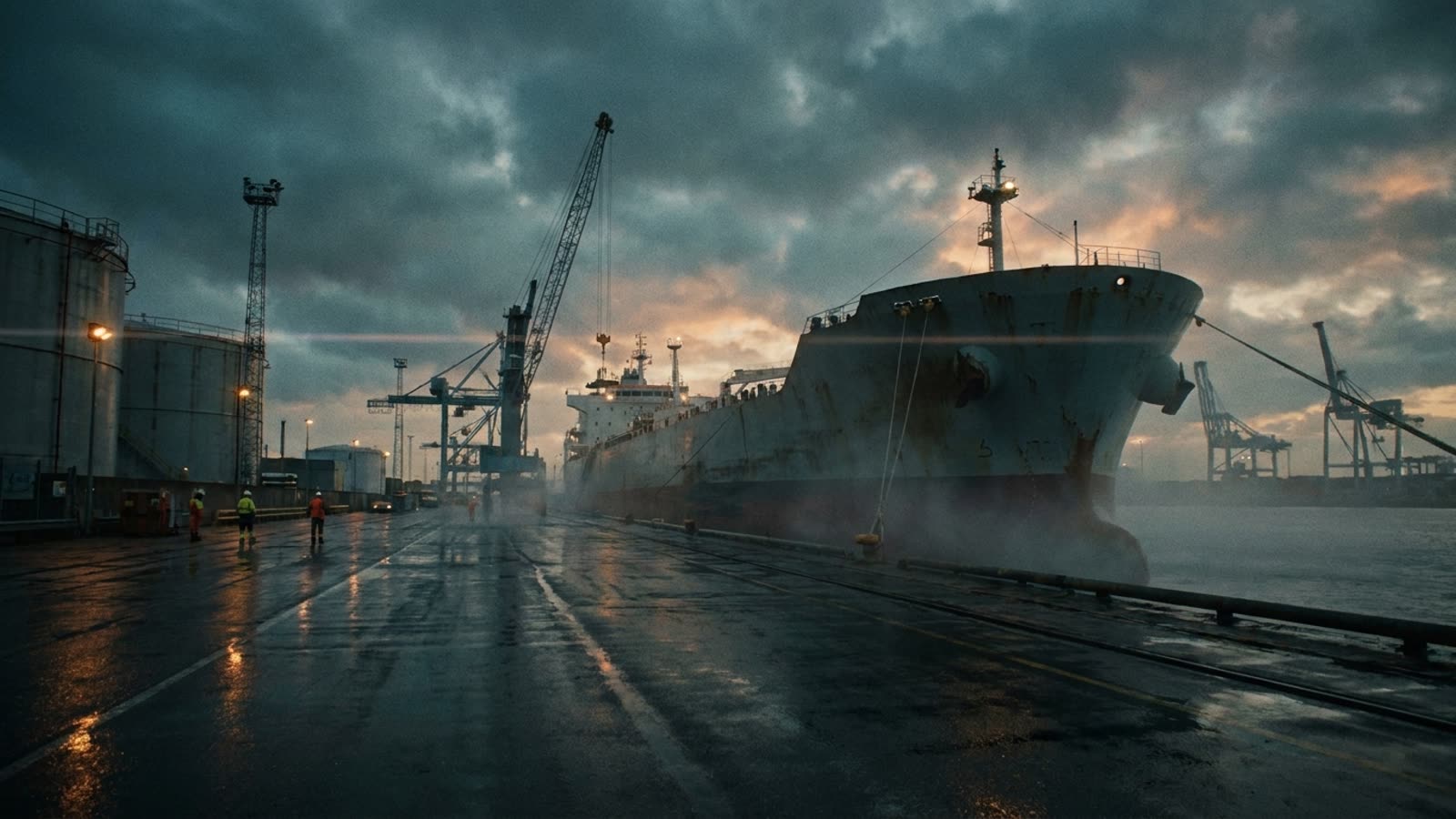
The abstraction of summit diplomacy has collided with the concrete reality of maritime logistics. Seven oil tankers carrying an estimated 288,000 tonnes of Russian diesel are currently en route to the United States, the first tangible cargo of the Trump-Putin energy agreement that has reshaped transatlantic relations and upended the post-2022 sanctions architecture.
Tracked by Greenpeace vessels and commercial shipping monitors, the tankers represent something more consequential than their hydrocarbon payload: they are a floating test of whether the administration's realpolitik gambit can actually function as trade policy rather than mere geopolitical theater.
The logistics of détente
The tankers departed from Russian Baltic and Black Sea ports over the past two weeks, their AIS transponders broadcasting destinations across the American Gulf Coast and Eastern Seaboard. Yet uncertainty persists over whether they will actually unload. Port authorities, refinery operators, and insurance underwriters are navigating a regulatory environment that remains, charitably, unsettled.
The original sanctions regime prohibited Russian petroleum imports and created secondary restrictions on shipping, insurance, and banking that made circumvention expensive and legally perilous. The Trump administration's executive orders have carved out exemptions, but the implementing guidance has arrived piecemeal, leaving commercial actors to make billion-dollar decisions on ambiguous legal footing.
Market implications
American refiners, particularly those on the Gulf Coast optimized for heavier crude blends, have historically sourced from Venezuela and Russia before sanctions constrained both supply chains. The prospect of Russian diesel returning to the market has already softened futures prices, though the volumes in transit represent a fraction of monthly consumption.
The more significant market signal is psychological. If these tankers discharge without incident, the pathway opens for substantially larger flows. European refiners, who absorbed much of the redirected Russian supply after 2022, would face renewed competition for alternative barrels. The global diesel market, already rebalancing after years of disruption, would enter another period of structural adjustment.
The political calculus
For the administration, successful delivery validates the argument that engagement with Moscow produces tangible benefits for American consumers and industry. For critics, it represents the monetization of foreign policy and the abandonment of allies who bore significant economic costs to maintain the sanctions coalition.
The tankers themselves are agnostic to this debate. They are simply following the commercial logic that has governed maritime trade for centuries: cargo moves toward the buyer willing to pay.
Our take
The spectacle of Russian diesel sailing toward American ports is less shocking than it might appear. Energy markets have always been morally flexible, and the sanctions of 2022-2025 were always as much about signaling resolve as achieving economic isolation. What matters now is whether the administration has actually constructed a durable legal and commercial framework, or whether these tankers are sailing into a regulatory void that will generate chaos at the dock. The former is hardheaded pragmatism; the latter is amateur hour with geopolitical consequences.