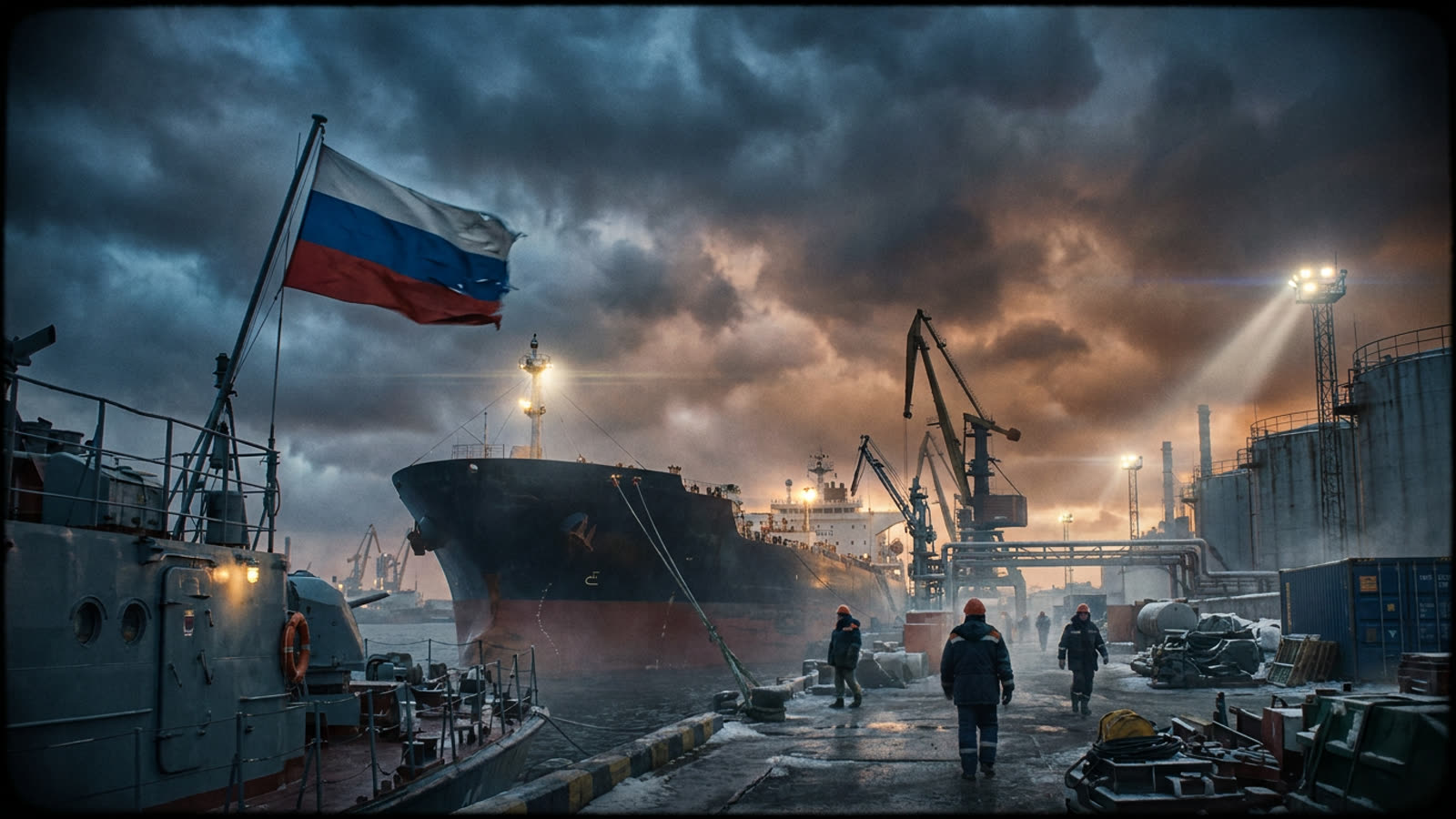
The Kremlin confirmed Monday that magnetic mines were discovered attached to a tanker at Ust-Luga, one of Russia's most critical Baltic Sea oil terminals. No detonation occurred, but the message was unmistakable: Russia's energy lifeline is no longer safe even in home waters.
The incident represents a significant escalation in what has become a sprawling shadow conflict targeting Russian petroleum infrastructure. Ust-Luga, located roughly 170 kilometers west of St. Petersburg, handles millions of tons of crude and refined products annually and serves as a crucial node in Russia's attempts to redirect oil exports away from European sanctions toward Asian buyers.
The geography of vulnerability
Russia's Baltic ports have long been considered relatively secure compared to Black Sea facilities, which face more direct Ukrainian threats. Ust-Luga sits within what Moscow considers its defensive perimeter, protected by naval assets and far removed from active combat zones. The successful placement of mines there suggests either remarkable operational reach by hostile actors or troubling gaps in Russian port security.
The Kremlin has not publicly attributed the mines to any party, though Ukrainian special services have previously claimed responsibility for similar maritime sabotage operations. Western intelligence agencies have documented an expanding Ukrainian capability for long-range asymmetric attacks, including drone strikes on Russian refineries hundreds of kilometers from the border.
Economic pressure points
Russia's war economy depends heavily on continued energy revenue. Despite Western sanctions, Moscow has maintained substantial oil export volumes by cultivating alternative buyers and developing a shadow fleet of aging tankers. Attacks on port infrastructure threaten this workaround by raising insurance costs, deterring shipping companies, and creating bottlenecks that reduce throughput.
The timing is notable. As global attention focuses on the Iran conflict and potential peace framework, the Ukraine-Russia war has settled into a grinding stalemate with neither side achieving decisive territorial gains. Sabotage operations offer Kyiv a way to impose costs on Moscow without the manpower-intensive offensive operations that have proven difficult to sustain.
Our take
The mine discovery at Ust-Luga illustrates why the Ukraine conflict refuses to fade from strategic relevance despite the Iran war's dominance of headlines. Russia cannot prosecute its war indefinitely if its economic foundations become targets. Whether these operations can meaningfully degrade Moscow's capacity remains uncertain, but they demonstrate that Ukraine retains initiative even when the front lines appear frozen. The shadow war is becoming the real war.