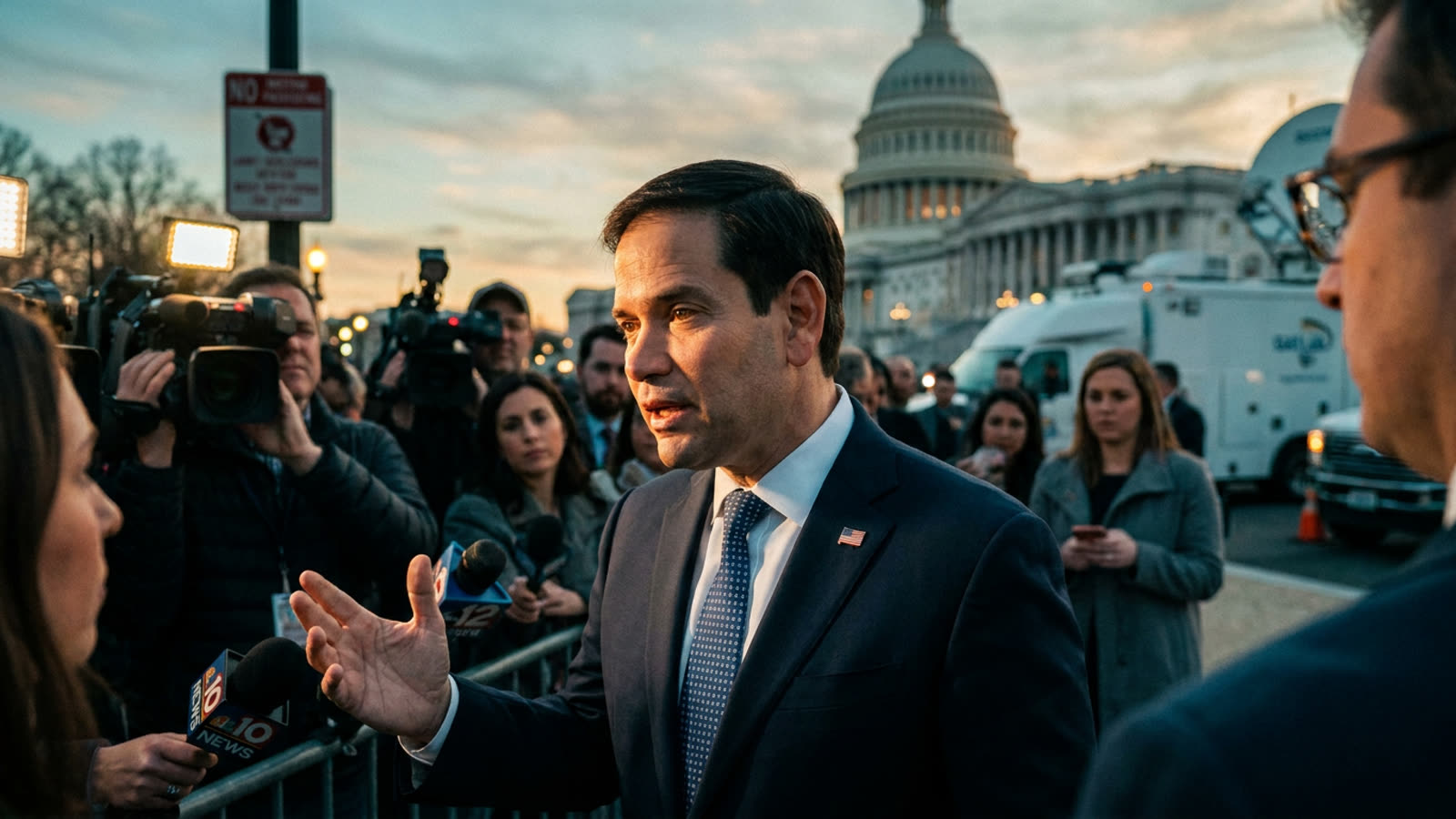
The State Department's emphatic denial that the United States has offered Iran sanctions relief to reopen the Strait of Hormuz is less interesting for what it says than for why it needed to be said at all.
Secretary of State Marco Rubio's statement arrives amid a peculiar diplomatic moment: President Trump has claimed negotiations with Tehran are ongoing "continuously," Iranian officials have signaled they are "studying" a deal to halt the current confrontation, and yet the administration insists no carrots have been extended. The message to domestic hawks is clear—we are not going soft. The message to Tehran is murkier, and perhaps intentionally so.
The Strait as leverage
The Strait of Hormuz remains the world's most consequential chokepoint, with roughly a fifth of global oil consumption passing through its narrow waters daily. Iran's capacity to threaten commercial shipping there has long been its primary asymmetric lever against American pressure campaigns. Any suggestion that Washington might trade sanctions relief for guaranteed passage would represent a significant shift from the administration's stated posture of unrelenting economic warfare.
Rubio's denial forecloses that interpretation—publicly. But the denial's timing, paired with Trump's insistence that talks continue, creates deliberate ambiguity. The administration appears to want the political benefits of hardline rhetoric without closing off whatever backchannel discussions may be underway.
The domestic audience
The denial also serves a Congressional function. Republican hawks have grown increasingly vocal about any perceived softening toward Tehran, and the administration's recent setbacks on Capitol Hill—including the blocking of Trump's "weaponization" fund—have made it sensitive to accusations of weakness. Rubio's statement reads as much as reassurance to restive allies on the Hill as it does diplomatic signaling.
Meanwhile, Iran's acknowledgment that it is studying a potential deal suggests Tehran sees an opening, or at least wants Washington to believe it does. Whether this reflects genuine flexibility or tactical positioning ahead of potential Israeli action remains unclear.
Our take
The Rubio denial is diplomatic theater, but theater with purpose. The administration is managing multiple audiences—domestic hawks, Gulf allies, European partners, and Tehran itself—with a single public statement. The actual state of negotiations, if any exist in meaningful form, remains opaque. What is clear is that the White House wants to preserve optionality while appearing resolute. It is a familiar posture for this administration: loudly closing doors while quietly leaving windows cracked.