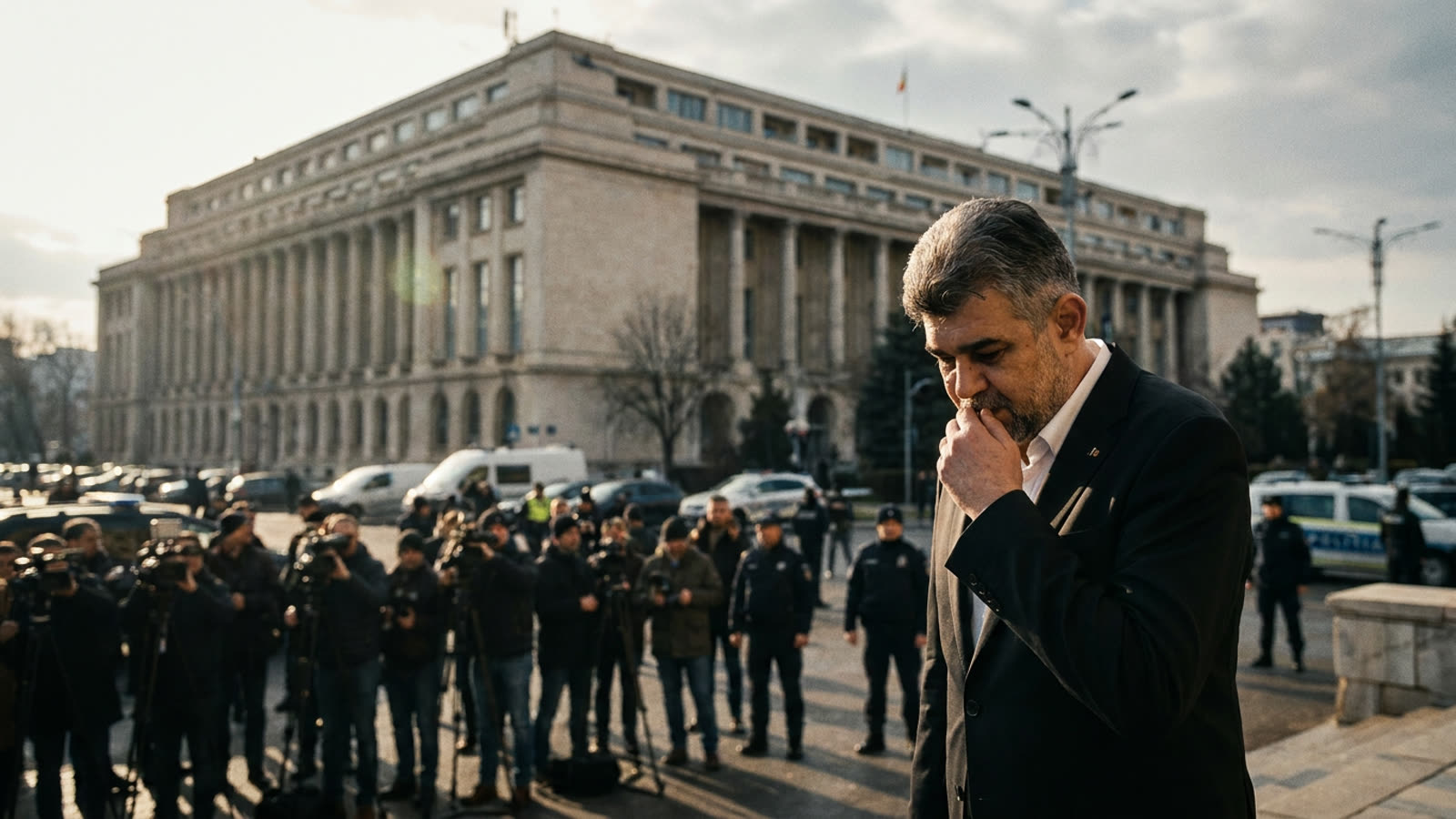
Klaus Iohannis has nominated Marcel Ciolacu, leader of the Social Democratic Party (PSD), to form Romania's next government — a move that trades one constitutional crisis for a prolonged negotiation with no guaranteed outcome. The decision, announced Saturday, follows the collapse of the previous coalition and weeks of political drift that have tested the patience of Brussels, NATO partners, and ordinary Romanians watching their currency wobble.
Ciolacu now has ten days to present a cabinet and secure a parliamentary confidence vote. The arithmetic is brutal. The PSD holds the largest bloc in both chambers, but not a majority. Potential partners — the National Liberals, the ethnic Hungarian UDMR, and a smattering of smaller parties — each carry their own price tags and red lines. The far-right AUR, which surged in recent polls, remains formally off-limits to mainstream coalitions, yet its shadow looms over every negotiation.
Why Iohannis picked the obvious choice
Constitutionally, the president must nominate the candidate most likely to command a majority. Ciolacu, a former parliament speaker with a reputation for backroom pragmatism, fits that description better than any alternative. He has governed before, in uneasy tandem with the Liberals, and knows which levers to pull. Iohannis, a lame-duck president in his final months, has little appetite for constitutional brinkmanship; a failed nomination would force him to consider dissolution and snap elections — an outcome no establishment party wants with AUR polling above twenty percent.
The European dimension
Romania is not Hungary, but Brussels is watching closely. The country is a major transit corridor for Ukrainian grain, a host of NATO's eastern-flank rotations, and a recipient of substantial EU recovery funds whose disbursement depends on judicial and anti-corruption benchmarks. A prolonged government vacuum would delay reforms and invite the kind of backsliding that has turned Budapest into a cautionary tale. Ciolacu, whatever his faults, is a known quantity who speaks the language of European integration — or at least knows when to nod along.
The coalition math
The most plausible path runs through a renewed grand coalition with the National Liberals, who governed alongside the PSD until their acrimonious split earlier this year. Neither party relishes the reunion, but both fear the alternative: a minority government vulnerable to no-confidence votes, or an election that could hand AUR the role of kingmaker. Expect weeks of haggling over ministries, with Interior and Finance as the prize seats. UDMR, representing the Hungarian minority, will likely extract concessions on cultural autonomy in exchange for its votes.
Our take
Ciolacu's nomination is less a solution than a deferral. Romania's political class has spent years avoiding the hard conversations about pension reform, energy policy, and the judiciary, preferring instead to rotate the same faces through the same offices. Iohannis has chosen stability over ambition — understandable, perhaps, but unlikely to inspire a country that has watched its neighbors modernize while Bucharest bickers. The next ten days will reveal whether coalition politics can still produce a government, or whether Romania is drifting toward the kind of permanent instability that rewards only the extremes.