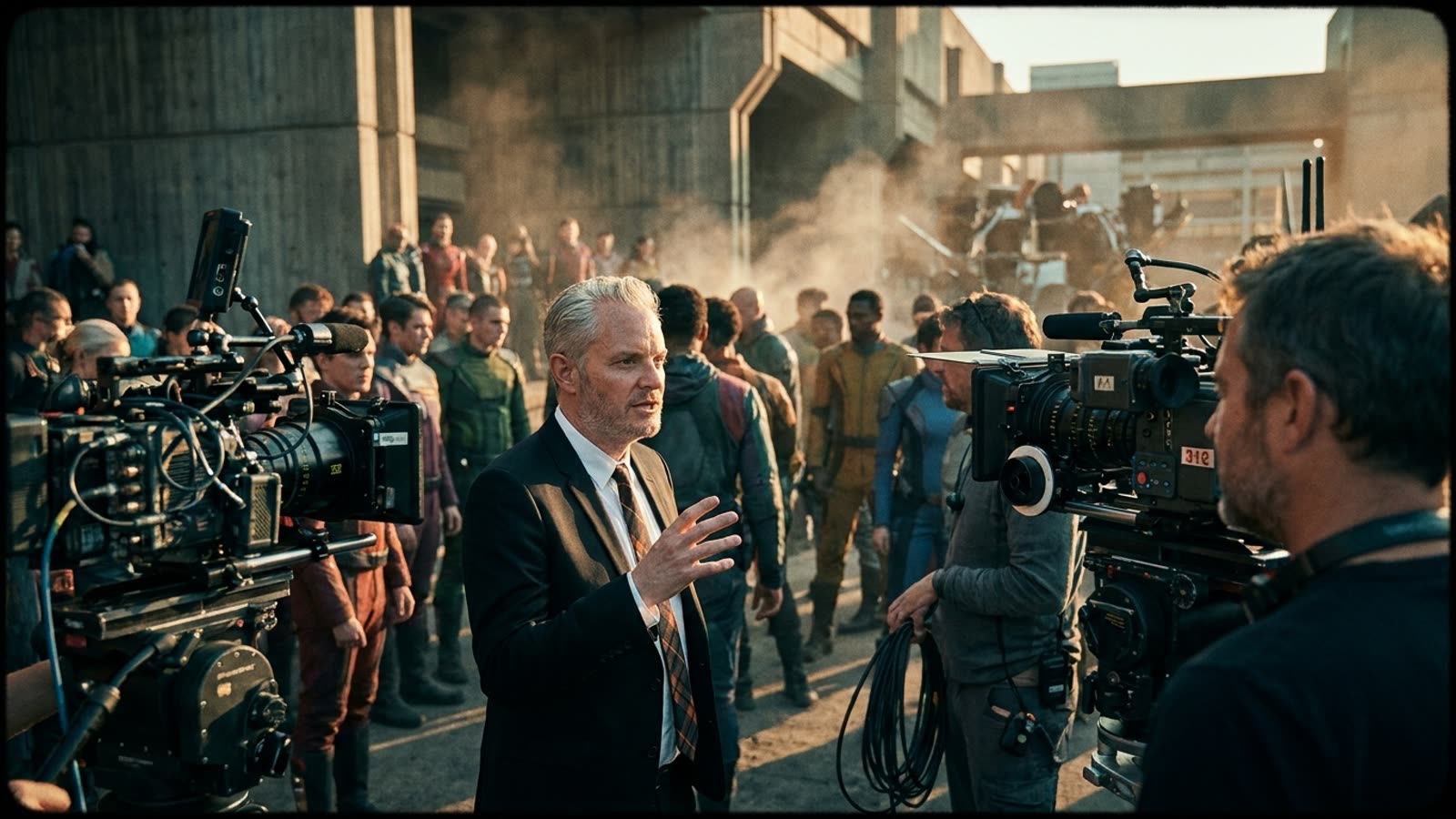
Paramount has handed Francis Lawrence the keys to another rebellion. The studio announced it will adapt Pierce Brown's Red Rising, the 2014 sci-fi novel about a genetically stratified Mars where the lowest caste—the Reds—mine beneath the surface while Golds rule above. Lawrence, who directed the final three Hunger Games films and shepherded that franchise to nearly $3 billion worldwide, will helm the adaptation, with Justin Rhodes writing the script.
The pairing is almost too neat: a proven dystopian-YA hand guiding another beloved book series through Hollywood's unforgiving machinery. But the move also reflects a broader industry recalibration—studios are once again hunting for the next tentpole franchise rooted in young-adult source material, a genre that seemed exhausted after the diminishing returns of Divergent and The Maze Runner.
Why now, and why Lawrence
Red Rising has circulated through development hell for the better part of a decade. Universal held the rights years ago; a television adaptation was floated and abandoned. Brown's novels—six books and counting—have sold millions of copies and cultivated a devoted fanbase that calls itself the Howlers. The material is dense, violent, and operatic, mixing Roman imperial aesthetics with interplanetary class warfare. It is not, in other words, an easy adaptation.
Lawrence's involvement signals Paramount's seriousness. His Hunger Games sequels proved he could manage scale, but more importantly, they demonstrated restraint—he let the political allegory breathe rather than drowning it in spectacle. Red Rising demands similar discipline; its world-building is intricate, and its protagonist, Darrow, undergoes a physical and psychological transformation that requires careful pacing.
The franchise calculus
Hollywood's YA dystopia boom peaked around 2014, the same year Brown's novel debuted. The genre's decline was swift: audiences grew weary of chosen-one narratives and revolution-by-committee plotting. Yet the success of The Hunger Games prequels and the enduring cultural footprint of the original films suggest the appetite never fully vanished—it simply became more selective.
Paramount is clearly hoping Red Rising can thread the needle: familiar enough to attract the YA-adjacent crowd, but sufficiently brutal and politically charged to court older viewers. The novels are bloodier than Hunger Games, with gladiatorial combat and betrayals that would make George R.R. Martin wince. Whether the studio will preserve that edge or sand it down for a PG-13 remains the central creative question.
Our take
Francis Lawrence is the safest possible choice, which is both the project's strength and its limitation. He will deliver competence, atmosphere, and a film that respects its source material. What he may not deliver is surprise. Red Rising deserves a director willing to embrace its extremity—the class rage, the body horror of Darrow's transformation, the moral ambiguity of revolution. Lawrence can certainly execute that vision; whether Paramount will let him is another matter. The Howlers have waited long enough. They deserve more than a handsome imitation of past glories.