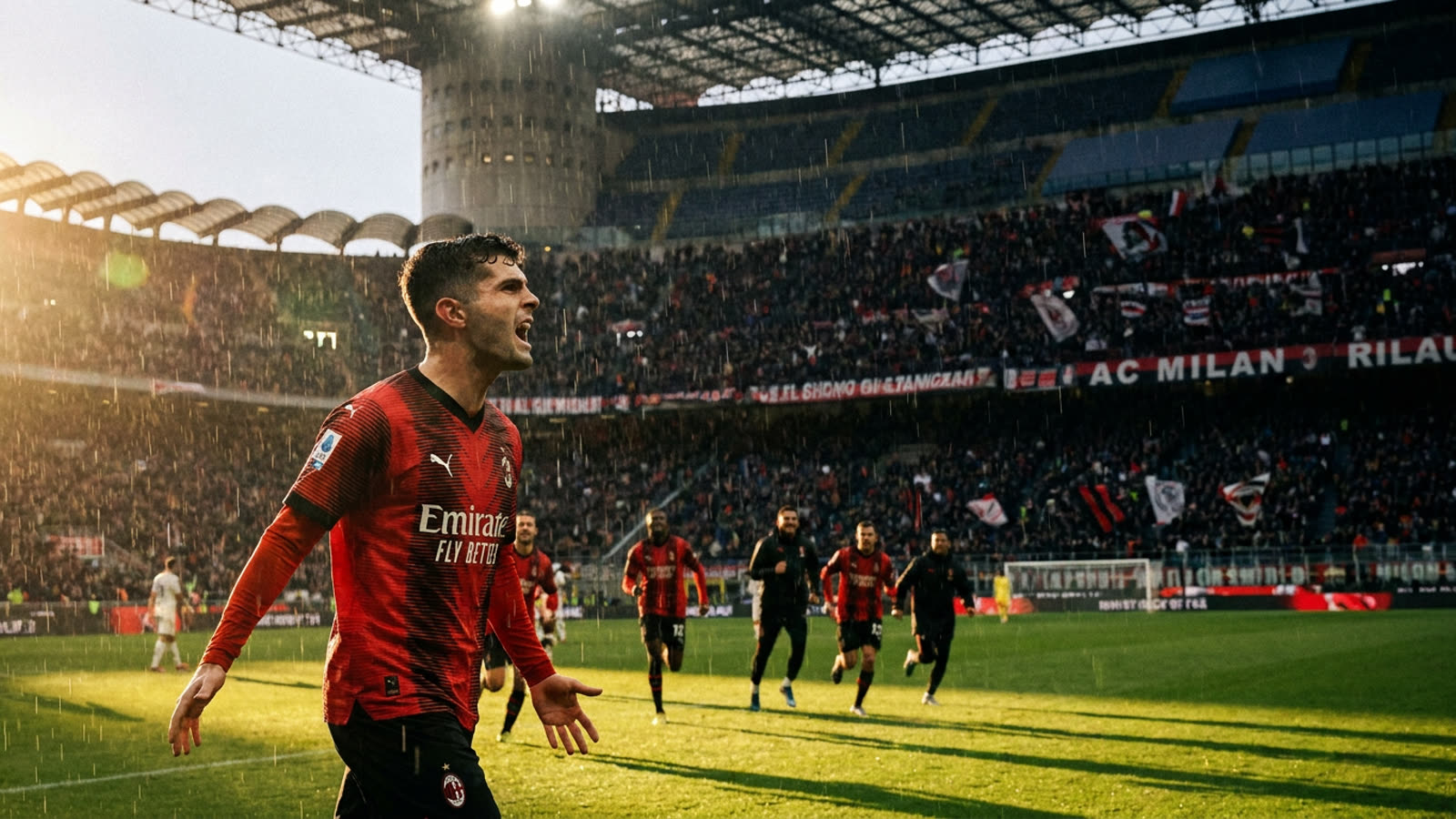
Christian Pulisic wants everyone to shut up, which is understandable given that everyone has been talking about him for the better part of three months. The AC Milan winger ended his international scoring drought this weekend, then offered a pointed post-match request that people stop "talking" about his form. It was the kind of comment that simultaneously closes one narrative and opens another: the drought is over, but the anxiety that produced it clearly is not.
The timing matters enormously. The 2026 World Cup kicks off on American soil in less than three weeks, and Pulisic remains the only U.S. men's national team player with genuine global name recognition. He is the face of a tournament his federation has spent years and billions preparing to host. When he doesn't score, it becomes a national sporting concern in a way that wouldn't apply to, say, a German winger in a minor slump.
The weight of being the guy
Pulisic has carried the burden of American soccer expectations since he was a teenager at Borussia Dortmund, and the load has only grown heavier. His club form at Milan has been excellent—double-digit goals in Serie A, consistent Champions League contributions—but the national team presents a different psychological challenge. Every friendly becomes a referendum. Every missed chance spawns a discourse cycle.
The drought itself was never catastrophic by objective standards. Pulisic continued creating chances, drawing defenders, and functioning as the team's primary attacking catalyst. But international football operates on narrative momentum, and "Pulisic can't score for the U.S." had become a sticky storyline that threatened to follow him into the World Cup.
What the goal actually solves
One finish against Senegal doesn't transform Pulisic's tournament prospects, but it does accomplish something valuable: it gives him a recent positive memory to carry into the pressure cooker. Sports psychology research consistently shows that confidence compounds. A player who enters a major tournament having just scored is measurably more likely to take decisive actions than one nursing a drought.
The more interesting question is whether Pulisic can maintain the form while managing the attention. His request that critics stop talking suggests he's been listening more than elite athletes typically should. The best World Cup performers tend to exist in a media-proof bubble; Pulisic appears to be acutely aware of his coverage.
Our take
Pulisic's frustration is legitimate, but his solution—asking people to stop discussing the most prominent American player at a home World Cup—is not realistic. The talking will intensify, not diminish. His challenge now is learning to perform inside the noise rather than wishing it away. The goal was a good start. The comment afterward suggested the mental work isn't finished.