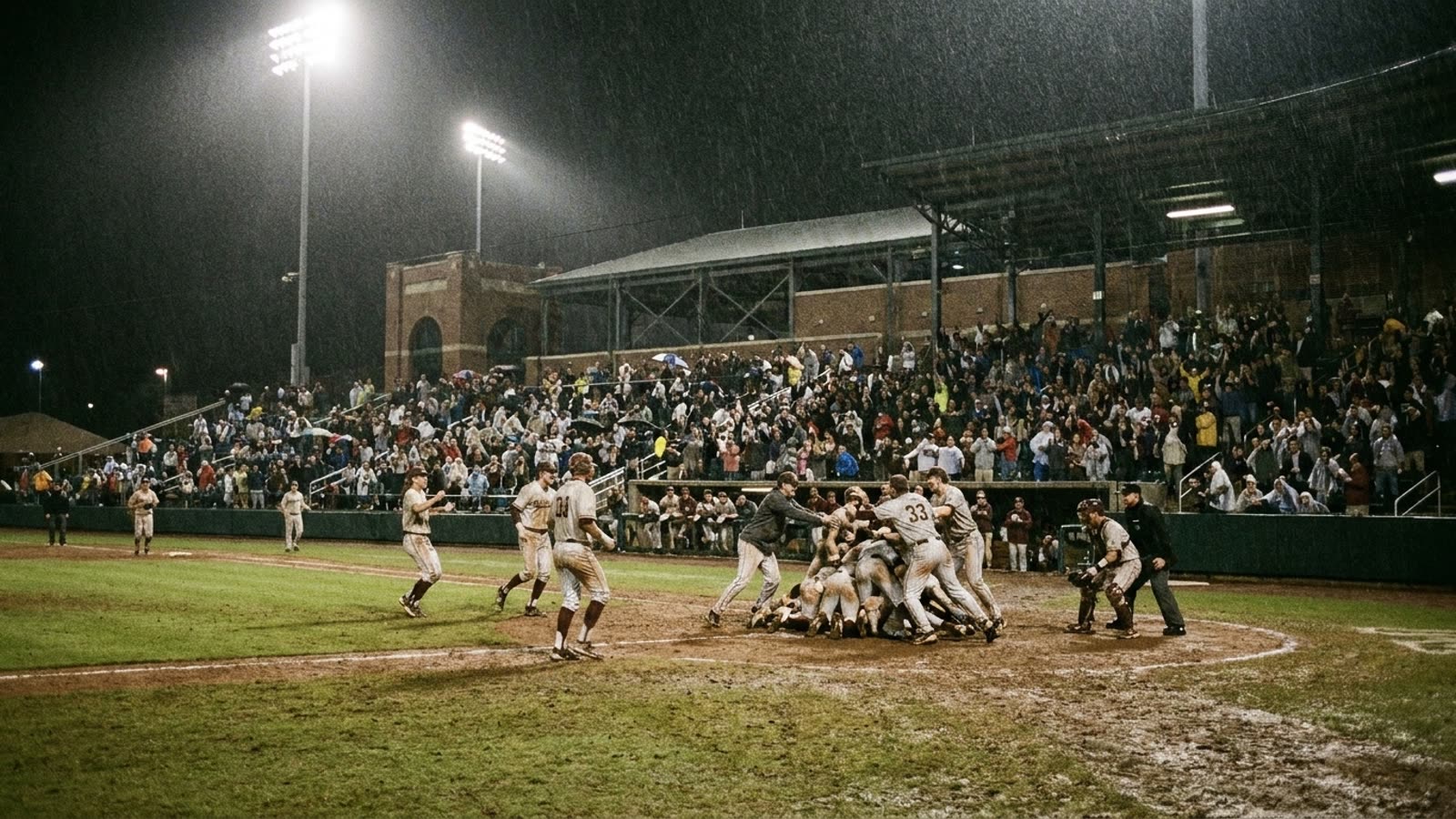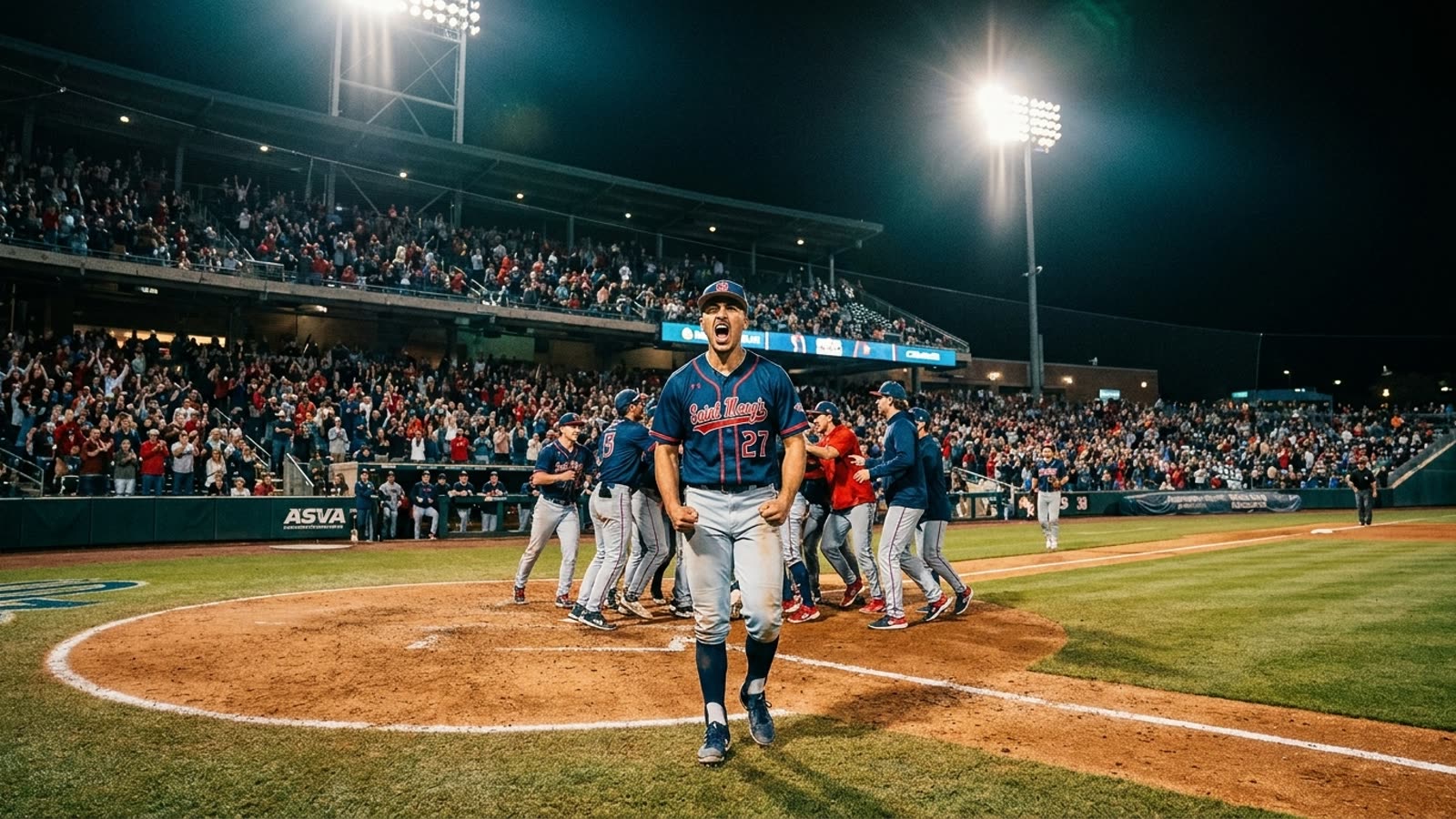
The NCAA Baseball Tournament exists in a peculiar corner of American sports consciousness—beloved by its devotees, largely invisible to everyone else, and capable of producing moments that would dominate the news cycle if only more people were watching. Saint Mary's College, a Jesuit school in Moraga, California with an enrollment that wouldn't fill half of UCLA's football stadium, just provided one of those moments.
The Gaels walked off the tournament's No. 1 overall seed, ending UCLA's season in the kind of sudden, brutal fashion that only single-elimination baseball can deliver. For a sport that usually reserves its cruelty for seven-game series and 162-game marathons, the college game offers something rarer: finality.
David's Blueprint
Saint Mary's isn't a baseball factory. The program operates on a budget that UCLA's athletic department might allocate to towel services. The Gaels don't produce first-round draft picks with regularity; they produce accountants and engineers who happened to be pretty good at baseball. That's precisely what makes upsets like this possible and, when they happen, so satisfying.
The walk-off win required everything going right at exactly the right moment—the kind of convergence that big programs can usually muscle through with superior depth and talent. UCLA, the presumptive favorite to reach Omaha, had no answer for the simple mathematics of elimination: one bad inning, one bad pitch, one moment of hesitation, and the season ends.
The Visibility Problem
College baseball's tragedy is that its best theater goes largely unseen. The Women's College World Series, happening simultaneously in Oklahoma City, draws massive crowds and ESPN's full promotional apparatus. The men's tournament, despite producing comparable drama, remains a niche product—appointment viewing for the converted, background noise for everyone else.
This is partly structural. The tournament's sprawling regional format dilutes attention across dozens of simultaneous games. It's partly cultural: baseball's pace doesn't suit the highlight-reel economy that drives modern sports media. And it's partly self-inflicted: college baseball has never figured out how to market its chaos the way March Madness turned bracket-busting into a national pastime.
What UCLA Lost
Being the No. 1 overall seed means carrying expectations that transform every game into a referendum. UCLA entered the tournament as the team to beat, which in baseball terms means being the team with the largest target and the smallest margin for error. The Bruins had the talent to win a national championship. They won't get the chance to prove it.
That's the deal with single-elimination formats: they don't identify the best team, they identify the team that was best on that particular day. Saint Mary's was better on that particular day. Whether they're better than UCLA over a seven-game series is irrelevant. The tournament doesn't care about sample sizes.
Our take
Saint Mary's won't win the national championship. The Gaels will almost certainly run into a program with more arms, more bats, and more institutional investment in baseball excellence. But that's not really the point. The point is that for one afternoon in June, a small Catholic school in the East Bay hills reminded everyone that baseball—even at the amateur level, even when nobody's watching—can still produce the kind of story that sports are supposed to tell. UCLA's season is over. Saint Mary's gets to keep playing. Sometimes that's all the drama you need.