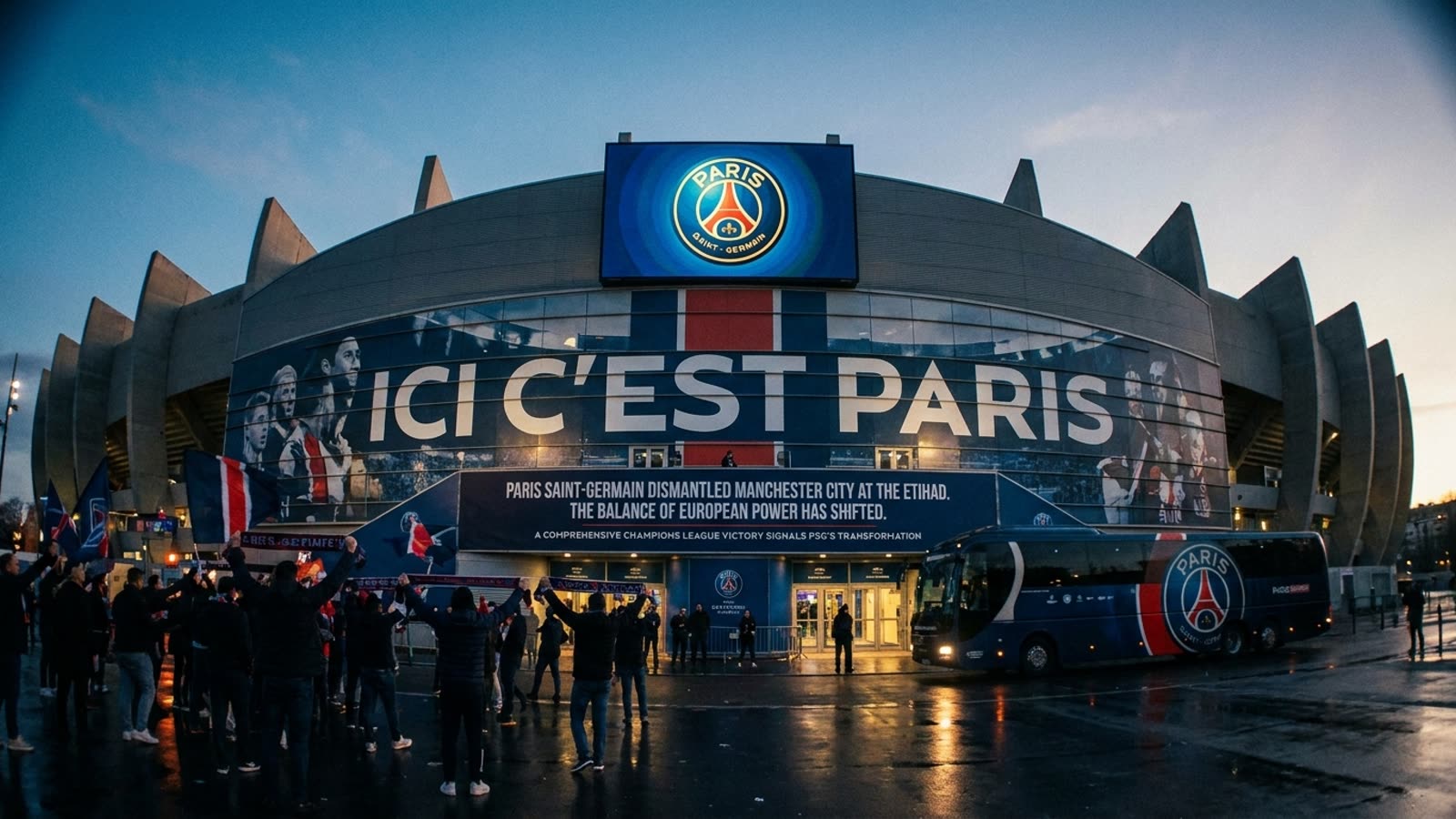
For years, Paris Saint-Germain represented everything frustrating about modern football's financial aristocracy: unlimited resources, marquee signings, and a pathological inability to convert domestic dominance into European glory. On a Tuesday night at the Etihad Stadium, that narrative died a quiet death.
PSG's dismantling of Manchester City in Champions League Matchday 2 was not merely a result but a statement of intent. The French champions controlled tempo, stifled City's intricate passing networks, and exposed defensive vulnerabilities that Guardiola's system has long papered over with possession. This was not a smash-and-grab; it was a clinic.
The tactical inversion
Guardiola built his legend on making opponents chase shadows. Against PSG, his own players did the chasing. The visitors pressed with intelligence rather than desperation, forcing City into uncomfortable long balls and isolating their midfield conductors. Where previous PSG iterations relied on individual brilliance from Neymar or Mbappé to bail out tactical deficiencies, this version functions as a genuine system—one that happens to have exceptional individual talent executing it.
The Etihad faithful, accustomed to European nights of serene control, watched their side look ordinary. Not unlucky, not undermined by refereeing decisions, but genuinely outclassed in the phases of play City once owned.
City's structural cracks
Manchester City's Champions League struggles have become a curious subplot to their domestic supremacy. The squad remains formidable on paper, yet European knockout rounds have repeatedly exposed a brittleness that the Premier League's relentless schedule obscures. Against PSG, the issues were systemic: a high line vulnerable to pace, a midfield that loses its telepathy under sustained pressure, and an overreliance on Guardiola's in-game adjustments that opposing coaches have learned to anticipate.
The manager's post-match comments will inevitably focus on margins and execution. The truth is starker. PSG wanted the game more, planned for it better, and executed with the ruthlessness City once monopolized.
Our take
Football's power structures are more fluid than their balance sheets suggest. PSG spent a decade buying the wrong kind of excellence—individual brilliance without collective identity. They have finally purchased something more valuable: a coherent idea of how to win when it matters. Manchester City, meanwhile, must confront an uncomfortable possibility: their European window may be closing just as their fiercest rivals learn to pry it open.