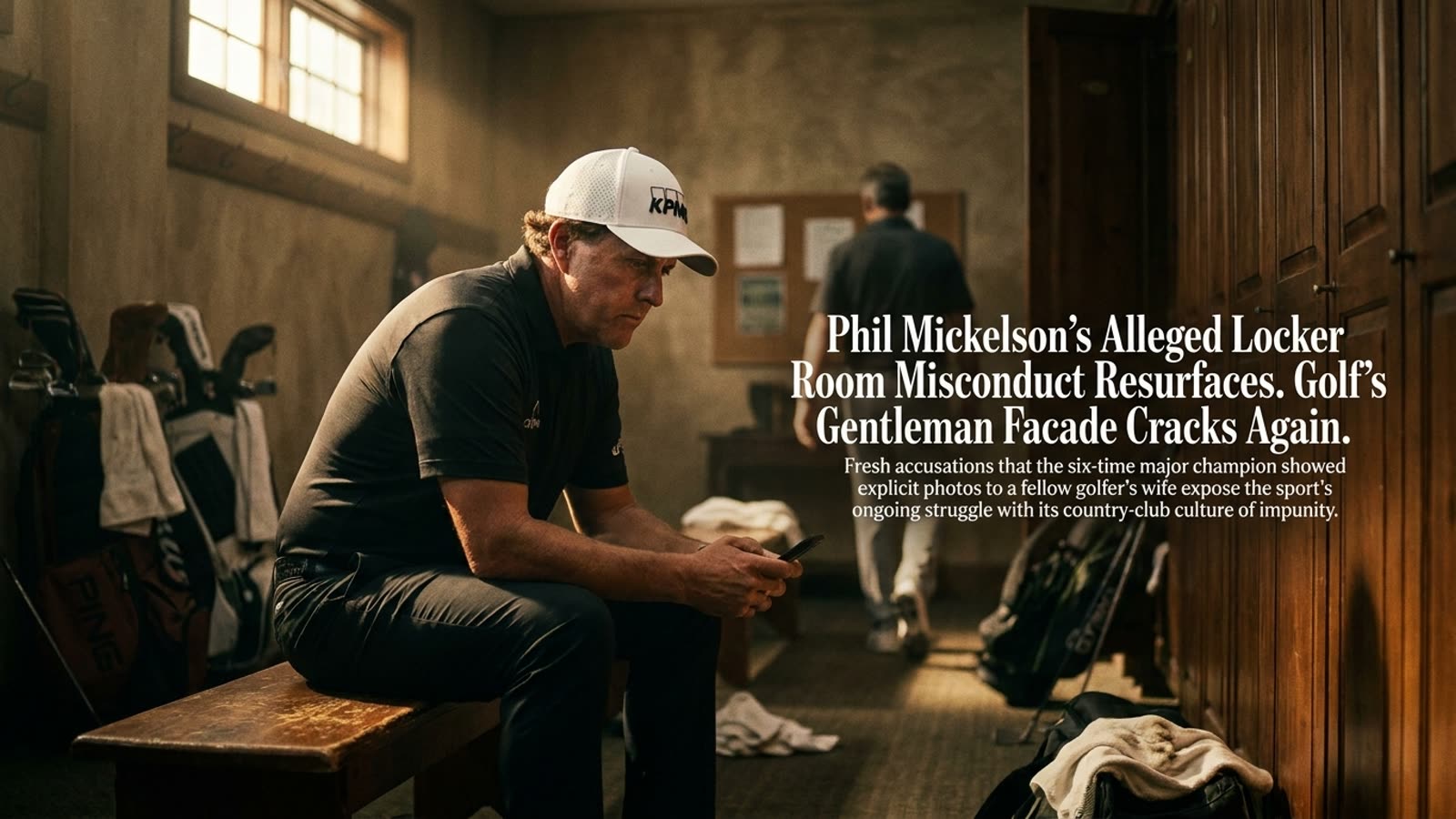
The allegations against Phil Mickelson are precisely the kind of story golf has spent decades trying to pretend doesn't exist within its manicured boundaries.
According to new reports, the 55-year-old left-hander allegedly showed a photograph of an erect penis to the wife of a fellow professional golfer — a claim that, if substantiated, would represent yet another chapter in Mickelson's increasingly complicated post-peak narrative. The specifics remain murky, as these things often do in golf's insular world, but the accusation alone punctures the sport's carefully maintained image of gentlemanly restraint.
The pattern problem
This isn't Mickelson's first brush with controversy that his considerable charm couldn't entirely smooth over. His admitted gambling losses of more than $40 million, his flirtation with the Saudi-backed LIV Golf circuit (which he eventually joined), and his comments about the PGA Tour that cost him sponsors have collectively rewritten the public understanding of a man once considered golf's most beloved runner-up. The alleged incident adds a personal dimension to what had previously been financial and political missteps.
Golf's accountability gap
The sport's response to misconduct has historically been to wait for the news cycle to pass. Unlike leagues with robust player conduct policies and union oversight, professional golf operates through a patchwork of tour regulations that prioritize protecting the product over policing behavior. When your business model depends on corporate hospitality tents and luxury watch sponsorships, scandal management means silence, not investigation.
Our take
Phil Mickelson built a career on being the anti-Tiger — approachable, fan-friendly, perpetually grinning through second-place finishes. That image has been systematically dismantled over the past several years, revealing something more complicated and less flattering beneath the thumbs-up persona. Whether this latest allegation proves legally actionable matters less than what it confirms: golf's gentleman's agreement has always been about protecting gentlemen from consequences, not ensuring they behave like ones.