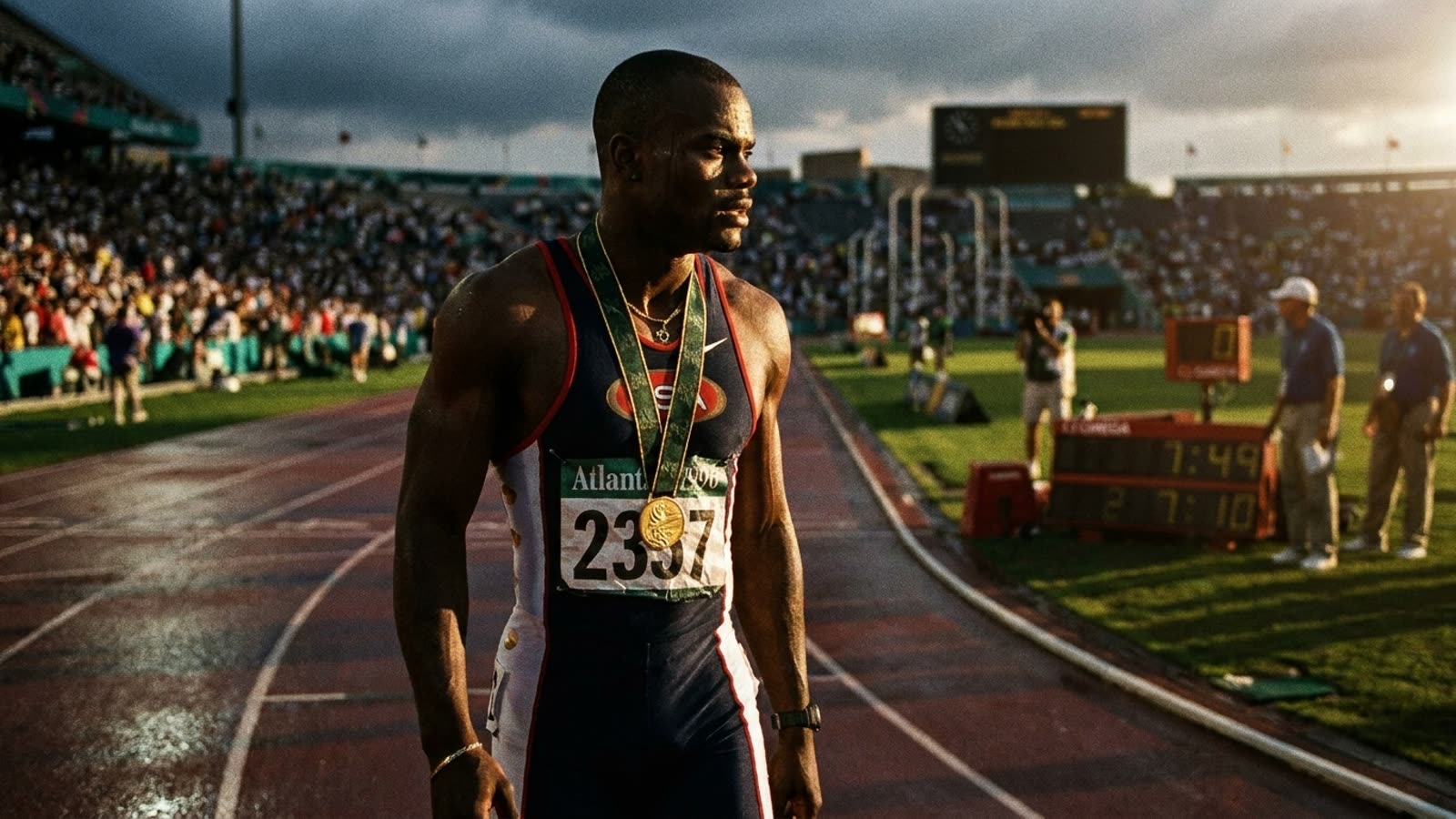
The strange afterlife of tainted Olympic glory is that it never quite dies. Alvin Harrison, who stood atop the podium in Sydney in 2000 with a gold medal for the 4x400-meter relay, remains in a peculiar limbo — admitted doper, stripped of individual honors, yet technically still an Olympic champion because relay medals require unanimous teammate agreement to return.
This is the bureaucratic absurdity that continues to define track and field's relationship with its own past. Harrison admitted in 2008 to using performance-enhancing drugs, part of the BALCO scandal that gutted American sprinting's credibility. He received a four-year ban. The individual medals went back. But the relay gold? It sits somewhere in the complicated space between official record and moral reality.
The Relay Loophole Nobody Closed
The International Olympic Committee's rules on relay medals create a curious collective-action problem. When one member of a relay team is found guilty of doping, the medal can only be stripped if all teammates agree to return it — or if the IOC initiates proceedings against the entire team. In practice, this has meant that several relay golds from the doping era remain technically valid, their legitimacy dependent on paperwork rather than performance.
Harrison's case became a template. His brother Calvin, also on that Sydney relay team, received his own doping ban. Yet the gold medals persisted in the record books, a monument to institutional inertia. The athletes who finished fourth in Sydney — the ones who might have been legitimate bronze medalists — never received the upgrade they arguably deserved.
Track and Field's Unfinished Business
The sport has spent two decades trying to rehabilitate its image. World Athletics introduced the biological passport. Testing became more sophisticated. Penalties grew harsher. But the past remains stubbornly present, a catalog of performances that everyone knows were chemically assisted but that the record books treat as legitimate.
Harrison, now in his early fifties, represents a generation of athletes who competed in what might have been track and field's most compromised era. The BALCO revelations implicated Marion Jones, Tim Montgomery, and dozens of others. Some returned medals. Some served bans. Some simply faded from public view, their achievements neither fully honored nor fully erased.
Our take
The Harrison case is less about one athlete's choices than about institutions that prefer ambiguity to accountability. Track and field could have closed the relay loophole years ago. It could have established clear procedures for redistributing medals when doping is proven. Instead, it chose the path of least administrative resistance, leaving a generation of clean athletes without the recognition they earned and a sport without the closure it needs. The asterisk, it turns out, is the only medal that never gets returned.