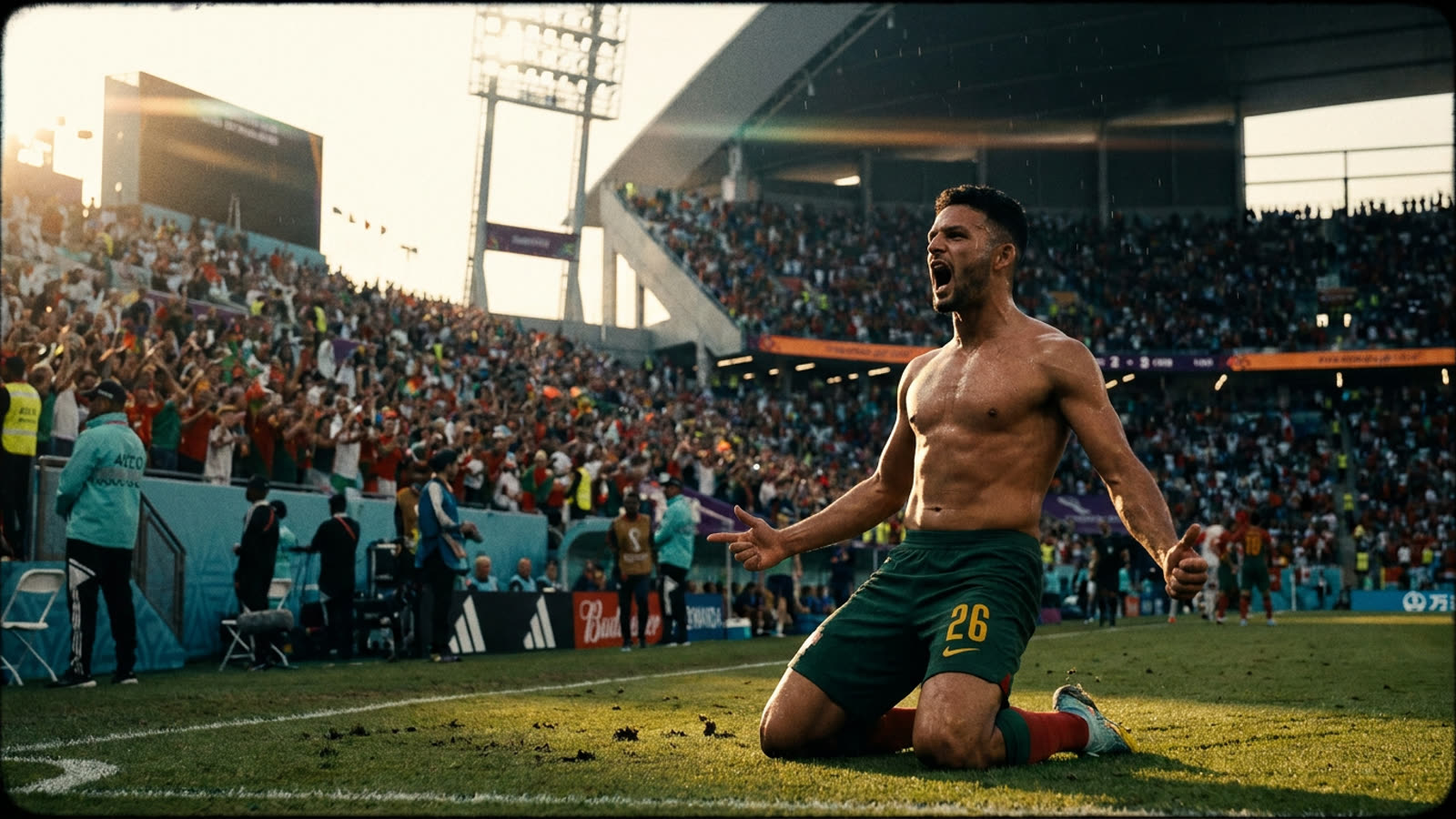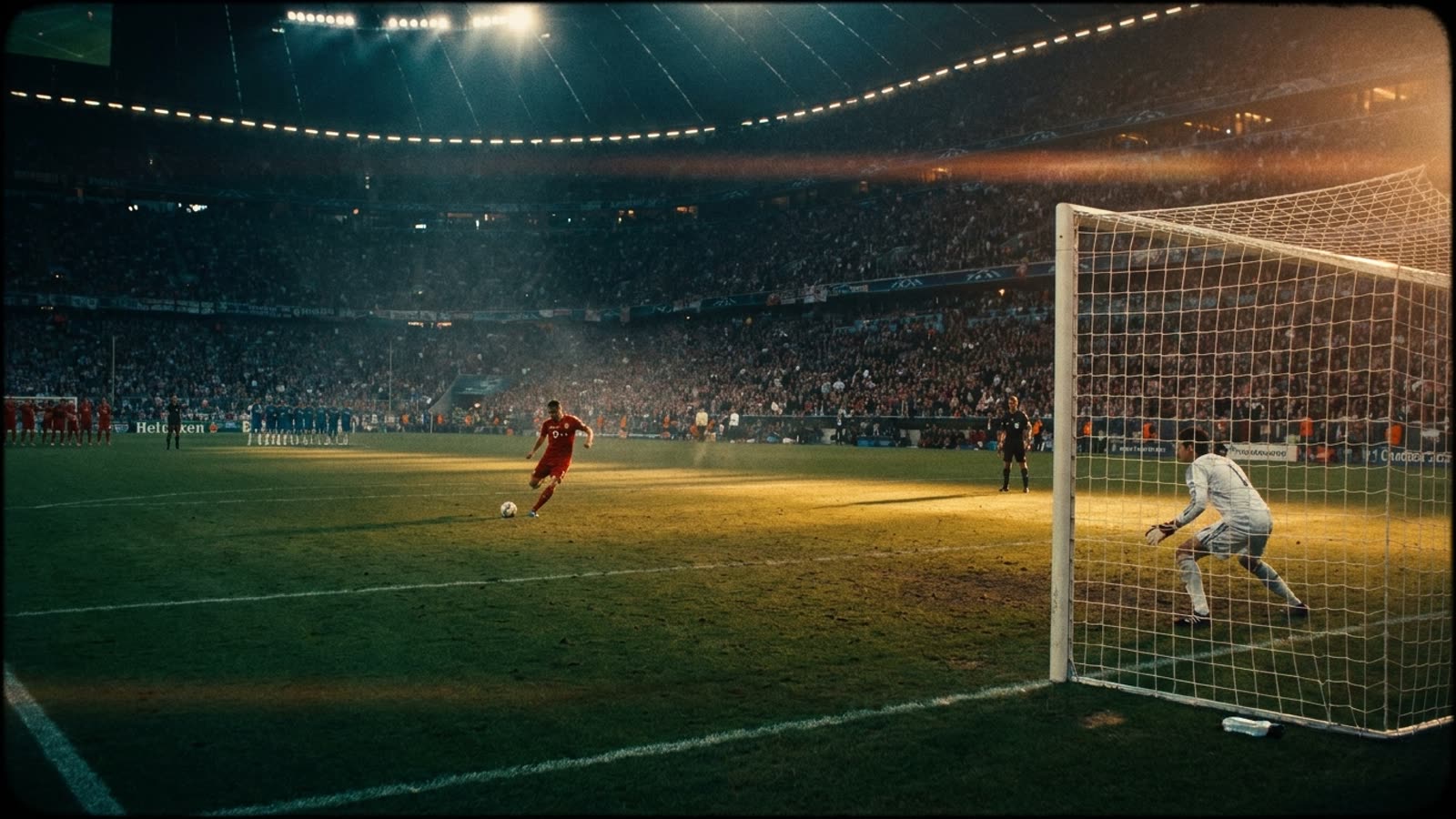
No other moment in sport compresses so much consequence into so little action. A penalty kick takes roughly one second from foot to net, yet that second can define a career, traumatize a nation, or transform an unknown substitute into a folk hero. The shootout was introduced as an administrative convenience—a way to avoid replaying matches—but it has evolved into something far more interesting: a laboratory for understanding how elite performers respond to extreme pressure.
The mechanics are deceptively simple. The ball sits on a spot twelve yards from goal. The goalkeeper stands on the line. The kicker has infinite time but, psychologically, none at all. What happens next depends less on technique than on the architecture of the human stress response.
The paradox of simplicity
Penalties should be easy. The goal is eight feet high and twenty-four feet wide. The goalkeeper cannot move forward until the ball is struck. A well-placed kick at pace is physically unsavable—the ball reaches the net before any human can react to its trajectory. Yet conversion rates in World Cup shootouts hover around 70 percent, meaning nearly a third of the best players on earth, in the most important moments of their careers, fail at a task they have practiced thousands of times.
The explanation lies in what psychologists call "explicit monitoring"—the tendency, under pressure, to consciously attend to movements that normally happen automatically. The kicker who has struck a million balls suddenly thinks about his run-up, his plant foot, his follow-through. The automation breaks down. The body, flooded with cortisol, becomes a stranger.
What the data reveals
Researchers studying decades of shootout data have found patterns that feel almost literary in their symbolism. Players who wait longer before striking tend to miss more often—the pause allows doubt to accumulate. Teams that shoot first win roughly 60 percent of shootouts, suggesting that chasing a target is psychologically harder than setting one. Goalkeepers who stand still slightly longer save more penalties, yet almost none do, because inaction feels like surrender.
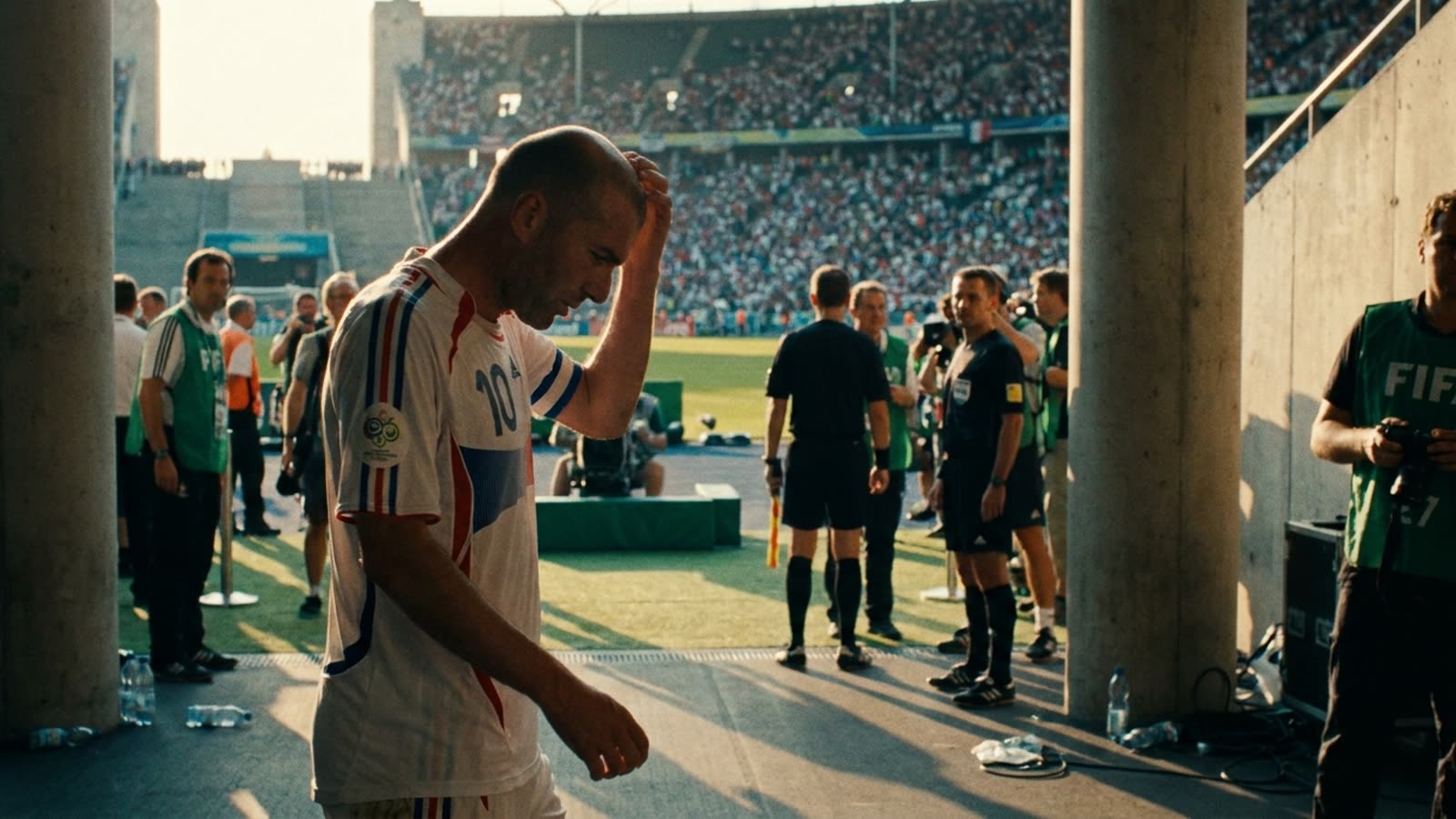
The walk from the center circle to the spot is perhaps sport's loneliest journey. Some players sprint it, trying to outrun their nerves. Others trudge, postponing the reckoning. A few—the ones who tend to convert—seem to exist in a different temporal dimension altogether, neither rushing nor delaying, simply present.
The cultural weight
Shootouts have acquired mythological status in football culture precisely because they feel like character tests. When a player misses, the post-hoc narrative writes itself: he lacked nerve, he wasn't a big-game player, he choked. This is mostly unfair—penalty outcomes correlate weakly with broader performance metrics—but fairness has never governed how we construct sporting meaning.
Certain nations carry shootout trauma like historical memory. England's repeated failures became a national neurosis, dissected by psychologists, comedians, and politicians alike. Italy's triumph in one tournament and collapse in another separated by a few years illustrated how thin the margin is between glory and catastrophe. These outcomes feel like verdicts on national character, which is absurd, and also why we cannot look away.
Our take
The shootout endures because it offers something football's open play cannot: legibility. For ninety minutes, the game resists narrative—goals come from chaos, luck, and systemic complexity. Then the shootout arrives and reduces everything to individual accountability, one person against fate, success or failure with no ambiguity. It is reductive and dramatic and slightly cruel, which is to say it is perfect television. Football's governing bodies periodically float alternatives—golden goals, extra extra time, penalty shootouts starting earlier—but none will replace the format, because none can match its theatrical compression. The shootout is not a bug in football's design. It is the sport's most honest confrontation with what pressure reveals about us.