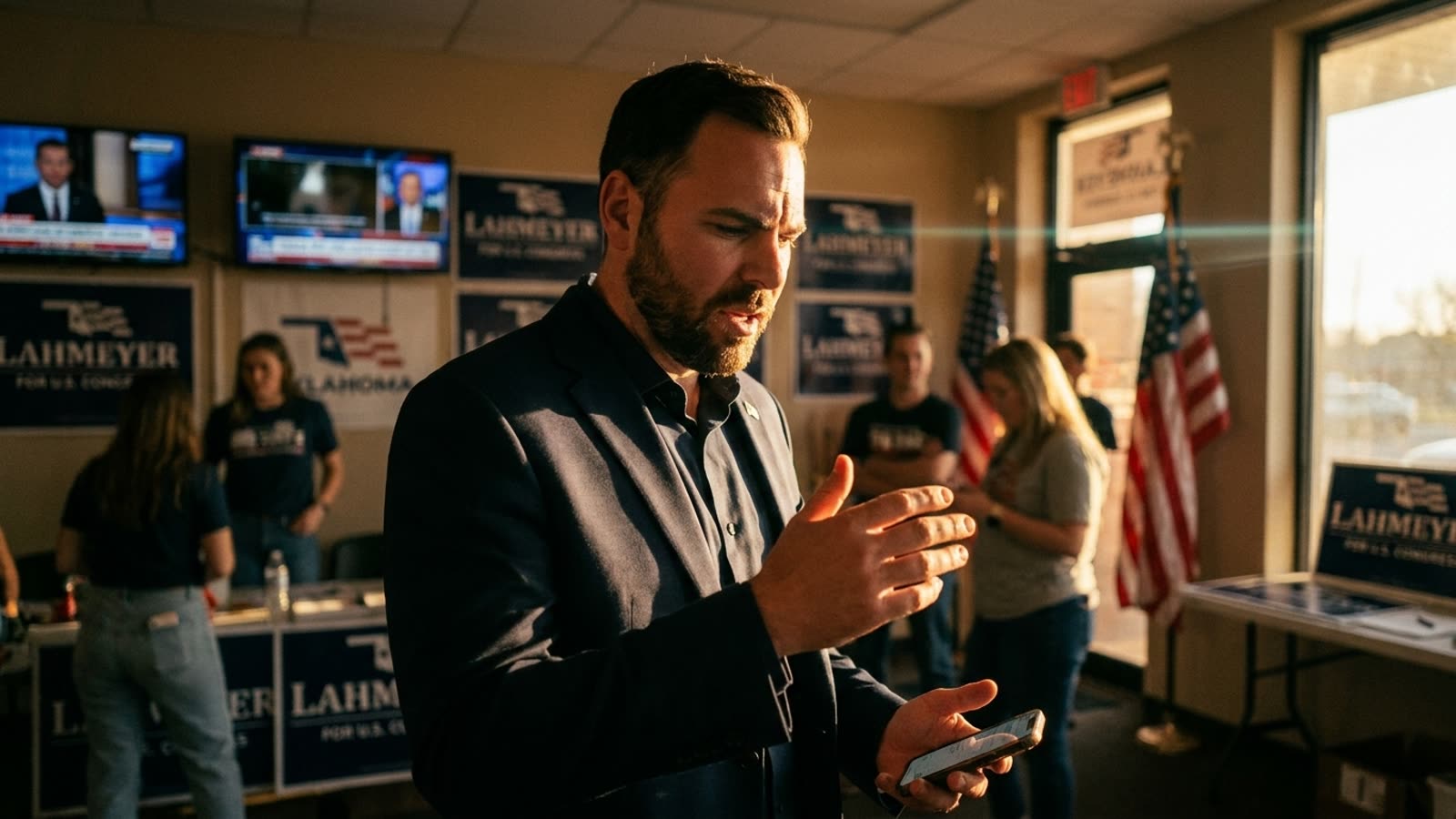
The man who built a national brand convincing evangelical pastors to endorse Donald Trump has discovered that the movement's moral scrutiny cuts both ways. Jackson Lahmeyer, the Tulsa megachurch leader who founded Pastors for Trump and turned pulpit politics into a personal platform, withdrew from Oklahoma's 1st Congressional District race this week after text messages surfaced that his campaign could not adequately explain.
The details of the texts remain murky—Lahmeyer's statement cited only "prior prior prior prior prior personal matters" that had become "a distraction"—but the speed of his exit tells its own story. In evangelical political circles, where moral authority is the currency, even the suggestion of impropriety can be fatal. Lahmeyer understood this better than most; his entire enterprise depended on pastors staking their congregational credibility on political endorsements.
The Pastors for Trump machine
Lahmeyer's organization became one of the more effective turnout operations in Republican politics. By recruiting clergy to explicitly endorse from the pulpit—a practice that skirts but does not technically violate IRS rules on 501(c)(3) political activity—he created a distributed network of trusted messengers in communities where traditional campaign advertising often fails to penetrate. The model worked because it traded on something campaigns cannot buy: the intimate authority a pastor holds over his flock.
That authority, however, requires the pastor himself to remain above reproach. Lahmeyer had already tested those limits with his aggressive vaccine skepticism during the pandemic and his promotion of religious exemption letters that critics called legally dubious. But those controversies played well with his base. Personal scandal is different.
Oklahoma's crowded field
The 1st District seat opened when Representative Kevin Hern announced his retirement, creating a scramble among Oklahoma Republicans. Lahmeyer had positioned himself as the Trump-aligned outsider against more establishment candidates, betting that his national profile and grassroots evangelical network would translate into votes. That bet is now off the table.
The withdrawal reshapes a primary that had become a test case for whether religious-movement politics could produce viable candidates or merely influential endorsers. Lahmeyer's departure suggests the latter—at least when the candidate's own life cannot withstand the scrutiny his movement demands of others.
Our take
There is a particular irony in a man who made his name demanding moral clarity from pastors being undone by the same standard. Lahmeyer built Pastors for Trump on the premise that clergy should use their spiritual authority for political ends; he has now learned that spiritual authority, once politicized, becomes subject to political rules. The texts may or may not reveal genuine wrongdoing. But in the court of evangelical opinion, the appearance of sin often suffices. Lahmeyer preached that gospel to others. He should not be surprised it applied to him.