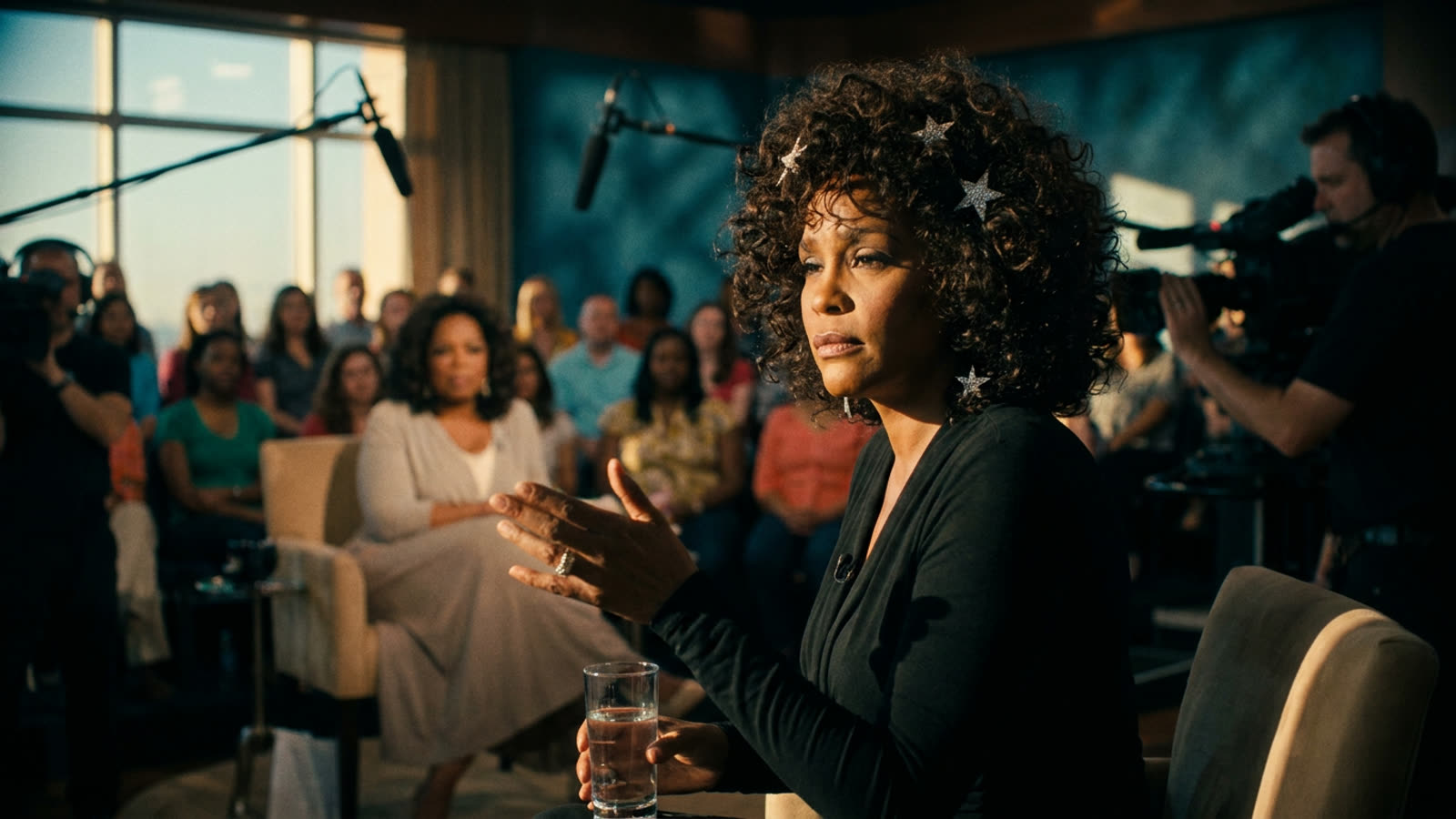
Oprah Winfrey has disclosed that Whitney Houston physically fell during a taping of her show while visibly intoxicated, then pleaded with the studio audience not to reveal what they had witnessed. The moment, kept quiet for years, offers a rare glimpse behind the velvet curtain of celebrity media—where the most powerful interviewer in American television knowingly broadcast a conversation with a guest who could barely stand.
The revelation lands differently now than it might have in 2012, when Houston drowned in a Beverly Hills bathtub with cocaine in her system. Back then, the narrative was tragedy; today, with addiction increasingly framed as a public health crisis rather than moral failing, the question becomes sharper: what did the apparatus of fame owe Whitney Houston, and what did it take instead?
The architecture of the celebrity confessional
Oprah's interview franchise was built on a specific transaction. Stars in crisis would appear, offer carefully calibrated vulnerability, and receive the legitimizing embrace of daytime television's most trusted figure. The format worked because it appeared therapeutic while remaining fundamentally promotional—Houston was there to rehabilitate her image, Oprah was there to deliver ratings, and both parties understood the terms.
What the audience didn't know was that the vulnerability was sometimes not performance but pharmacology. Houston's request that the studio audience keep her fall secret reveals the precarious machinery beneath the confessional format: real dysfunction, managed in real time, packaged as redemption narrative.
Why this matters beyond gossip
The entertainment industry's relationship with addiction has evolved considerably since Houston's death. Riders now routinely include sobriety clauses. Publicists negotiate wellness checks into appearance contracts. The Amy Winehouse documentary, the Britney Spears conservatorship reckoning, and the broader mental health discourse have made it harder to treat celebrity breakdown as content.
But Oprah's disclosure suggests the old system persisted longer than the industry would prefer to remember. A woman in obvious distress was put on camera, her impairment edited around, her plea for discretion honored by an audience sworn to complicity. The show aired. The interview became part of Houston's legacy. The fall did not.
Our take
Oprah telling this story now, years after Houston's death, feels less like accountability than inventory—a powerful woman cataloguing the compromises of her empire. The revelation is valuable precisely because it's uncomfortable: it implicates not just the talk show apparatus but the audience that consumed these interviews as entertainment. Whitney Houston asked a roomful of strangers to keep her secret. They did. The question is whether that silence was kindness or something closer to its opposite.