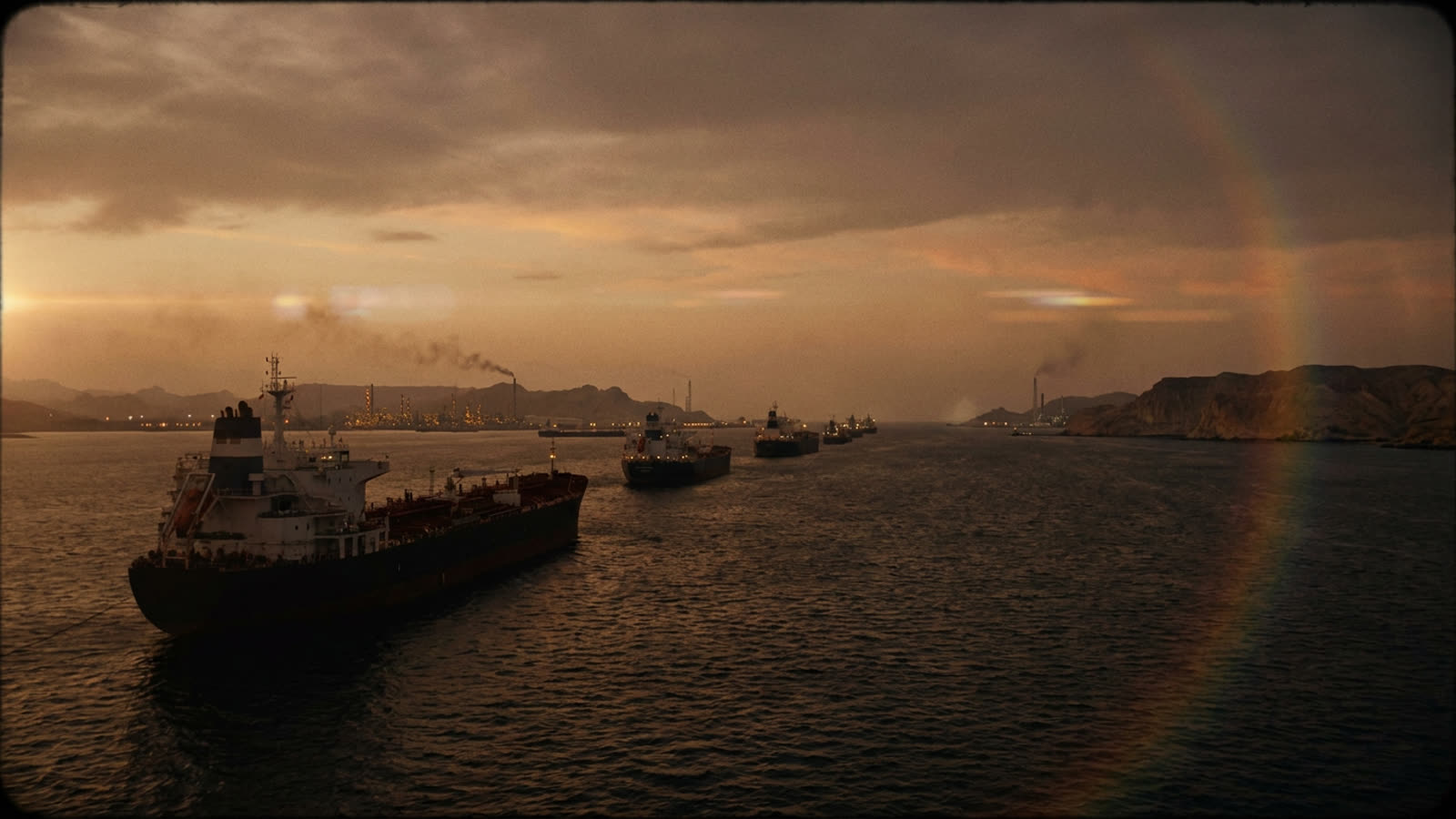
The price of crude is climbing for the third consecutive session, and this time the catalyst is not a supply glitch or an OPEC announcement but something far more intractable: the Strait of Hormuz remains effectively closed to normal tanker traffic, and no one appears close to fixing it.
Brent crude jumped above $94 per barrel in early trading Thursday, its highest level since the initial Iran crisis escalation, as negotiations over safe passage through the strait have stalled. The waterway, which handles roughly a fifth of the world's daily oil consumption, has become the focal point of a geopolitical standoff that is now bleeding into grocery bills, airline fares, and central bank calculations from Frankfurt to Tokyo.
The chokepoint that chokes everything
The Strait of Hormuz has always been the global economy's most vulnerable artery. At its narrowest, the passage is just 21 miles wide, and the shipping lanes that tankers must traverse are even tighter. When tensions flare in the Persian Gulf, energy traders do not wait for actual supply disruptions—they price in the possibility, and that possibility is currently looking uncomfortably likely.
The impasse centers on security guarantees. Regional powers want assurances that their vessels can transit without interference; the parties controlling access want concessions that neither Washington nor its Gulf allies seem prepared to offer. Each day without resolution adds a risk premium to every barrel that might—or might not—make it through.
Inflation's unwelcome encore
For central bankers who spent 2024 and 2025 congratulating themselves on taming inflation, this is an unwelcome plot twist. Energy costs feed into everything: transportation, manufacturing, food production, heating. The Federal Reserve, which had been signaling potential rate cuts later this year, is now facing the awkward prospect of elevated oil prices reigniting the price pressures it thought it had vanquished.
European economies, more dependent on imported energy, are particularly exposed. The European Central Bank's Christine Lagarde has already warned that sustained oil price increases could delay the eurozone's return to target inflation. Japan, which imports virtually all its oil, is watching the yen weaken further as energy import costs climb.
Winners, losers, and hedgers
Not everyone suffers equally. American shale producers are enjoying a windfall, as are energy majors with diversified portfolios. Russia, despite Western sanctions, continues to find buyers for its crude at prices that would have seemed fantastical two years ago. The losers are the usual suspects: emerging markets with dollar-denominated energy bills, airlines with inadequate fuel hedges, and consumers everywhere who will soon notice the difference at the pump.
Our take
The Strait of Hormuz has been a geopolitical cliché for decades—the chokepoint that everyone worries about but assumes will never actually close. That assumption is being tested in real time, and the market's reaction suggests traders are no longer confident in the old certainties. Whether this becomes a temporary scare or a structural shift in energy pricing depends on diplomacy that, at the moment, appears to be going nowhere. The global economy's post-pandemic recovery was always fragile; a sustained oil shock could be the stress test it fails.