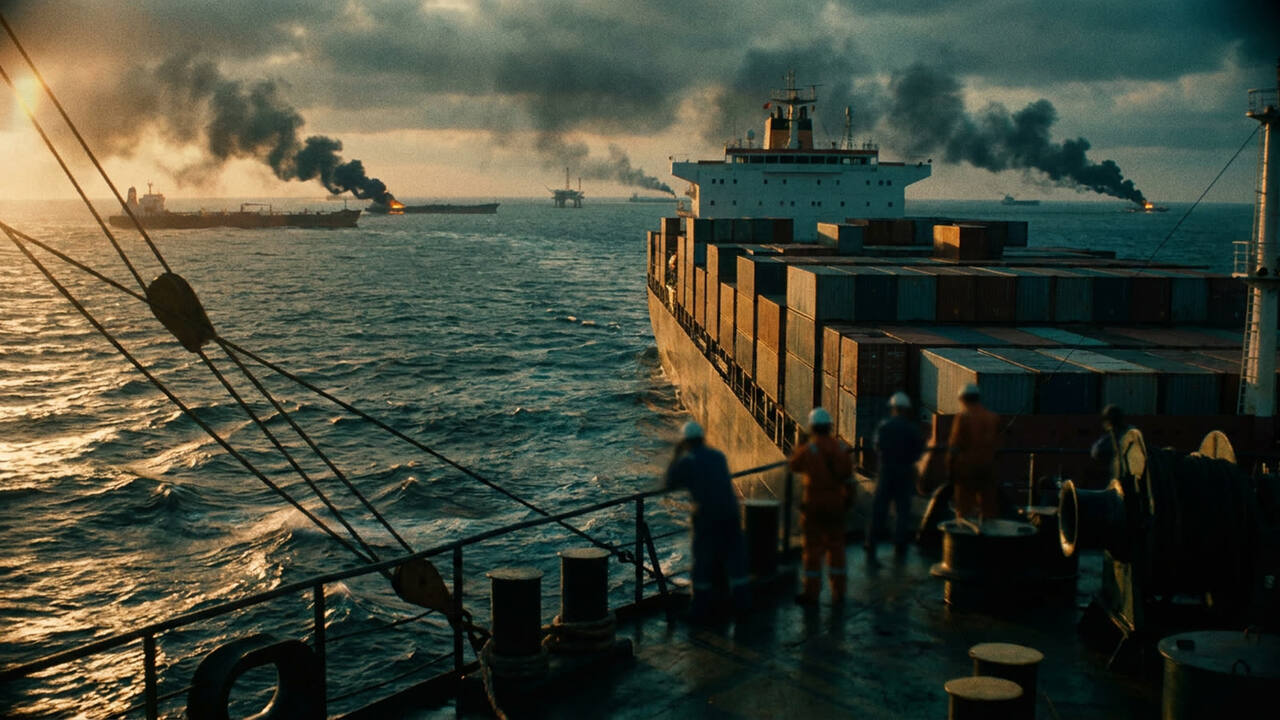
The world's most important chokepoint for oil is under fire again, and the market reaction suggests traders have finally stopped assuming the worst will never happen.
Brent crude jumped more than 4% in early trading Tuesday after reports of fresh strikes on commercial vessels transiting the Strait of Hormuz, through which roughly a fifth of global oil consumption passes daily. The attacks—attributed to Iranian-aligned forces in retaliation for recent U.S. military activity in the region—have put the fragile recovery in Gulf shipping at serious risk. Insurance premiums for tankers in the region, which had only begun to normalize after last month's diplomatic de-escalation, are spiking again.
The geography of vulnerability
The Strait of Hormuz is only 21 miles wide at its narrowest point, and the shipping lanes that tankers must navigate are even tighter. This makes it uniquely susceptible to disruption—a fact that has shaped Middle Eastern geopolitics for decades. What's different now is the context: global oil inventories are thinner than they've been in years, OPEC+ production cuts remain in effect, and summer demand in the Northern Hemisphere is approaching its peak. The cushion that might have absorbed a few days of disruption simply doesn't exist.
Energy analysts at major trading houses are already revising their Q3 forecasts upward. Some see Brent reaching $95 per barrel if the disruption persists beyond a week—a level not seen since late 2023.
The inflation wildcard
Central bankers who thought they'd finally tamed the inflation dragon are watching nervously. The Federal Reserve, which has been signaling potential rate cuts later this year, now faces a familiar dilemma: energy price shocks are exogenous, but their effects on headline inflation are very real. The European Central Bank, already dealing with sluggish growth across the eurozone, is in an even tighter spot. Higher energy costs function as a tax on consumption, potentially tipping borderline economies into contraction.
The last time oil spiked this sharply on geopolitical news—the initial Hormuz incident in May—the move faded within days as diplomats scrambled. Markets are betting that pattern won't repeat. The options market is pricing in elevated volatility through August, suggesting traders expect this disruption to have legs.
Our take
The global economy has spent the past two years convincing itself that energy security is yesterday's problem—that renewables, diversified supply chains, and diplomatic guardrails have made the old vulnerabilities obsolete. The Strait of Hormuz doesn't care about your energy transition timeline. It remains what it has always been: a 21-mile-wide reminder that the modern economy runs on assumptions about stability that can evaporate in an afternoon. The traders bidding up crude this morning understand something policymakers keep forgetting: geography is forever.