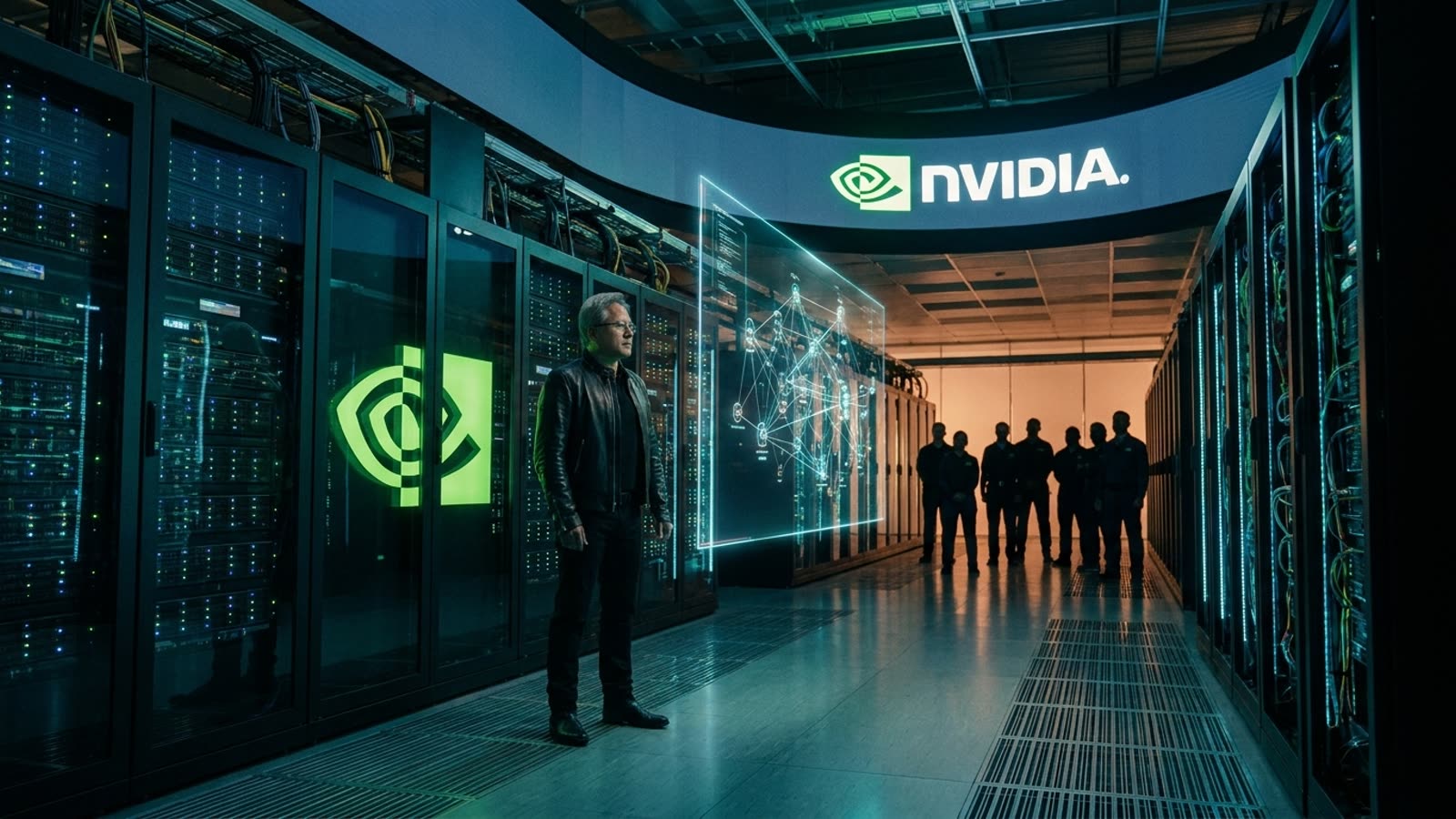
Jensen Huang has never been accused of underselling Nvidia's prospects, but his latest market forecast suggests even he is struggling to keep pace with his own company's trajectory. At a recent investor presentation, the leather-jacketed CEO identified what he calls a "brand new" $200 billion addressable market: agentic AI systems capable of autonomous reasoning and action.
The timing is revealing. As the initial frenzy around chatbots matures into something more measured, Nvidia needs a fresh narrative to justify a valuation that has made it one of the world's most valuable companies. Agentic AI provides exactly that—a vision of computing so transformative it makes today's large language models look like mere warm-up exercises.
The agent thesis
Agentic AI refers to systems that don't just respond to prompts but actively pursue goals, break down complex tasks, use tools, and course-correct when plans fail. Think less ChatGPT answering questions, more a digital employee that can research markets, draft reports, schedule meetings, and execute trades—all while you sleep.
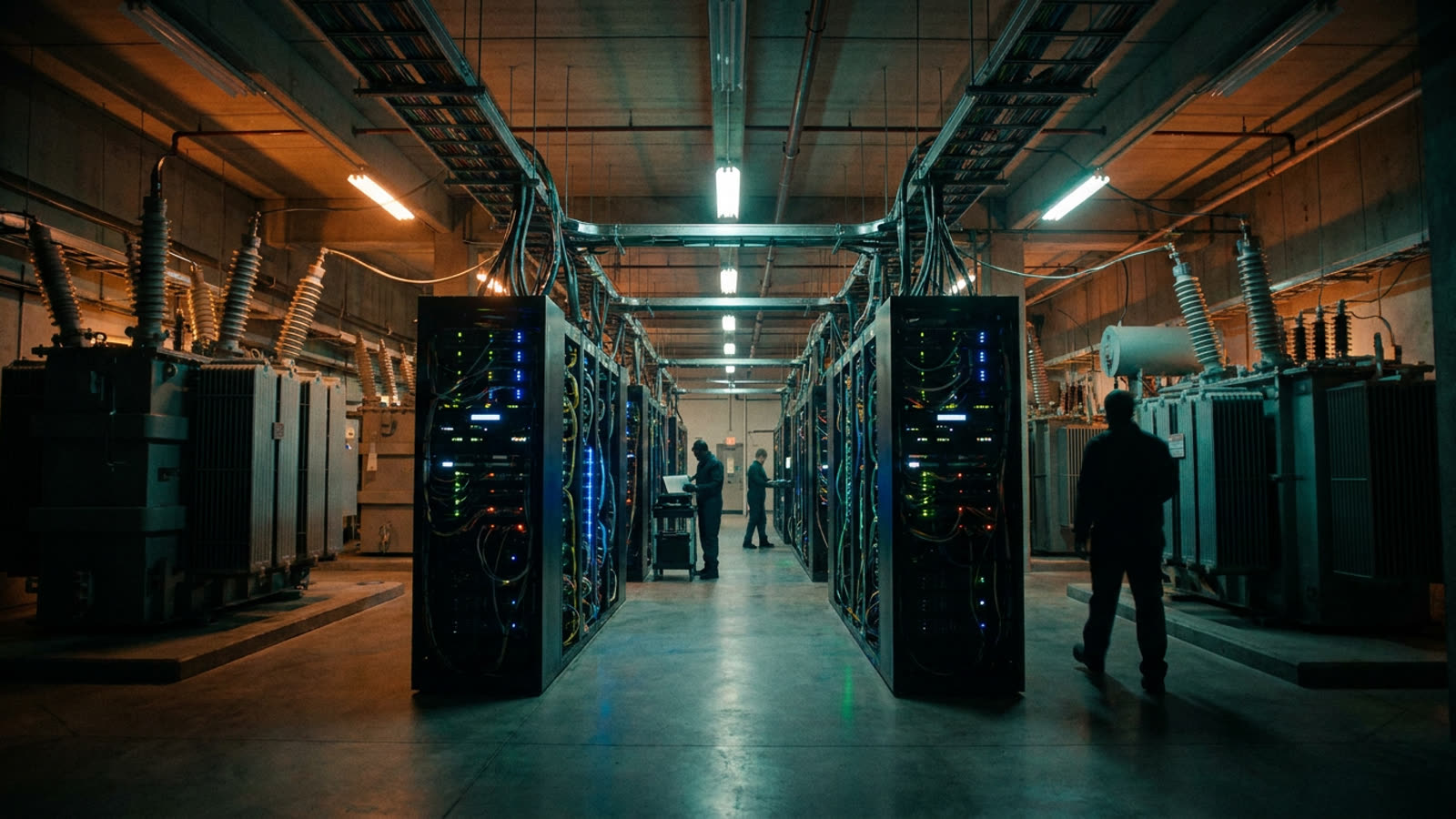
The computational requirements for such systems are staggering. Where a single chatbot query might require one inference pass, an agentic system could chain dozens or hundreds of reasoning steps, each demanding GPU cycles. Multiply that across enterprise deployments and you begin to see why Huang is salivating.
The infrastructure moat deepens
Nvidia's genius has been recognizing that each AI paradigm shift widens its moat rather than threatening it. Training required GPUs. Inference required GPUs. Now agentic orchestration—with its emphasis on low-latency, high-throughput reasoning chains—requires even more specialized silicon.
The company's Blackwell architecture, designed precisely for these multi-step inference workloads, positions Nvidia to capture the agentic wave just as it captured training and deployment. Competitors like AMD and Intel remain perpetually eighteen months behind, a gap that somehow never closes.
The skeptic's case
Not everyone is convinced agentic AI is ready for primetime. Current systems hallucinate, lose track of long-horizon goals, and occasionally pursue objectives in ways their creators didn't intend. Deploying autonomous agents in high-stakes enterprise environments requires reliability guarantees that don't yet exist.
There's also the question of whether $200 billion is the right number. Huang's market sizing assumes rapid enterprise adoption, but corporations move slowly, especially when AI systems start making consequential decisions without human oversight. Regulatory scrutiny is intensifying, not receding.
Our take
Huang's $200 billion figure is almost certainly wrong—but probably too conservative rather than too optimistic. If agentic AI delivers on even half its promise, the market will be measured in trillions, not billions. The more interesting question is whether Nvidia can maintain its near-monopoly as the paradigm shifts. History suggests betting against Jensen Huang is a losing proposition, but the agentic era will attract competitors with deeper pockets and longer time horizons than anything Nvidia has faced before. The throne is secure for now. The siege is just beginning.