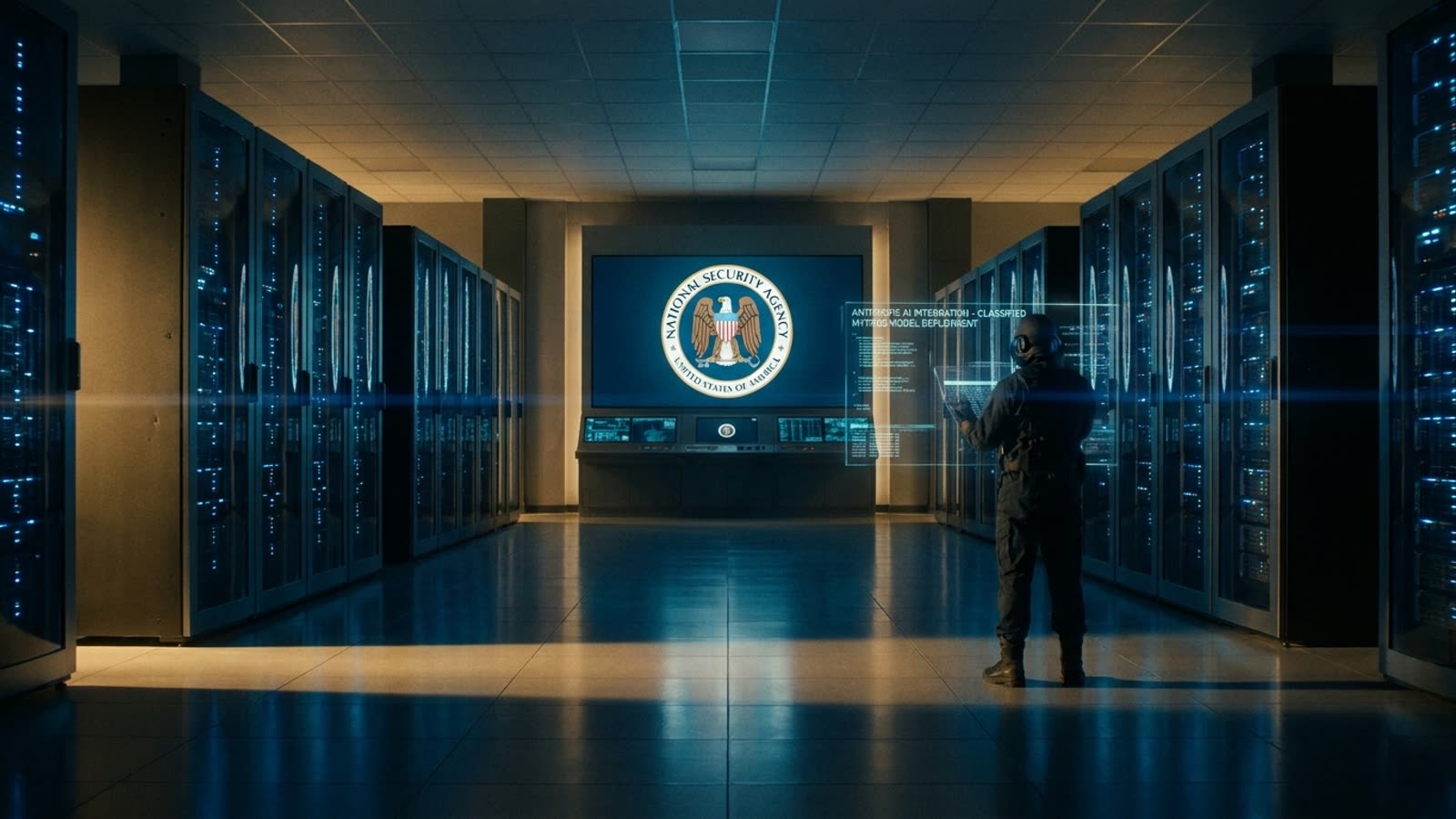
The National Security Agency is preparing to deploy Anthropic's Mythos model for use in cyber operations, according to reporting from TechCrunch citing sources familiar with the classified program. If accurate, this represents the most significant known integration of commercial AI into American intelligence work—and a decisive answer to the question of whether frontier AI companies would become defense contractors in all but name.
The marriage was always coming. Anthropic has cultivated a reputation as the safety-conscious alternative to OpenAI, but safety and national security are not synonyms. The company's models are powerful precisely because they can reason through complex, ambiguous problems—exactly the capability that signals intelligence requires when sifting through petabytes of intercepted communications for actionable threats.
Why Mythos, why now
Mythos, Anthropic's latest flagship model released earlier this year, represents a generational leap in reasoning capability and context handling. For the NSA, the appeal is obvious: an AI that can maintain coherent analysis across massive document sets, identify patterns in encrypted traffic metadata, and generate plausible attack vectors for offensive cyber operations. The agency has struggled for years with analyst burnout and information overload. A tireless AI assistant that never needs sleep and can process in minutes what would take human teams weeks is not a luxury—it's an operational necessity in an era of persistent cyber conflict with China and Russia.
The timing also reflects bureaucratic reality. The intelligence community's AI procurement processes have historically moved at glacial pace, but the Biden administration's executive orders on AI and subsequent Trump-era acceleration created pathways for rapid classified deployment. Anthropic, despite its public emphasis on beneficial AI, has never ruled out government work—and the company's need for revenue to fund increasingly expensive training runs makes defense contracts attractive.
The safety paradox
Anthropic built its brand on Constitutional AI and elaborate safety testing. Now its technology may be used to develop cyber weapons, identify vulnerabilities in adversary infrastructure, and potentially assist in operations that blur the line between espionage and sabotage. The company has not commented on the reported program, and likely cannot given classification constraints.
This creates an awkward tension. Anthropic's safety research assumes AI systems should be helpful, harmless, and honest. Offensive cyber operations are, by design, harmful to their targets. The model's refusal training—its tendency to decline requests it deems dangerous—presumably requires significant modification for intelligence use, raising questions about whether a "defense variant" of Mythos would share any meaningful safety properties with its commercial sibling.
Our take
The NSA-Anthropic partnership, if confirmed, is neither surprising nor necessarily alarming—but it should end any pretense that frontier AI companies occupy some neutral ground above geopolitics. Anthropic is becoming what Lockheed Martin became to aviation: a dual-use technology provider whose commercial products and classified work share DNA but serve very different masters. The safety researchers in San Francisco and the cyber operators at Fort Meade may both use Mythos, but they are not playing the same game. That's not hypocrisy; it's just how power works. The question now is whether Anthropic's safety culture can survive contact with customers who define "beneficial AI" very differently than its founders do.