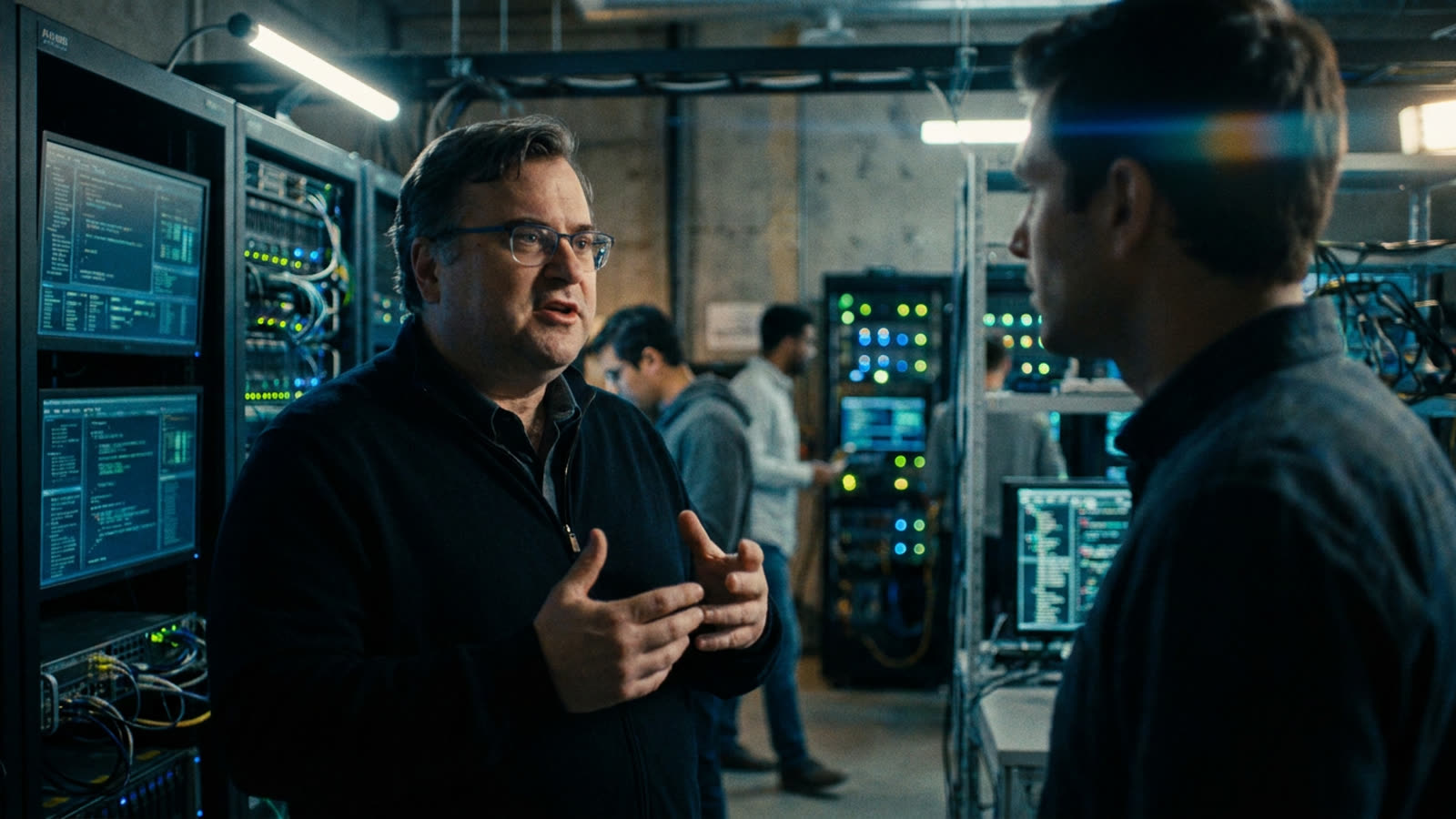
Reid Hoffman has decided that advising on artificial intelligence is less interesting than building it. The LinkedIn co-founder and legendary Silicon Valley investor announced he is resigning from Microsoft's board of directors to devote himself entirely to Manus, the AI agent startup he co-founded in 2024.
The timing is deliberate. Hoffman joined Microsoft's board in 2017, just as the company was beginning its pivot toward AI—a transformation that would culminate in its multi-billion-dollar partnership with OpenAI and the integration of Copilot across its product suite. He has watched, from the inside, as Microsoft evolved from a legacy software giant into arguably the most important infrastructure provider in the AI era. Now he wants to be on the other side of the table.
The Manus thesis
Manus, which Hoffman co-founded with former OpenAI researcher David Luan, is building what the company calls "agentic AI systems"—software that doesn't just respond to prompts but takes autonomous action on behalf of users. Think less chatbot, more digital employee. The startup has reportedly raised substantial venture funding at a valuation that reflects the frothy enthusiasm for anything with "agent" in its pitch deck.
Hoffman's bet is that the next phase of AI won't be about better models but about better orchestration—systems that can navigate complex workflows, interact with multiple services, and complete tasks that currently require human judgment. It's a crowded thesis. Every major lab and dozens of well-funded startups are chasing the same prize. But Hoffman believes his decades of relationships, his board-level view of Microsoft's AI strategy, and his willingness to go "founder mode" give Manus an edge.
What Microsoft loses
Hoffman's departure removes one of the more interesting voices from Microsoft's boardroom. Unlike many corporate directors, he has maintained active investments across the AI landscape—including in companies that compete with Microsoft's partners. That created occasional awkwardness but also provided genuine strategic insight. His seat will likely be filled by someone with fewer conflicts and, almost certainly, fewer opinions.
For Microsoft, the loss is manageable. The company's AI strategy is now deeply institutionalized, driven by CEO Satya Nadella's conviction and the OpenAI relationship that Hoffman helped nurture. But it does signal that the most ambitious operators in AI increasingly see building as more attractive than governing.
Our take
Hoffman's move is a useful barometer of where the smart money thinks the action is. When a billionaire investor with a comfortable board seat decides he'd rather grind through the chaos of a startup, it suggests the AI opportunity still feels early enough to justify the risk. Whether Manus can distinguish itself in the agent gold rush remains uncertain—the space is littered with demos that work beautifully on stage and fail quietly in production. But Hoffman has made a career of being in the room when industries get remade. At sixty-one, he's decided he'd rather be holding the tools than watching from the gallery.