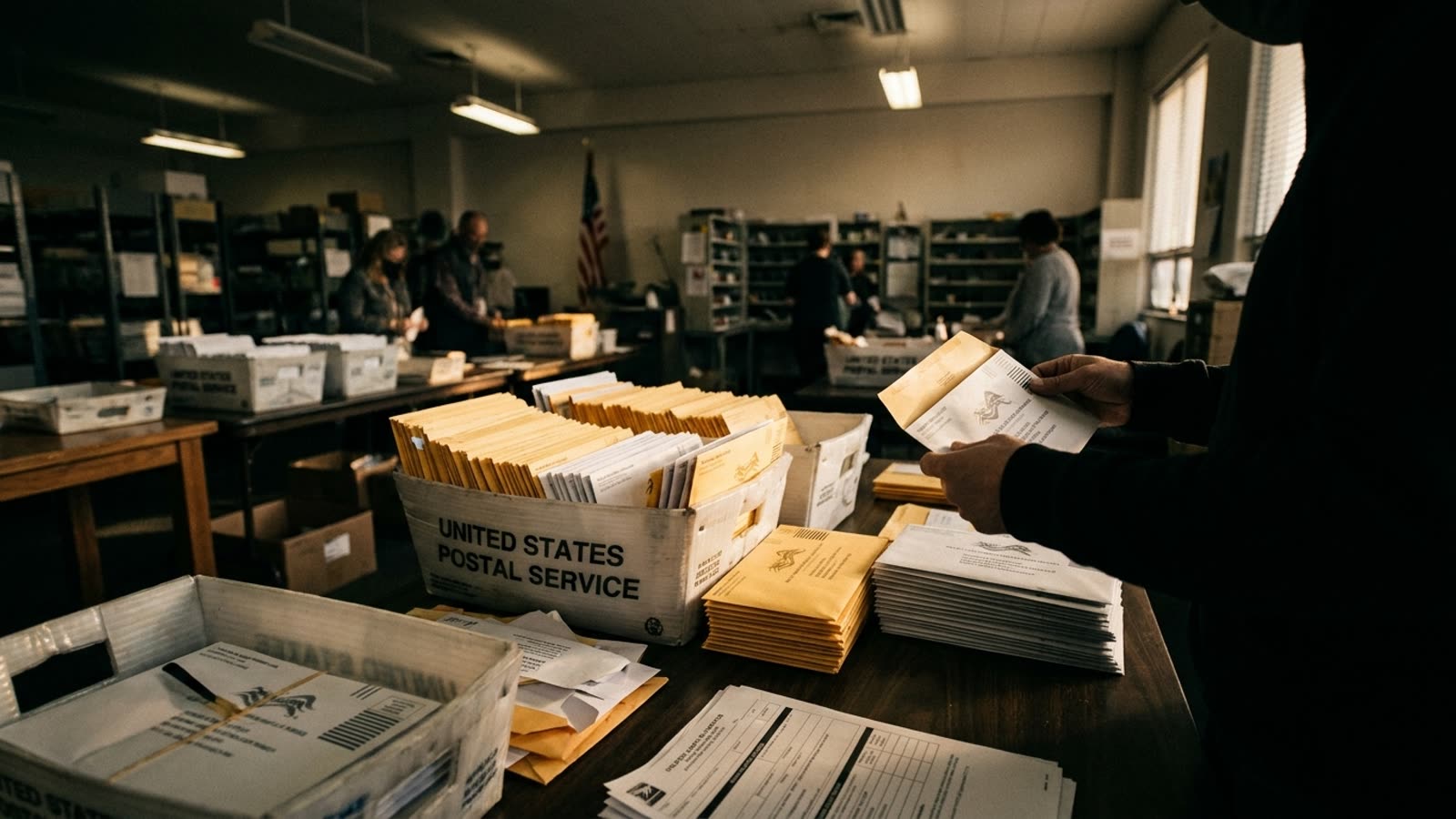
Two weeks before Americans decide which party controls Congress, North Carolina election officials are tossing mail ballots for offenses as minor as an unsealed inner envelope. The state's new procedural requirements, implemented after Republican-backed rule changes, have already led county boards to reject ballots at rates that could swing close races—and voting rights organizations are scrambling to reach affected voters before it's too late.
The timing is exquisite. North Carolina's Senate race remains a toss-up, and several House seats could determine whether Democrats claw back any legislative power. In a state where statewide elections have been decided by tens of thousands of votes, the disqualification of even a few thousand ballots is not administrative noise—it's electoral math.
The envelope problem
North Carolina now requires mail voters to use a two-envelope system: the ballot goes into an inner "secrecy" envelope, which then goes into an outer mailing envelope. Both must be sealed. Both must be signed in the correct places. Fail any step, and your vote may not count.
County officials have reported rejecting ballots for unsealed inner envelopes, misplaced signatures, and envelopes that arrived slightly damaged in transit. The state provides no uniform standard for what constitutes a "seal"—some counties accept tucked flaps, others do not. Voters receive no automatic notification that their ballot has been rejected, though state law does allow a "cure" process if they learn of the problem in time.
Voting rights groups including the ACLU of North Carolina and Democracy North Carolina have launched urgent outreach campaigns, urging voters to check their ballot status online and, if rejected, either cure the defect or vote in person during early voting, which ends November 2.
The partisan subtext
Republicans argue the rules protect ballot integrity and are no more onerous than requirements in other states. Democrats counter that the changes were designed to create friction for mail voters—who skewed Democratic in 2020 and 2024—while offering no evidence that envelope-sealing failures correlate with fraud.
The debate echoes fights in Georgia, Arizona, and Pennsylvania, where mail voting procedures have become proxies for larger battles over who gets to vote easily and who must navigate bureaucratic obstacle courses. North Carolina's rules are not the most restrictive in the country, but their implementation weeks before a consequential election has maximized confusion.
Our take
Democracy should not hinge on envelope adhesive. North Carolina's new rules may be technically legal, but they are functionally hostile to voters who followed instructions in good faith and made minor, immaterial errors. If the state wanted secure elections, it would fund better voter education and automatic notifications—not silent rejections. Instead, it has built a system where the margin of victory might be determined not by persuasion, but by postage.