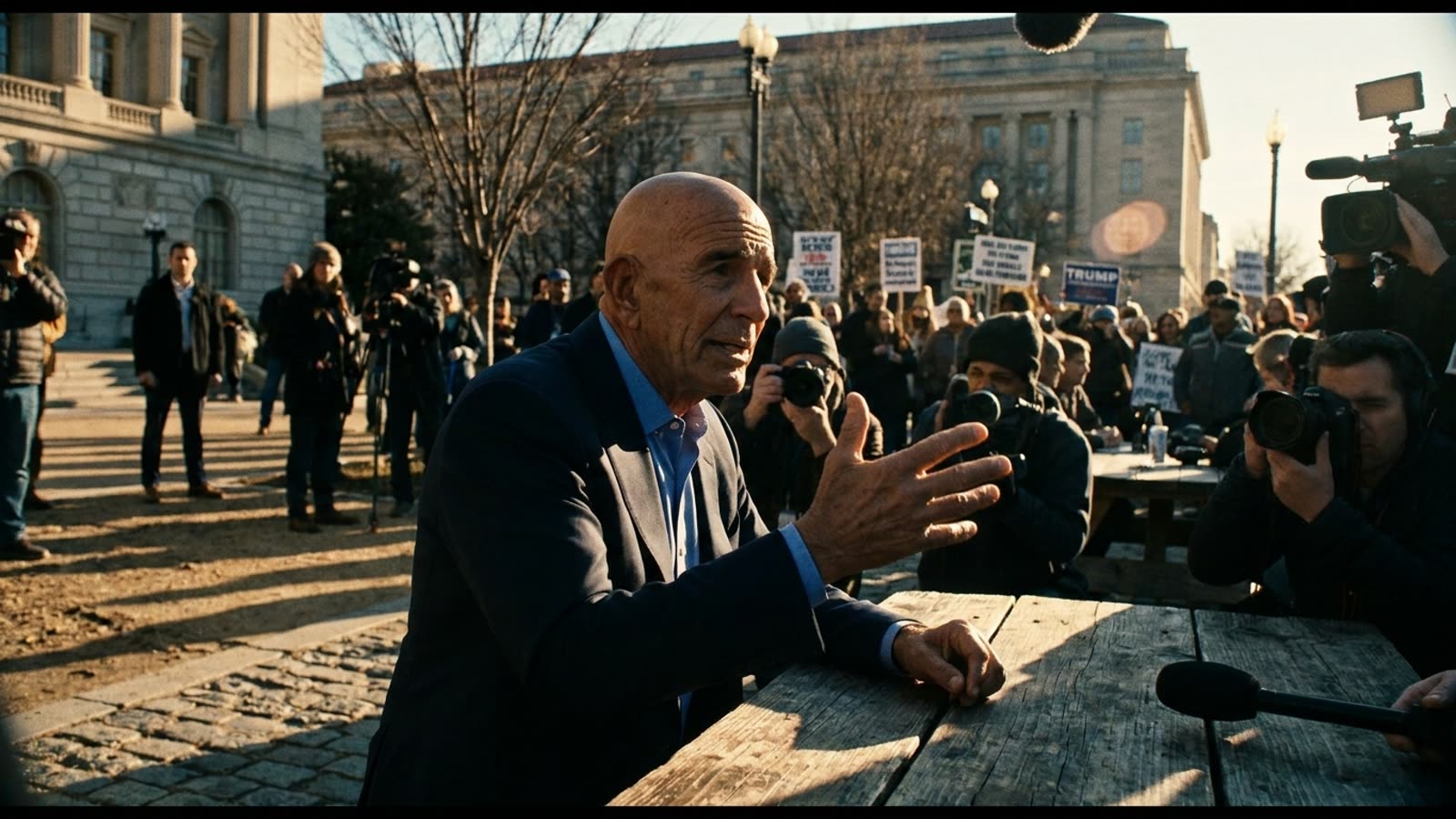
The Israeli military's decision to detain Brad Lander—a sitting New York City comptroller and Democratic nominee for Congress—while he picked olives alongside Palestinian farmers is the kind of unforced error that makes diplomats wince. Lander was released after roughly three hours, but other American, British, and Israeli volunteers remained in custody near Nahalin, a village south of Bethlehem. The episode will reverberate far beyond the terraced hillsides of the West Bank.
Lander is no fringe activist. He is a credentialed progressive who has threaded the needle on Israel-Palestine with more care than most of his ideological allies, criticising the Netanyahu government's conduct in Gaza while stopping short of the boycott-and-sanctions maximalism that dominates parts of the Democratic left. That profile made him an awkward target for Israeli security forces—and an ideal protagonist for a news cycle that highlights the occupation's rougher edges.
Why the timing stings
Israelis head to the polls in a matter of weeks, and Prime Minister Benjamin Netanyahu is fighting for political survival. His coalition's strategy has been to project toughness: on Hamas, on Hezbollah, on the Palestinian Authority, on anyone who can be framed as an external threat. Detaining rabbis and a Democratic congressional candidate at an olive harvest does not fit that narrative. It looks petty, not strong.
Palestinians, meanwhile, are watching the Israeli campaign with a mixture of exhaustion and faint hope. Polling suggests a narrow but real possibility that a centrist bloc could unseat Netanyahu's right-wing government. For families in Gaza and the West Bank who have endured two years of intensified military operations, the prospect of any change—however modest—feels like oxygen.
Washington's delicate dance
The Biden administration spent its final months trying to coax Israel toward a durable ceasefire; the Trump White House has oscillated between transactional deal-making and performative indifference. Neither posture equips American officials to respond gracefully when a fellow elected official is zip-tied in the Judean hills. State Department statements will be carefully bland. Progressive Democrats will be anything but.
Lander's detention also complicates life for AIPAC and its allies, who have poured resources into defeating left-wing candidates they deem insufficiently supportive of Israel. Lander is not in that camp—he has been measured, even cautious—and yet here he is, briefly a prisoner of the IDF. The episode undermines the argument that criticism of Israeli policy is synonymous with hostility toward the Jewish state.
Our take
Israel has every right to secure its borders and enforce its laws, but detaining volunteer olive-pickers—including rabbis and a prominent American politician—is a masterclass in self-sabotage. Netanyahu's government has spent years insisting that international criticism is driven by antisemitism or ignorance. Moments like this make that defence harder to sustain. If Israeli voters want a government that projects competence rather than belligerence, they now have one more data point to consider.