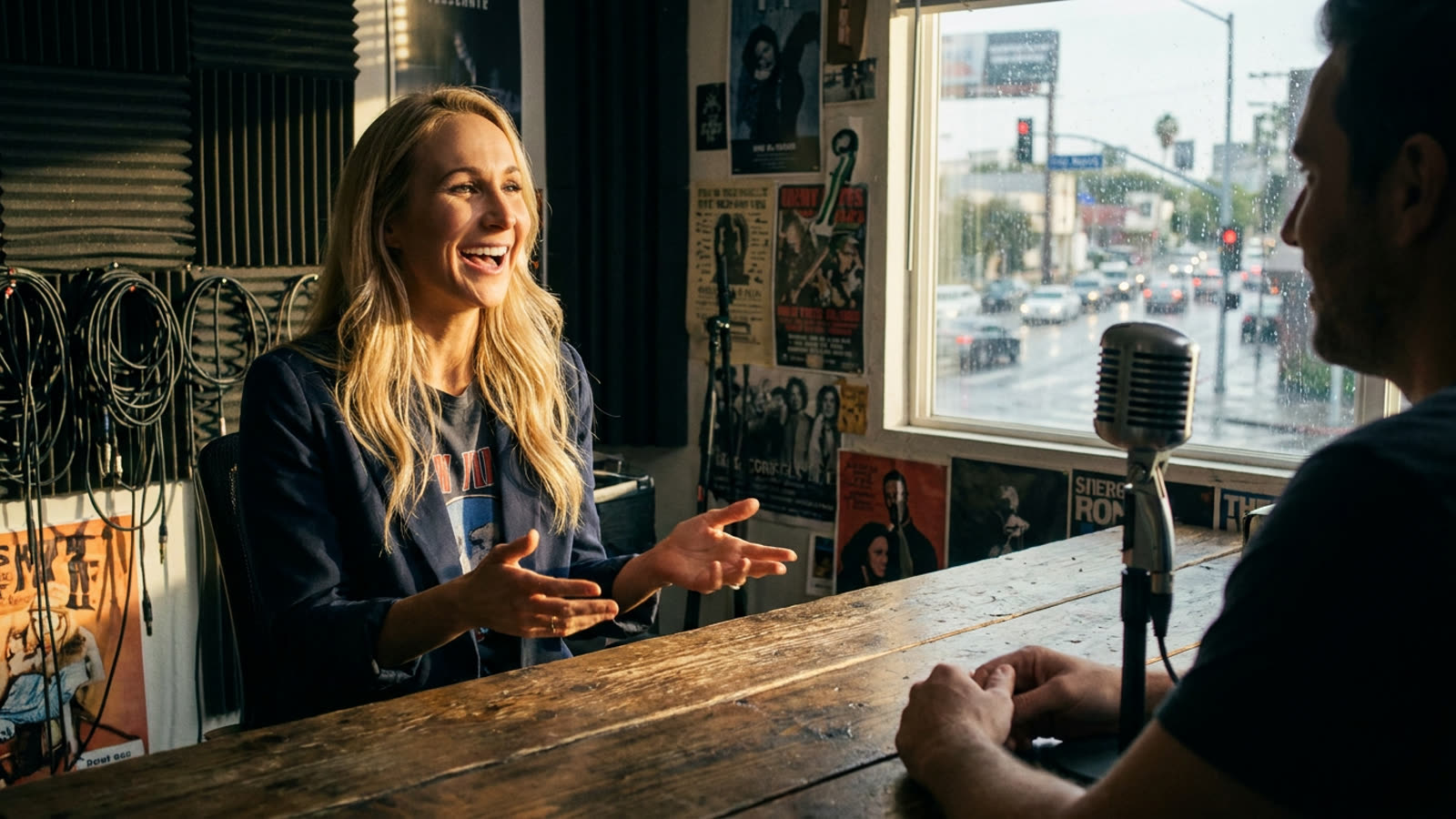
The modern celebrity interview has a problem: everyone has media training, and nobody says anything. Enter Nikki Glaser, whose podcast has quietly become the place where famous people go to drop their guard and occasionally their dignity.
The latest example arrived this week when Pete Davidson appeared on Glaser's show and proceeded to speak warmly about Kim Kardashian, years after their relationship ended. It was the kind of moment that would have been unthinkable in a traditional late-night setting—too raw, too specific, too likely to generate headlines that the publicist didn't pre-approve. Which is, of course, precisely why it happened on Glaser's couch.
The confessional format
Glaser's rise as an interviewer is a case study in counter-programming. While most celebrity conversations have become exercises in brand management—carefully rehearsed anecdotes, plugs for upcoming projects, and absolutely nothing that might trend for the wrong reasons—she has built her show around the opposite premise. Her guests are encouraged to be messy, nostalgic, and occasionally regretful.
The formula works because Glaser herself operates without apparent boundaries. Her comedy has always been confessional to the point of discomfort; her sets are littered with details about her romantic failures, body image struggles, and various humiliations. This creates a kind of permission structure for her guests. If the host is willing to discuss her own disasters in granular detail, the celebrity across from her can hardly maintain a fortress of talking points.
Why celebrities keep showing up
The traditional media ecosystem offered celebrities a straightforward transaction: access in exchange for promotion. You went on Letterman to plug your movie, answered a few softball questions, and went home. The podcast era has scrambled this arrangement. There are now thousands of interview shows competing for guests, and the currency has shifted from reach to intimacy.
Glaser's show offers something specific: the chance to seem like a real person. For celebrities whose public images have calcified into caricature—Davidson as the chaotic boyfriend, Kardashian as the calculating mogul—an hour of unscripted conversation can function as a kind of reputation laundering. Not in a sinister sense, but in the way that any of us might want to be seen as more than our worst headlines suggest.
The risk, of course, is that unscripted means uncontrolled. What gets said on Glaser's podcast tends to become news, which is both the appeal and the danger.
Our take
Glaser has identified something real about the current moment: audiences are tired of the performance of authenticity and hungry for the actual thing, or at least a more convincing simulation of it. Her podcast succeeds because she has made vulnerability into a format, and celebrities keep volunteering because the alternative—another anodyne press tour—has become its own kind of reputational risk. In an attention economy that rewards emotional disclosure, Glaser is running the most efficient extraction operation in Hollywood.