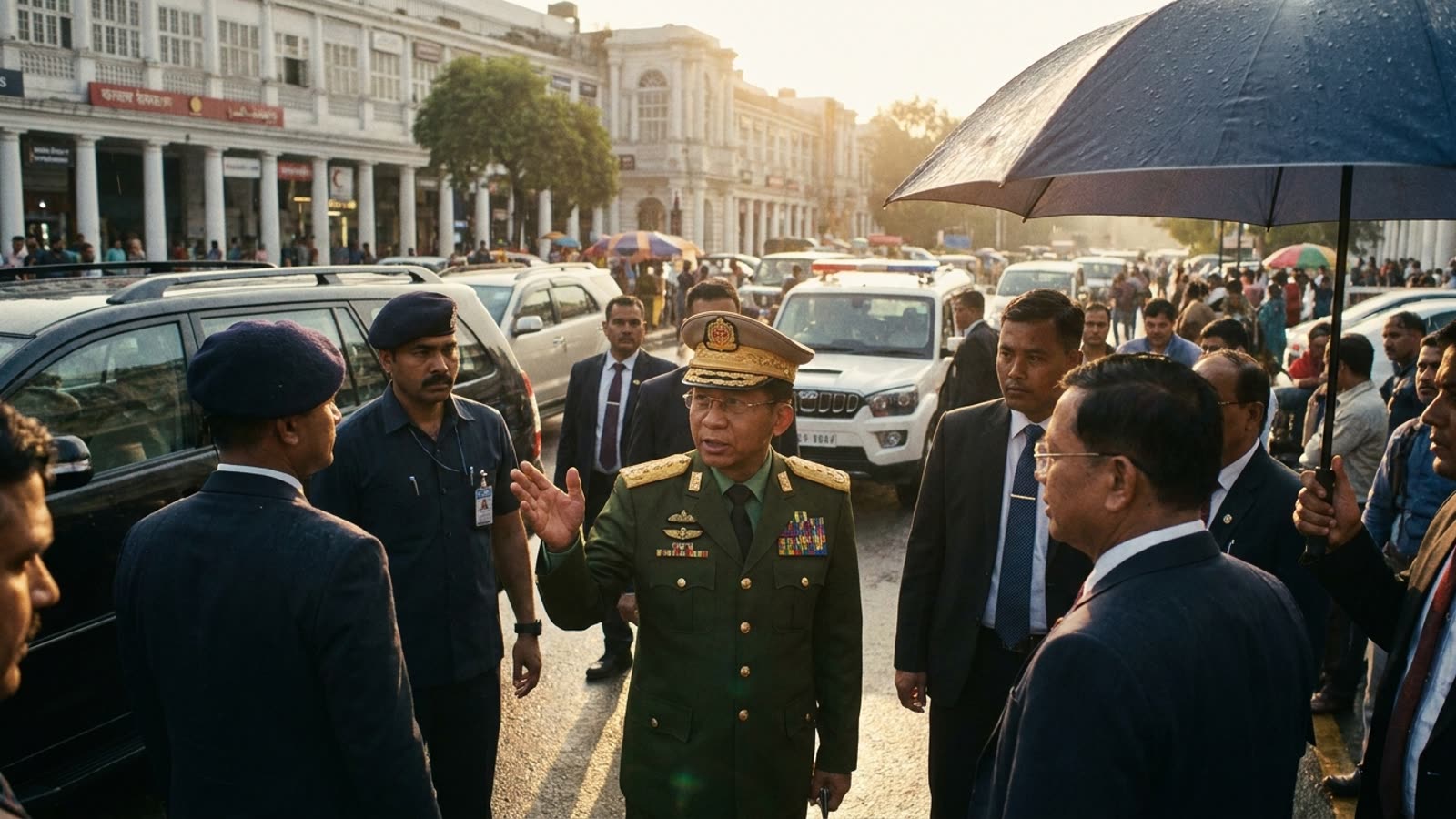
Four years after seizing power in a coup that plunged Myanmar into civil war, Senior General Min Aung Hlaing is attempting something his regime has struggled to achieve: international legitimacy. His visit to India this week—his first foreign trip since declaring himself president in April—is less about bilateral trade than about sending a message northward to Beijing.
The India play
New Delhi has maintained a studied ambiguity toward Myanmar's military government, balancing democratic rhetoric with security pragmatism. India shares a 1,600-kilometer border with Myanmar, and the restive northeastern states have long been vulnerable to cross-border insurgent movements. For Prime Minister Modi's government, a functional relationship with whoever controls Naypyidaw is not optional—it is infrastructure for counterterrorism cooperation and a hedge against Chinese encirclement.
Min Aung Hlaing is exploiting this calculus. By showing he can secure a red-carpet reception in a major democracy, he undermines the Western isolation strategy and creates leverage with Beijing, which has grown frustrated with the junta's inability to pacify the country or protect Chinese investments along the border.
China's uncomfortable position
Beijing has never been a comfortable patron of Myanmar's generals. The relationship is transactional: China wants pipeline access, rare-earth minerals, and a land corridor to the Indian Ocean. What it has received instead is instability, with ethnic armed groups—some tacitly backed by Chinese interests—seizing territory and disrupting Belt and Road projects.
The junta's Delhi outreach is a reminder that Myanmar, however weakened, retains options. India cannot offer the scale of investment China provides, but it can offer something Beijing cannot: a counterweight narrative. For a regime desperate to avoid complete dependency on a single patron, that has value.
Our take
Min Aung Hlaing is not pivoting away from China; he is demonstrating that he could. It is the diplomatic equivalent of taking a meeting with a competitor before contract renewal. India will extract what it can—border cooperation, perhaps some infrastructure concessions—while maintaining enough distance to preserve its democratic credentials. The real audience for this trip sits in Zhongnanhai, where strategists are being reminded that client states, even desperate ones, still shop around.