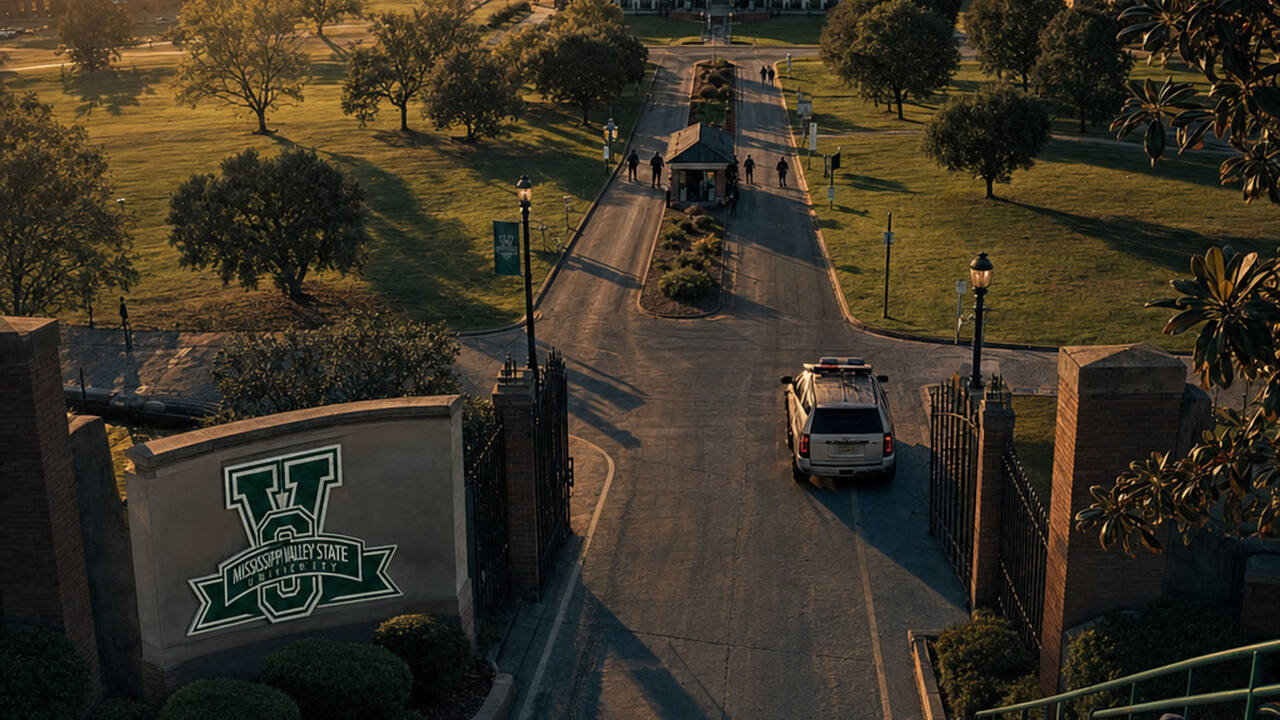
A men's basketball player at Mississippi Valley State University, a historically Black institution in the Mississippi Delta, is currently being held by Immigration and Customs Enforcement — a detention that has thrown a small athletic program into an unexpected collision with federal immigration policy.
The player, a Chinese national whose recruitment represented MVSU's modest push into international basketball talent, was taken into custody over what the university has characterized as a visa-related issue. Details remain sparse, but the case has already drawn attention from immigration advocates who see it as emblematic of an enforcement apparatus that increasingly treats administrative lapses as criminal matters.
The student-athlete visa maze
International student-athletes occupy a peculiar legal space. They arrive on F-1 visas that permit study but restrict employment, then spend twenty-plus hours weekly in what is, for all practical purposes, a job that generates millions for their institutions. The NCAA's recent name-image-likeness reforms have made this tension more acute: can a Chinese point guard on an F-1 visa accept a local car dealership sponsorship? The answer depends on which immigration lawyer you ask.
Smaller programs like MVSU — which competes in the Southwestern Athletic Conference, far from the television money of the SEC — often lack the compliance infrastructure that protects athletes at wealthier schools. A missed deadline, an improperly filed form, a work authorization misunderstanding: any of these can transform a scholarship athlete into an enforcement target.
Enforcement climate
The detention comes amid a broader tightening of immigration enforcement that has not exempted higher education. ICE arrests on or near college campuses have increased notably over the past two years, and the agency has shown less deference to the informal norms that once treated universities as sensitive locations. For international students from China — the largest source of foreign enrollment at American universities — the scrutiny has intensified alongside deteriorating U.S.-China relations.
MVSU officials have reportedly been in contact with immigration attorneys and the player's family, though the university has declined to comment in detail, citing privacy concerns. The SWAC has not issued a statement.
Our take
There is something clarifying about seeing immigration enforcement reach a Division I basketball roster in Itta Bena, Mississippi. It strips away the abstraction. This is not a policy debate about border security or skilled-worker quotas; it is a young man who came to play basketball and study, now sitting in a detention facility because of paperwork. Whether you believe current enforcement priorities are appropriate or draconian, the case is a reminder that the American immigration system makes no distinction between a student-athlete and any other visa holder who runs afoul of its byzantine requirements. The cruelty, as they say, is the point — or at minimum, a feature the system has stopped pretending to regret.