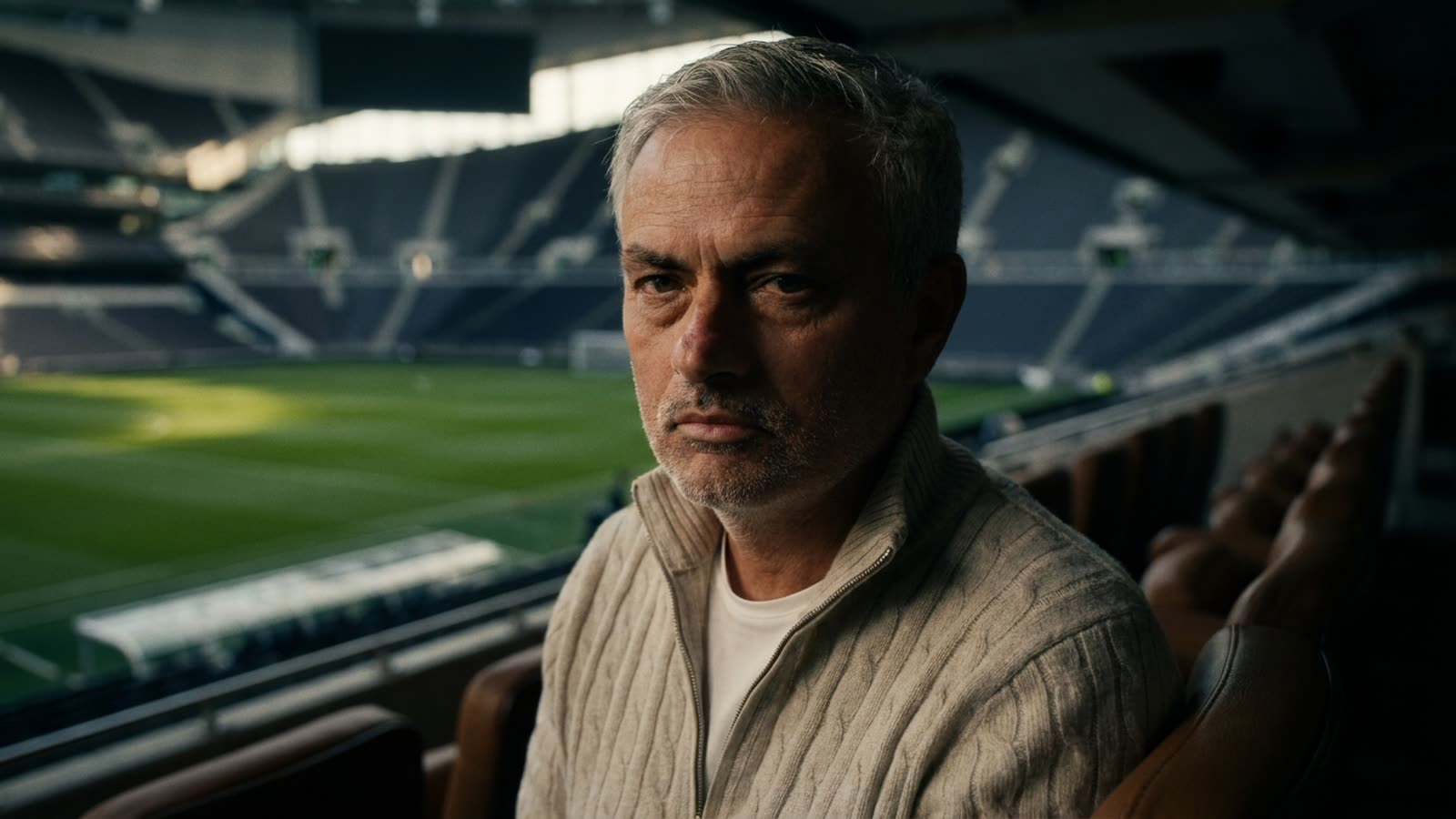
Real Madrid approaching José Mourinho about a return to the Santiago Bernabéu is the kind of move that only makes sense when nothing else does. The Portuguese manager, now 63, left the club in 2013 after three seasons that delivered one La Liga title, one Copa del Rey, and enough dressing-room psychodrama to fuel a decade of documentaries. That he is back in the conversation tells you everything about where Madrid finds itself: out of ideas, out of patience, and apparently out of better options.
The talks, first reported by Spanish media and confirmed by sources close to the club, are described as preliminary. But the fact that Florentino Pérez's inner circle is even entertaining the notion suggests a fundamental shift in how Madrid views its managerial future. This is not a club that typically revisits the past. It is a club that discards it.
The case for Mourinho, such as it is
Mourinho's first stint at Madrid was, by most statistical measures, a success. He won 72% of his league matches, ended Barcelona's domestic stranglehold, and reached three consecutive Champions League semifinals. The problem was everything else: public feuds with club legends, a finger in Tito Vilanova's eye, and a systematic alienation of the Spanish press that made his position untenable long before results did.
What has changed? Mourinho's recent tenures at Tottenham, Roma, and Fenerbahçe have produced one Conference League trophy and a great deal of discourse about whether his methods still translate to elite football. His defenders argue he has been underresourced; his critics note that he has been underresourced because clubs no longer trust him with resources.
Why Madrid is even considering this
The current season has been a slow-motion unraveling. Carlo Ancelotti's second spell, which began with a Champions League triumph in 2022, has curdled into something unrecognizable. The midfield transition after Toni Kroos's retirement has been rockier than anticipated. Kylian Mbappé's arrival, which was supposed to inaugurate a new galáctico era, has instead exposed structural imbalances that no amount of individual brilliance can paper over.
Madrid's board is not sentimental, but it is risk-averse in peculiar ways. Mourinho represents a known quantity—combustible, yes, but capable of imposing order through sheer force of personality. In a season where the dressing room has reportedly fragmented into factions, that quality suddenly looks less like a liability and more like a feature.
Our take
This would be a marriage of mutual desperation dressed up as destiny. Mourinho needs Madrid to validate a career that has drifted toward irrelevance; Madrid needs someone, anyone, who can command a room full of egos that have stopped listening. Neither party is getting what it actually wants—a fresh start—but both might settle for the familiar chaos of a reunion. Football loves a redemption arc. Whether this qualifies as redemption or repetition depends entirely on how much you've chosen to forget.