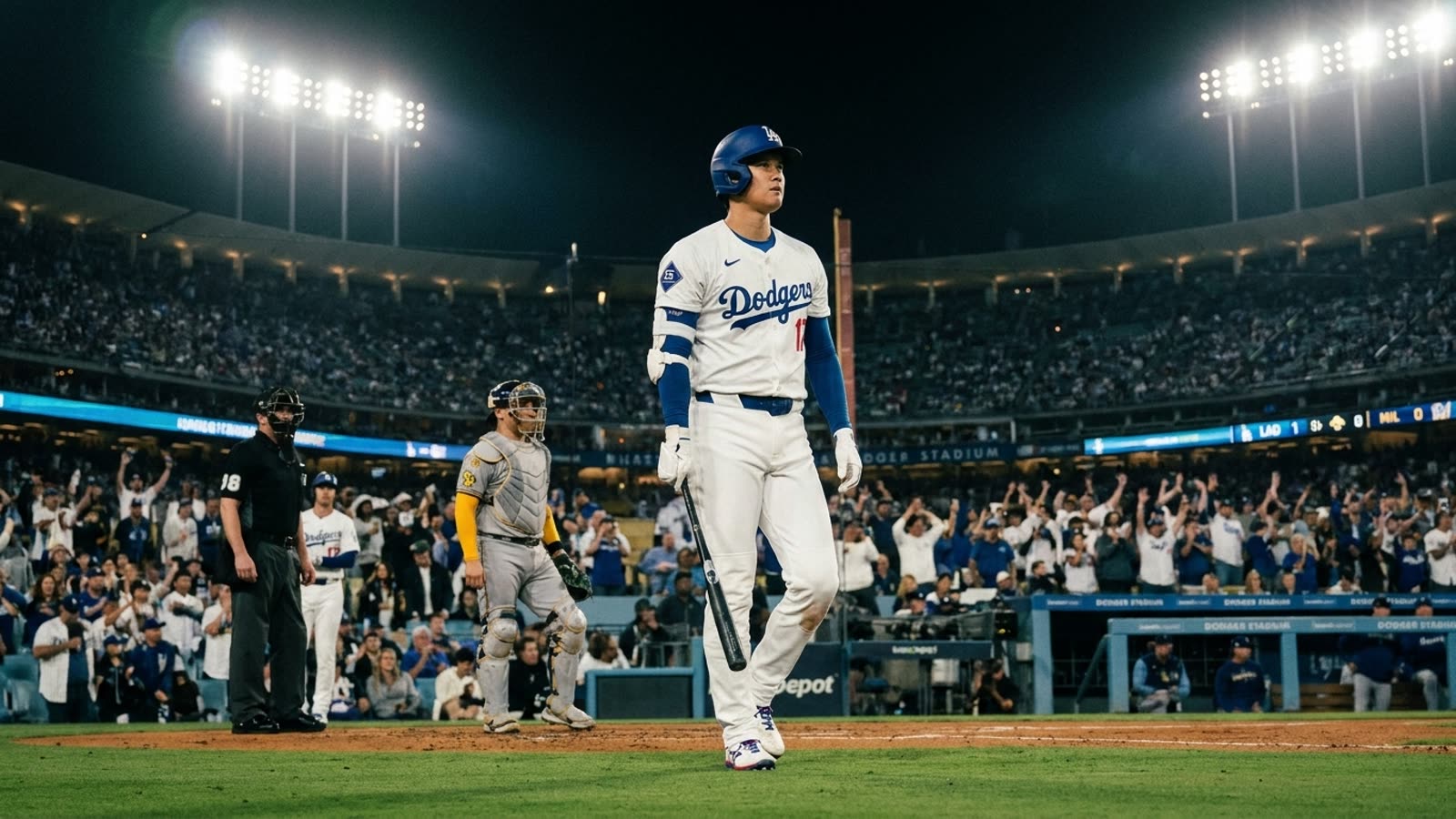
There is no player in professional sports quite like Shohei Ohtani, and on nights when both versions of him show up, baseball briefly becomes appointment television again. His latest outing—a leadoff home run followed by five innings of shutout pitching—was the sort of performance that makes the sport's declining ratings feel like a marketing problem rather than a product one.
The Dodgers have built their entire identity around Ohtani since signing him to a contract that deferred most of its $700 million value into the distant future. The gamble was always that his body would hold up, that the arm and the bat could coexist at elite levels for a decade. Nights like this one suggest the bet is paying off.
The two-way paradox
What makes Ohtani's continued excellence so remarkable is how thoroughly it defies modern baseball's specialization orthodoxy. Every incentive in the sport pushes toward narrow optimization: pitchers who throw harder but shorter, hitters who sell out for power, relievers who face two batters and disappear. Ohtani rejects all of it.
His leadoff home run set the tone immediately, a reminder that even when he's scheduled to pitch, opposing teams cannot simply wait out his at-bats. The five scoreless innings that followed demonstrated the command that has made him one of the American League's most effective starters since his arrival from Japan in 2018.
The Dodgers' calculated patience
Los Angeles understood what they were acquiring: not just a player, but a phenomenon that transcends traditional roster construction. Ohtani's presence allows the Dodgers to effectively carry an extra position player on days he pitches, a structural advantage that compounds over a 162-game season.
The deferred contract structure—which pushes the majority of his salary into his post-playing years—was widely mocked as creative accounting. But it has allowed the Dodgers to surround him with complementary talent while keeping their luxury tax exposure manageable. The result is a team built to contend for the next half-decade.
Our take
Baseball's existential crisis is real. The sport struggles to capture younger audiences, its games run too long, and its stars lack the cultural penetration of their NBA and NFL counterparts. But Ohtani is the exception that proves the rule—a player so obviously extraordinary that even casual fans understand what they're watching. The Dodgers paid for a generational talent and got something rarer: a reason to watch.