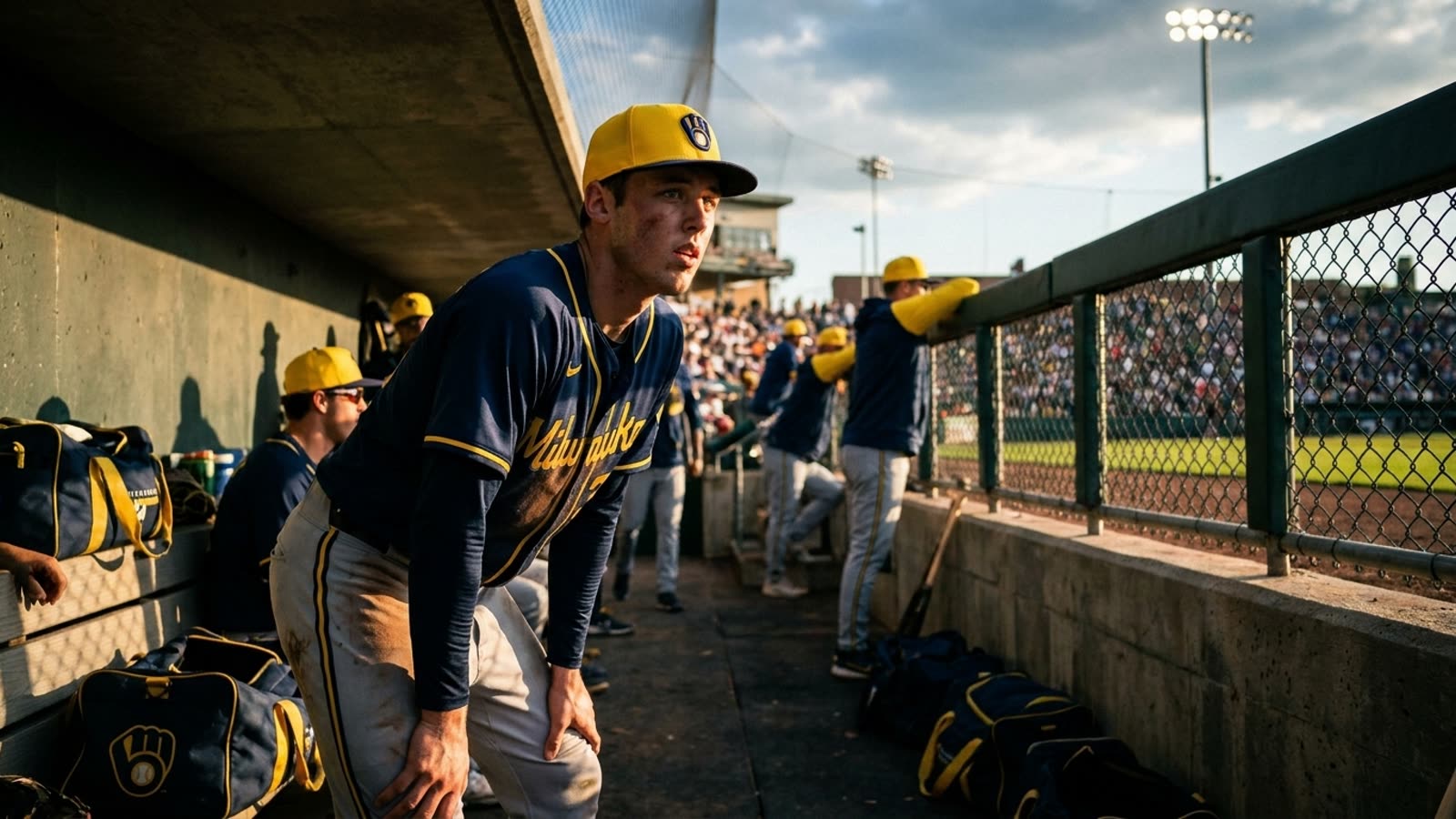
A pitching prospect hitting 100 mph is no longer rare. A pitching prospect hitting 100 mph fifty-seven times in the same game is something else entirely—a declaration of intent that scouts, front offices, and hitters' therapists all take seriously.
Jace Misiorowski, the Brewers' 23-year-old right-hander, delivered precisely that in his latest Triple-A start for Nashville, touching triple digits on more than half his fastballs while maintaining command that belied the violence of his arm action. The performance wasn't a curiosity; it was a confirmation that Milwaukee's pitching pipeline, already responsible for Corbin Burnes and Brandon Woodruff before their departures, continues to mint arms that other organizations would mortgage their futures to acquire.
The velocity revolution's new ceiling
Baseball's relationship with velocity has shifted dramatically over the past decade. Where 95 mph once marked elite heat, it now reads as merely competent. The average fastball velocity in MLB has climbed past 94 mph, compressing the advantage that pure arm strength once provided. To stand out, a pitcher must either command the zone with surgical precision or simply throw harder than physics seems to allow.
Misiorowski has chosen the latter path, at least for now. His fastball sat comfortably in the 99-101 range throughout his outing, and the 57 triple-digit readings weren't scattered randomly—they came in high-leverage counts, when hitters were sitting dead red and still couldn't catch up. That kind of sustained effort suggests genuine elite-tier arm strength rather than adrenaline-fueled peaks.
Milwaukee's quiet factory
The Brewers have operated for years as one of baseball's most efficient organizations, consistently competing despite payroll constraints that would doom less creative front offices. Their secret has never been secret: develop pitching, extract value, repeat. Burnes won a Cy Young in Milwaukee before being traded. Woodruff anchored rotations before injuries intervened. Freddy Peralta emerged from the same system.
Misiorowski represents the next iteration. Drafted in the second round in 2022, he has moved through the system with the kind of steady progression that suggests polish rather than projection. His slider, already a plus pitch, pairs with the fastball to create a two-pitch mix that could play in a major-league bullpen tomorrow or, with continued refinement of his changeup, anchor a rotation spot by 2027.
Our take
The Brewers find themselves in an enviable position: contending now while stockpiling arms that could either extend their window or fund its next phase via trade. Misiorowski's 57-pitch statement wasn't just about one prospect's arm—it was a reminder that Milwaukee's model works, even as larger-market teams throw money at problems the Brewers solve with scouting and development. In a sport increasingly dominated by payroll, that's worth more than any single radar reading.