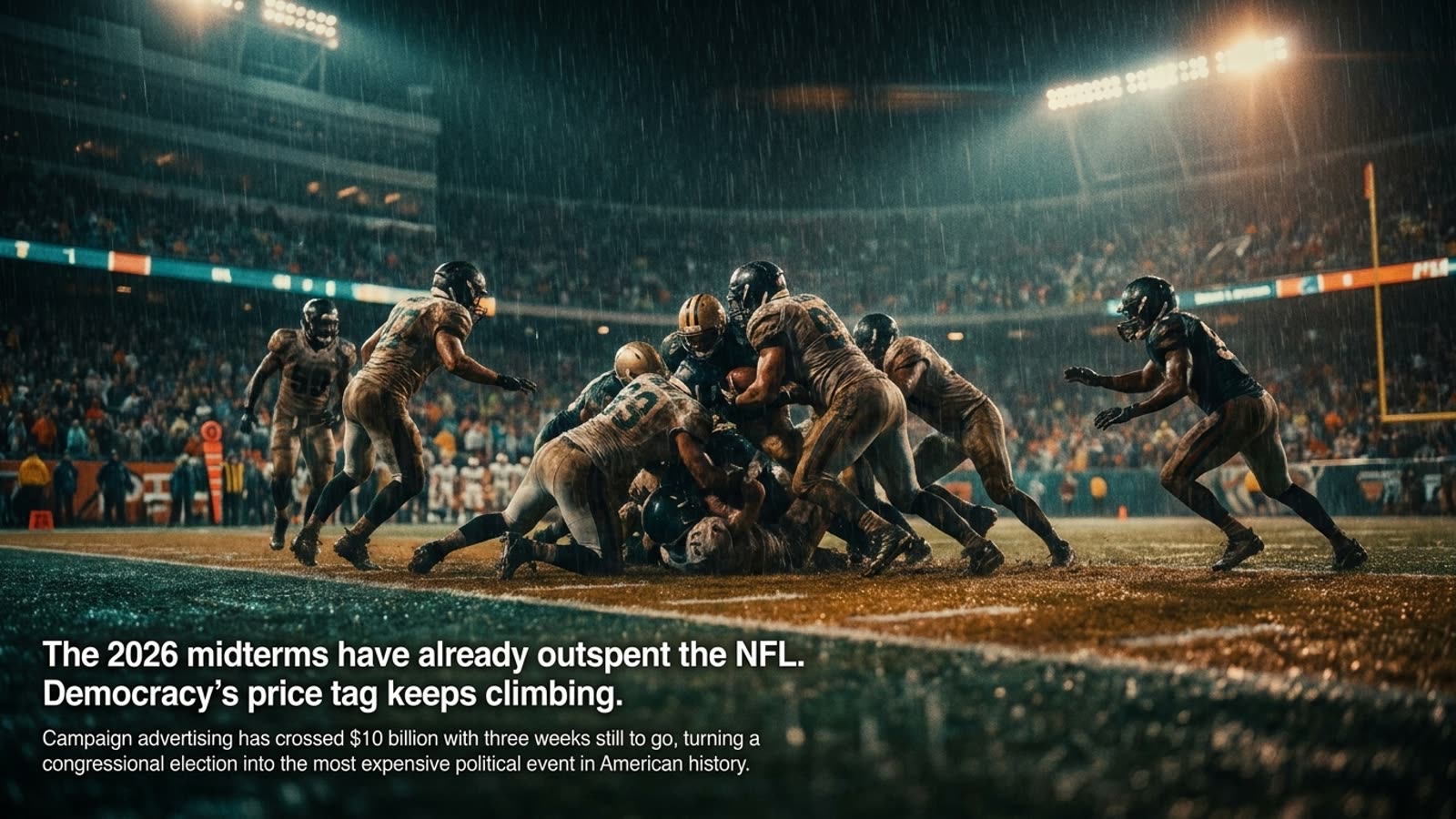
The 2026 midterm elections have achieved a grim milestone: more money has been spent on campaign advertising than the entire National Football League booked for its most recent season. The figure now exceeds $10 billion, and the final invoices are still being tallied. This is not a presidential year. There is no White House on the ballot. Yet the spending has already surpassed the 2024 cycle that put Donald Trump back in office.
The numbers reflect a structural transformation in American politics. Campaigns no longer compete for attention; they purchase it at industrial scale. The rise of streaming platforms, programmatic digital advertising, and micro-targeted social media has created an infinitely expandable marketplace for political persuasion. There is always another impression to buy, another demographic slice to saturate.
The money pipeline
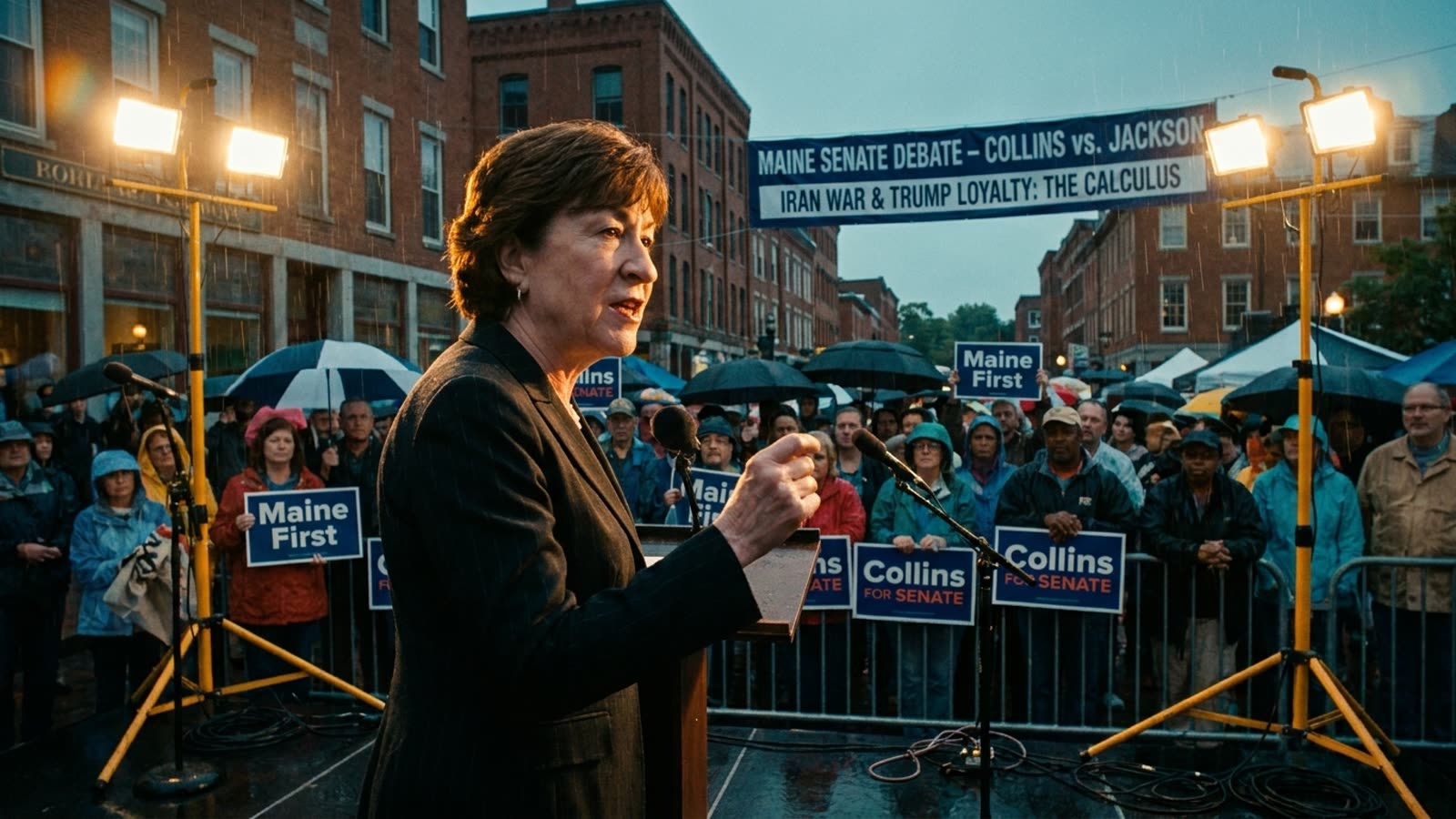
Super PACs on both sides have poured unprecedented sums into competitive Senate and House races. The Senate Majority PAC, the leading Democratic outside group, has committed hundreds of millions to battleground states including Michigan and Maine, where control of the upper chamber may be decided. Republican groups have matched or exceeded that spending in Arizona, Montana, and Nevada. The combined effect is a media environment in which voters in swing districts cannot escape political messaging—on their phones, their televisions, their streaming services, even their podcasts.
The spending is not evenly distributed. A handful of Senate races account for a disproportionate share of the total. In states with expensive media markets—Pennsylvania, Arizona, Georgia—the cost per persuadable voter has reached absurd levels. Some estimates suggest campaigns are spending more than $100 per swing voter in the most contested districts, a figure that would have seemed fantastical a decade ago.
What the money buys
The obvious question is whether any of this works. The research is mixed. Television advertising appears to have diminishing returns at high saturation levels; voters tune out or develop resistance. Digital advertising is harder to measure but may be more effective at mobilization than persuasion. The campaigns themselves seem uncertain, which is why they keep spending—the fear of being outgunned outweighs the uncertainty about marginal returns.
What the money definitively buys is access. Candidates who cannot raise at competitive levels simply do not survive primaries. The donor class—whether individual billionaires, corporate PACs, or small-dollar networks—has become a de facto gatekeeper for political viability. The $10 billion figure is not just a measure of advertising; it is a measure of the barrier to entry for American democracy.
Our take
There is something darkly comic about a congressional election outspending the NFL, an organization whose entire business model is selling attention to advertisers. The comparison reveals what American politics has become: a content vertical, competing for eyeballs alongside football and streaming dramas. The $10 billion is not a bug in the system. It is the system working exactly as designed—by those who designed it to favor those with money to spend.