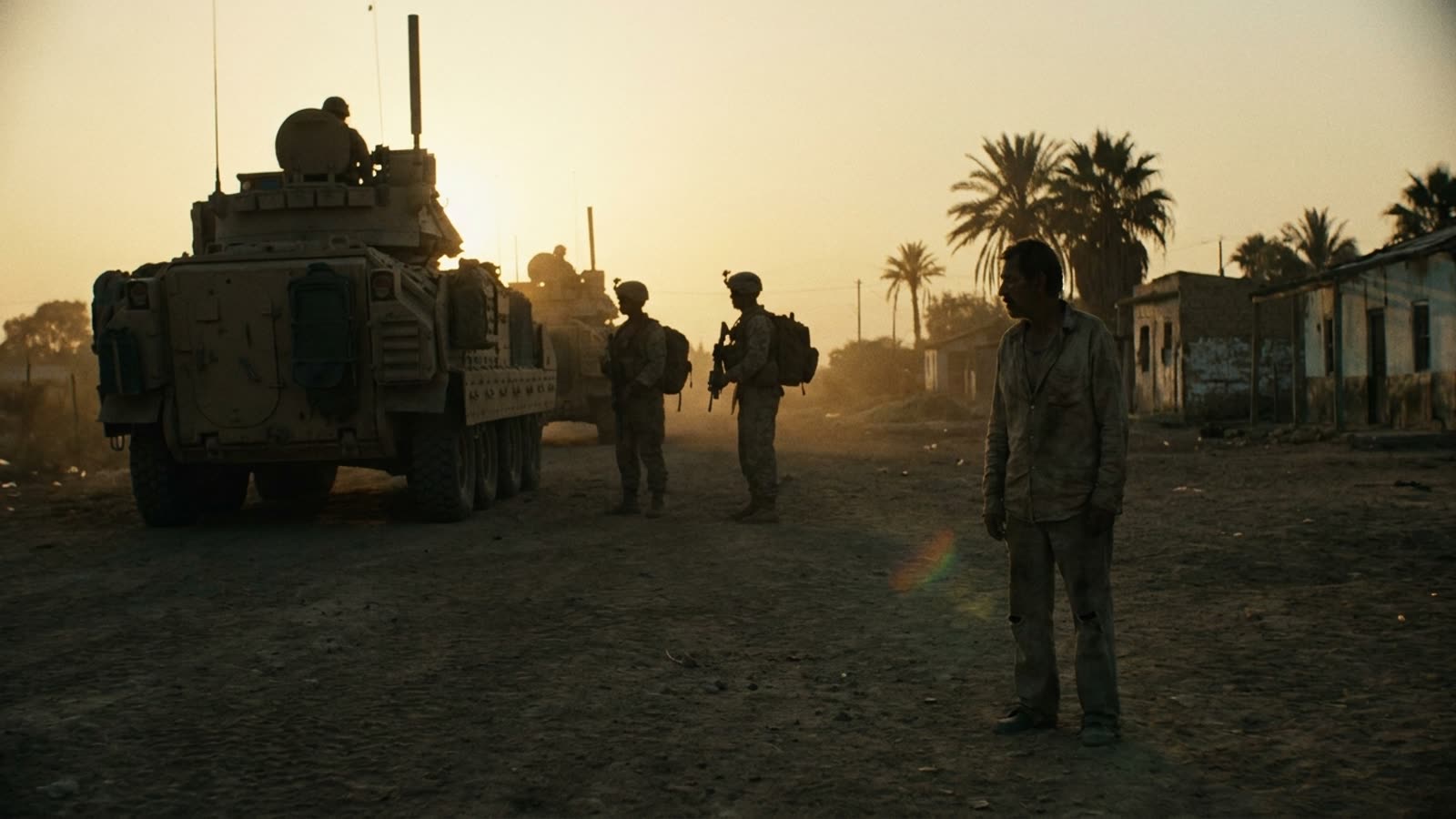
The sight of camouflage fatigues on the National Mall has become so routine that tourists barely glance up from their phones. That normalcy is precisely what troubled a three-judge panel of the D.C. Circuit Court of Appeals this week, as it interrogated the legal foundations of President Trump's ongoing National Guard deployment in the nation's capital.
The deployment, which began in early 2025 following protests against the administration's immigration policies, has continued without interruption for more than sixteen months. What was initially framed as a temporary measure to restore order has quietly calcified into a permanent fixture of Washington life—thousands of troops rotating through shifts, manning checkpoints near federal buildings, and conducting patrols that critics describe as indistinguishable from martial law.
The constitutional tripwire
The case before the appeals court, brought by civil liberties groups and several D.C. residents, hinges on a deceptively simple question: can a president deploy military forces domestically for an indefinite period without triggering the constraints of the Posse Comitatus Act or requiring explicit congressional authorization?
The administration argues that the National Guard, when operating under federal Title 32 status, occupies a legal grey zone that permits sustained deployment. Judge Patricia Millett appeared unconvinced, asking government lawyers whether their theory would permit a president to station troops in any American city, indefinitely, based solely on a declared emergency. The Justice Department's response—that courts should defer to executive judgment on security matters—drew visible skepticism from the bench.
The precedent problem
Legal scholars have noted that the deployment represents the longest sustained domestic military presence in a major American city since Reconstruction. Previous National Guard activations, including those during the 2020 protests, lasted weeks rather than years. The administration's position effectively argues that duration is irrelevant so long as the initial deployment was lawful—a theory that, if accepted, would dramatically expand presidential authority over domestic military operations.
The timing matters politically as well. With midterm elections three weeks away, the troops' presence has become a campaign issue in its own right. Democratic candidates have seized on what they call the "occupation of Washington," while Republicans argue the deployment has successfully reduced crime and protected federal property.
Our take
The founders were explicit about their fear of standing armies in peacetime, and particularly armies deployed against the citizenry. That the current deployment involves the National Guard rather than regular Army units is a distinction that grows thinner with each passing month. The appeals court appears to recognize what Congress has been unwilling to confront: that executive power, once expanded, rarely contracts voluntarily. Whatever the panel decides, the fact that it took sixteen months for any branch of government to seriously question the arrangement suggests the constitutional immune system is running dangerously slow.